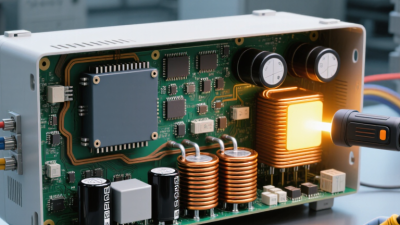
What Is a High Voltage DC DC Converter?
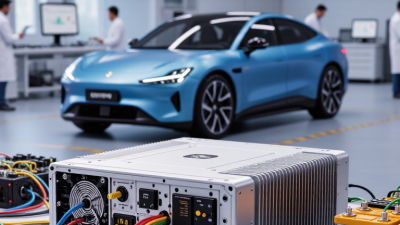
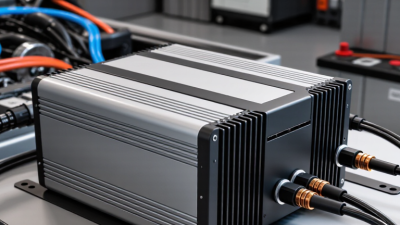
A High Voltage DC DC Converter changes one direct-current voltage level into another, often while handling hundreds or thousands of volts. It appears in electric vehicles, renewable-energy systems, industrial drives, medical equipment, and high-voltage battery platforms. The converter may raise voltage, reduce it, or regulate both directions, depending on system requirements.
Robert W. Erickson, a respected power-electronics researcher and author, wrote, “Power electronics is the application of solid-state electronics for the control and conversion of electric power.” This principle explains the converter’s role. Semiconductor switches, transformers, inductors, capacitors, sensors, and control software work together inside a tightly managed power path.
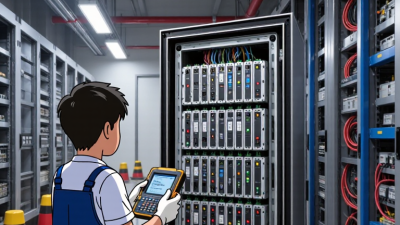
In practical engineering, the details become physical. Engineers check switching waveforms with an oscilloscope. They inspect hot spots with a thermal camera. They measure insulation spacing, leakage current, ripple, and electromagnetic noise. A small layout mistake can create excessive voltage stress or unwanted heating.
Safety is not an accessory.
A reliable High Voltage DC DC Converter must control energy during normal operation and fault conditions. Its design may include isolation barriers, soft-start circuits, fuses, discharge paths, current limiting, and protective shutdown logic. However, no single topology solves every application. Efficiency, size, cost, switching frequency, isolation, cooling, and serviceability can conflict.
Some specifications look impressive on paper. Real performance may change with altitude, temperature, cable length, aging, and load transients. That is where simplified explanations become incomplete. Understanding the converter requires both theory and measured evidence. This guide examines how these devices work, where they are used, and which design choices deserve closer review.
Read more »

 By:Oliver
- October 29, 2026
 By:Evelyn
- October 24, 2026
 By:Amelia
- October 9, 2026