
Engineered & manufactured in Germany — Adlkofen / Bavaria Global service network in 40+ countries
0%

A High Voltage DC DC Converter changes one direct-current voltage level into another, often while handling hundreds or thousands of volts. It appears in electric vehicles, renewable-energy systems, industrial drives, medical equipment, and high-voltage battery platforms. The converter may raise voltage, reduce it, or regulate both directions, depending on system requirements.

Robert W. Erickson, a respected power-electronics researcher and author, wrote, “Power electronics is the application of solid-state electronics for the control and conversion of electric power.” This principle explains the converter’s role. Semiconductor switches, transformers, inductors, capacitors, sensors, and control software work together inside a tightly managed power path.

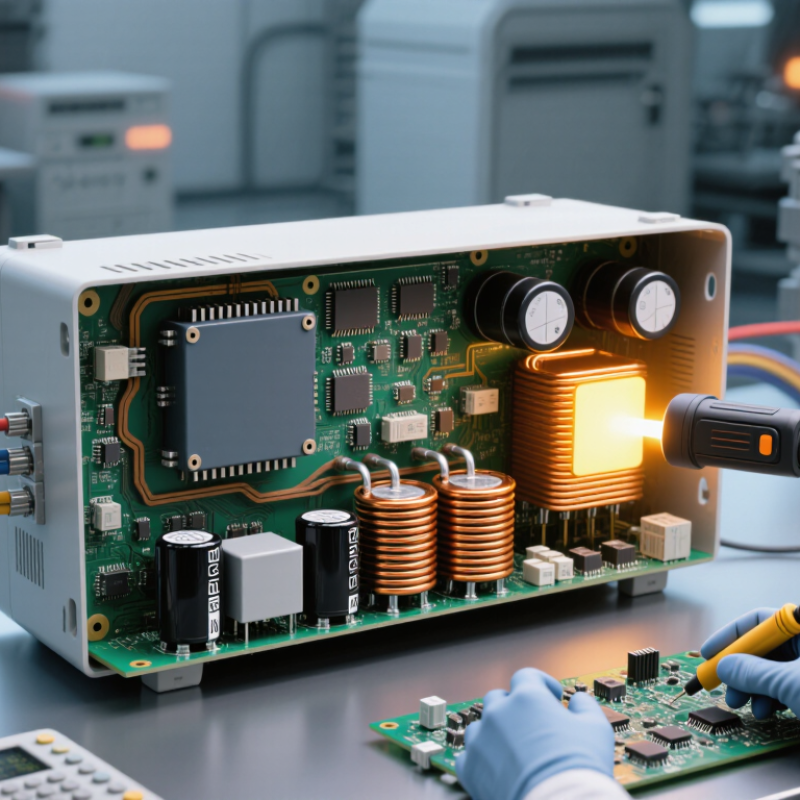
In practical engineering, the details become physical. Engineers check switching waveforms with an oscilloscope. They inspect hot spots with a thermal camera. They measure insulation spacing, leakage current, ripple, and electromagnetic noise. A small layout mistake can create excessive voltage stress or unwanted heating.

Safety is not an accessory.

A reliable High Voltage DC DC Converter must control energy during normal operation and fault conditions. Its design may include isolation barriers, soft-start circuits, fuses, discharge paths, current limiting, and protective shutdown logic. However, no single topology solves every application. Efficiency, size, cost, switching frequency, isolation, cooling, and serviceability can conflict.

Some specifications look impressive on paper. Real performance may change with altitude, temperature, cable length, aging, and load transients. That is where simplified explanations become incomplete. Understanding the converter requires both theory and measured evidence. This guide examines how these devices work, where they are used, and which design choices deserve closer review.
What Is a High Voltage DC DC Converter?

Definition and Core Purpose of a High Voltage DC-DC Converter

A high-voltage DC-DC converter changes one direct-current voltage into another. Its core purpose is practical: it supplies stable, usable power to different electrical systems. In an electric vehicle, the traction battery may operate at several hundred volts, while lighting, controls, sensors, and communication circuits need 12 or 24 volts. That is the job. The converter reduces voltage, controls current, and often provides electrical isolation.

The IEA’s Global EV Outlook 2024 reported nearly 14 million electric car sales worldwide in 2023. This growth increases demand for compact and dependable high-voltage conversion systems. The U.S. Department of Energy’s Vehicle Technologies Market Report also describes high-voltage battery packs alongside low-voltage auxiliary networks. The split is clear. A converter connects them safely. It may use buck, boost, or buck-boost switching stages, depending on the required voltage direction.

In real engineering work, efficiency alone is not enough. Engineers examine heat, switching losses, electromagnetic noise, insulation distance, fault response, and lifetime. A converter rated above 95% efficiency can still create serious thermal problems under continuous load. That detail is easy to miss. The IEA’s data shows market expansion, but sales figures do not reveal field conditions, vibration, moisture, or sudden load changes. Designers must test those realities. A neat circuit diagram can hide difficult compromises, especially when smaller packaging conflicts with cooling performance.

What Is a High Voltage DC-DC Converter?

A high voltage DC-DC converter transfers electrical energy between different direct-current voltage levels. The chart shows representative nominal conversion paths used in electric power systems, including battery, traction, auxiliary, and low-voltage loads.

The converter raises or lowers DC voltage while regulating the output and providing electrical isolation or protection when required. Actual voltage ranges and efficiency vary with converter topology, power rating, switching frequency, temperature, and load conditions.

How High Voltage DC-DC Conversion Works

What Is a High Voltage DC-DC Converter?

A high-voltage DC-DC converter transfers energy between DC voltage levels. In electric vehicles, it often reduces 400–800 volts to 12 or 48 volts. That lower voltage powers lighting, sensors, pumps, and control units. It is a compact electrical bridge. The International Energy Agency reported over 14 million electric car sales worldwide in 2023, nearly 18% of new car sales. This growth increases demand for efficient onboard power conversion.

How High Voltage DC-DC Conversion Works

The converter begins with switching devices that rapidly interrupt the battery’s direct current. An inductor or high-frequency transformer then reshapes the energy. Rectifiers and capacitors smooth the output voltage afterward. A feedback controller measures voltage and adjusts switching speed continuously. The process resembles opening and closing a very fast water valve.

Galvanic isolation may separate the high-voltage battery from low-voltage circuits. This design can reduce shock risks and limit fault propagation. Cooling plates remove heat from switching devices and magnetic components. Even small losses become significant at high power. A 2% loss in a 5-kilowatt converter produces about 100 watts of heat. BloombergNEF’s 2024 Electric Vehicle Outlook projected global electric vehicle sales would exceed 16 million units in 2024, intensifying efficiency pressures across power electronics. Real systems are less tidy. Cable resistance, temperature changes, electromagnetic noise, and aging components disturb ideal calculations. Engineers must test converters under cold starts, sudden loads, and battery voltage swings. Efficiency figures can look excellent in laboratories, yet field performance may differ.

What Is a High Voltage DC DC Converter? - How High Voltage DC-DC Conversion Works

Data Dimension Representative Data How It Works Engineering Notes
Definition A power converter that changes one DC voltage level to another, with an input or output commonly above 60 VDC. It uses high-frequency switching, energy storage components, and feedback control to regulate the output. The exact meaning of “high voltage” depends on the applicable safety standard and system design.
Typical DC Input Range 200–800 VDC for many industrial, renewable-energy, and electric-vehicle power systems. The input is switched at high frequency rather than being reduced directly with a resistive device. Actual limits depend on insulation, semiconductor voltage rating, transient protection, and creepage requirements.
Typical DC Output Range 12–48 VDC for auxiliary loads; higher outputs are also possible in industrial systems. The controller adjusts the switch duty cycle or switching phase to maintain a target voltage. Low-voltage outputs often supply control electronics, fans, pumps, sensors, and communication equipment.
Isolation Type Non-isolated or galvanically isolated. An isolated design transfers energy through a high-frequency transformer; a non-isolated design transfers energy through an inductor and switching network. Isolation improves safety and allows the input and output grounds to remain electrically separate.
Common Topologies Buck, boost, buck-boost, half-bridge, full-bridge, and resonant converter. Topology selection determines whether the voltage is stepped down, stepped up, inverted, or isolated. Bridge and resonant topologies are often selected for higher power or improved switching performance.
Switching Frequency Approximately 20 kHz–500 kHz in many power-conversion designs. Higher frequency reduces the required size of magnetic components but increases switching losses and electromagnetic interference. The optimum frequency is a trade-off among efficiency, size, thermal performance, and electromagnetic compatibility.
Typical Efficiency Approximately 90%–98%, depending on power level, voltage ratio, topology, and operating point. Efficiency is improved by reducing conduction loss, switching loss, magnetic loss, and auxiliary power consumption. Efficiency usually varies with load; the rated maximum is not necessarily achieved across the full operating range.
Typical Power Rating From tens of watts for auxiliary supplies to tens of kilowatts for industrial and vehicle systems. Power rating is determined by semiconductor current, magnetic size, cooling capacity, and allowable temperature rise. Higher-power converters commonly require forced-air or liquid cooling and carefully designed busbars.
Energy-Conversion Sequence DC input → switching stage → transformer or inductor → rectifier or synchronous switch → filter → regulated DC output. The switching stage converts steady DC into high-frequency electrical energy, which is then transferred and filtered. The output filter reduces switching ripple before power reaches the load.
Output Regulation Closed-loop voltage regulation with current limiting and protection thresholds. A feedback circuit compares the output with a reference and changes the switching command when the load or input varies. Control methods include pulse-width modulation, frequency modulation, and phase-shift control.
Input and Output Ripple Typically specified as a percentage of rated voltage or as millivolts peak-to-peak. Capacitors, inductors, switching strategy, and layout work together to reduce voltage and current ripple. Ripple requirements are stricter for sensitive control circuits, measurement systems, and communication equipment.
Protection Functions Overvoltage, overcurrent, short-circuit, overtemperature, input surge, and undervoltage lockout protection. The controller limits energy transfer or shuts down the converter when unsafe conditions are detected. Protection design must account for stored energy in capacitors and inductors after input power is removed.
Galvanic Isolation Level Designed according to the required working voltage, impulse voltage, pollution degree, and safety standard. Isolation is provided by transformer insulation, optocouplers, digital isolators, or isolated gate-drive circuits. Clearance and creepage distances must be selected for the actual voltage, environment, and material group.
Main Semiconductor Requirements Voltage rating must exceed the maximum steady-state and transient stress; current rating must exceed peak and RMS current. Power switches turn the current path on and off rapidly to control the energy delivered to the output. Adequate margin is required for voltage overshoot, thermal derating, fault conditions, and repetitive switching stress.
Typical Applications Electric vehicles, battery systems, photovoltaic systems, industrial drives, energy storage, medical equipment, and telecommunications infrastructure. The converter supplies a stable DC rail from a high-voltage battery, DC link, renewable-energy source, or rectified power stage. Application requirements determine isolation, power density, cooling, electromagnetic compatibility, and safety controls.

Main Components and Circuit Topologies

What Is a High Voltage DC DC Converter?

Main Components and Circuit Topologies

A high voltage DC DC converter changes one direct-current voltage into another. It may raise 400 V to 800 V or reduce it for control electronics. The main components must manage energy, heat, switching noise, and electrical isolation. Power switches, such as MOSFETs or IGBTs, control current flow at high speed. A gate driver provides accurate switching signals. Small timing errors can create serious losses.

The magnetic section usually contains an inductor or high-frequency transformer. Inductors store energy during each switching cycle. Transformers provide isolation and adjust voltage through their winding ratio. Diodes or synchronous switches direct the output current.

Capacitors smooth voltage near the input and output terminals. Current sensors, voltage sensors, snubber networks, and cooling hardware support stable operation. These parts are easy to overlook.

Circuit topology determines how the components share stress. A buck converter lowers voltage with a relatively simple structure. A boost converter raises voltage but can produce higher switch stress. Buck-boost circuits handle wider voltage ranges, although control becomes less intuitive.

For isolated systems, push-pull, half-bridge, and full-bridge topologies use a transformer. Resonant topologies can reduce switching losses, but they require careful design. In practice, the first schematic is rarely the best one.

Layout, insulation distance, parasitic inductance, and fault protection often decide whether a design works reliably. A clean simulation can still hide problems.

Key Electrical Specifications and Safety Requirements

What Is a High Voltage DC-DC Converter?

Key Electrical Specifications and Safety Requirements

A high voltage DC-DC converter changes one direct-current voltage into another. It may raise a 400 V battery bus to 800 V or reduce it for control electronics. The critical figures include input range, output voltage, rated power, efficiency, ripple, isolation, and transient response. IEA’s Global EV Outlook 2024 reported more than 14 million electric car sales in 2023, increasing demand for compact, efficient power conversion. That growth makes specification accuracy less negotiable.

Efficiency is not just a percentage on a datasheet. At 20 kW and 95% efficiency, about 1 kW becomes heat. Designers must check thermal resistance, cooling airflow, switching frequency, and derating above 40°C. Output ripple should be measured with a defined probe method, not a convenient setup. A small measurement mistake can hide dangerous voltage spikes. In real testing, electromagnetic interference and startup overshoot often deserve more attention than expected.

Safety begins with insulation coordination. IEC 60664-1 requires designers to evaluate working voltage, pollution degree, material group, clearance, and creepage distance. IEC 62368-1 also emphasizes protection against electric shock and stored energy. Isolation voltage, insulation resistance, discharge time, grounding, and interlock behavior should be verified during production testing. A converter may survive a short laboratory test yet fail after vibration, humidity, or repeated thermal cycling. That uncomfortable gap between compliance and field reliability still needs careful engineering judgment.

Common Applications and Selection Considerations

A high-voltage DC-DC converter transfers electrical energy between different direct-current voltage levels. It may raise voltage, reduce it, or provide electrical isolation. In an electric vehicle, for example, it can convert a high-voltage battery output into a stable low-voltage supply for lighting, controls, and safety systems. According to the International Energy Agency’s Global EV Outlook 2024, more than 14 million electric cars were sold worldwide in 2023. That expanding fleet increases demand for efficient, compact power conversion.

Common applications include electric vehicles, battery storage systems, photovoltaic equipment, fuel-cell systems, industrial drives, and telecommunications infrastructure.

The IEA’s Renewables 2024 report expects global renewable capacity to expand by roughly 5,500 GW between 2024 and 2030. More renewable hardware also means more conversion stages between variable sources, batteries, and usable loads. Not every system needs the same topology.

Selection should begin with input range, output voltage, continuous power, peak load, and isolation requirements. Efficiency matters, but thermal behavior matters just as much. A converter rated at 97% efficiency still loses significant energy at high power. Heat accumulates quickly inside a sealed enclosure. Engineers should also check switching frequency, electromagnetic interference, transient response, short-circuit protection, creepage, clearance, and relevant safety standards. Field measurements are essential. Datasheet performance may not match dusty cabinets, cold starts, or rapid load changes. That gap deserves careful review.

FAQS

What does a high-voltage DC-DC converter do?

It changes one direct-current voltage into another.

Which components are commonly found inside a converter?

Typical parts include power switches, gate drivers, inductors, transformers, diodes, and capacitors.

How does circuit topology affect converter performance?

A buck circuit reduces voltage with a relatively simple structure.

When is electrical isolation necessary?

Isolation is useful when the input and output need separate electrical paths.

Which specifications should be checked before selecting a converter?

Check input range, output voltage, continuous power, peak load, and isolation requirements.

How much heat can a converter produce?

A 20-kilowatt converter operating at 95% efficiency loses about 1 kilowatt as heat.

What safety details are important in high-voltage designs?

Designers should verify insulation, creepage, clearance, grounding, and stored-energy discharge.

Where are high-voltage DC-DC converters commonly used?

They appear in electric vehicles, battery storage, photovoltaic equipment, and fuel-cell systems.

How should converter performance be tested?

Measure ripple with a defined probe method.

Conclusion

A High Voltage DC DC Converter is a power electronic device that changes one direct-current voltage level into another, either stepping voltage up or down while maintaining controlled power delivery. It is designed for systems that require efficient energy transfer, electrical isolation, stable output, and precise regulation. The conversion process typically uses high-frequency switching devices, inductors or transformers, capacitors, feedback control circuits, and rectification stages. By rapidly switching the input and managing energy through magnetic and capacitive components, the converter can produce a regulated output with reduced size and improved efficiency.

Common circuit topologies include isolated and non-isolated designs, such as flyback, push-pull, half-bridge, full-bridge, and buck-boost configurations. Important specifications include input and output voltage ranges, power rating, efficiency, switching frequency, ripple, isolation voltage, thermal performance, and protection functions. Safe operation also requires insulation, creepage and clearance distances, grounding, current limiting, overvoltage protection, and controlled discharge of stored energy. These converters are widely used in electric transportation, renewable energy systems, industrial equipment, medical electronics, and high-voltage battery systems. Selection should match the application’s electrical, thermal, environmental, and safety requirements.

Evelyn

Evelyn

Evelyn is a dedicated marketing professional who combines strategic insight, clear communication, and a deep understanding of the company’s products and services. With extensive experience in content planning, customer research, and digital marketing, Evelyn helps translate complex product features......