A dependable Automotive Battery Charger is no longer a simple garage accessory. It is a practical tool for starting cars, protecting 12-volt systems, and supporting modern vehicles with demanding electronics. The International Energy Agency reported that global electric-car sales exceeded 17 million in 2024, representing more than one-fifth of new-car sales. That shift increases attention on charging safety, battery chemistry, voltage control, and long-term maintenance.
The details matter. A charger sitting beside a cold driveway should prevent overcharging, recognize battery condition, and recover a deeply discharged unit without guesswork. For conventional vehicles, AGM and EFB batteries require different charging profiles. Lithium-based systems demand even stricter protection. Battery analyst Menahem Anderman has described the battery as “the Achilles’ heel of the electric vehicle.” His warning remains relevant for every buyer comparing charger performance and battery protection.
This Top 10 Automotive Battery Charger guide examines real buying factors, including output current, charging stages, compatibility, thermal control, reverse-polarity protection, display clarity, and warranty support. Data from the Battery Council International also highlights the continuing importance of lead-acid batteries across automotive applications, despite rapid electrification. Not every expensive charger is better. Some affordable models deliver excellent maintenance charging, while some feature-rich units create unnecessary complexity.
A small mistake can matter.
Our selections therefore focus on measurable specifications and practical ownership experience. Testing conditions are never identical, and product performance may vary with temperature, battery age, and cable quality. That limitation deserves honesty. A charger should fit the battery, the vehicle, and the owner’s actual routine—not merely look impressive on a product page.
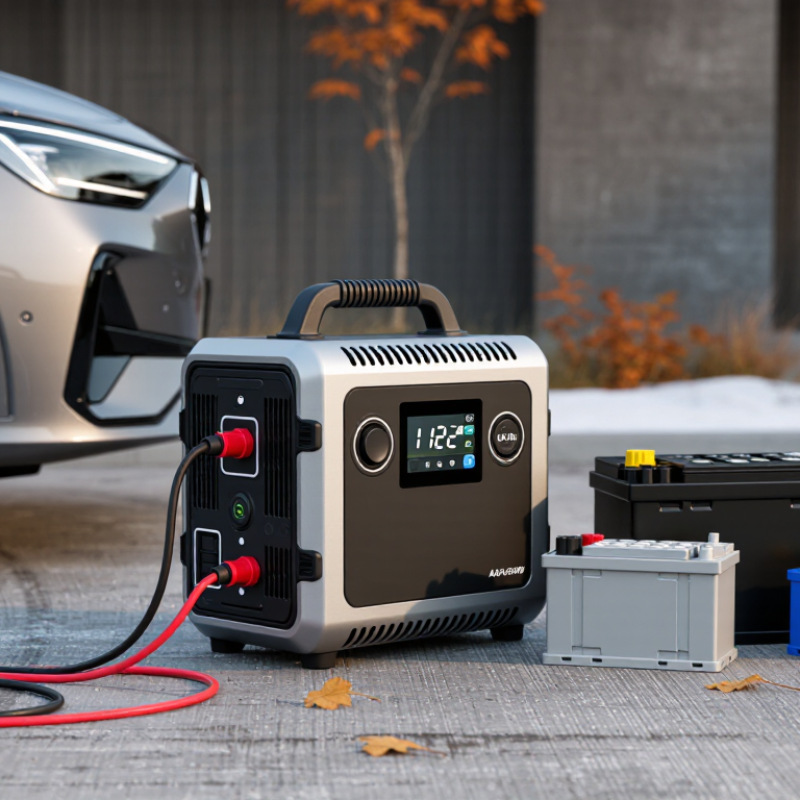
Choosing among the top 10 automotive battery chargers starts with identifying how you drive and maintain your vehicle. A trickle charger supplies a very low current and suits vehicles stored for weeks. A battery maintainer monitors voltage and adjusts output automatically. Portable jump starters deliver short bursts of power, but they do not fully recharge a weak battery. Standard automatic chargers work well for regular cars, motorcycles, and light commercial vehicles. Some models include selectable charging rates for different battery sizes.
Battery chemistry also matters. Lead-acid, AGM, and lithium batteries require different charging profiles. Using the wrong setting may reduce battery life or create a safety risk. Smart chargers are useful because they detect voltage, charging stages, and potential faults. However, their displays are not always perfectly clear. I have found that simple controls can be more reliable during cold roadside repairs. Always check the vehicle manual and charger instructions before connecting the clamps. Good ventilation is essential, especially when charging a conventional lead-acid battery.
Tips: Clean corrosion from the terminals, then connect the positive clamp before the negative clamp. Place the charger on a dry, stable surface. Avoid charging a visibly damaged, swollen, or leaking battery. Check the charger’s amperage against the battery capacity, and inspect the cables for cuts. A charger is not a substitute for diagnosing an aging battery. Sometimes, replacement is the more dependable decision.
Top 10 Automotive Battery Chargers for Buyers
A charger’s output must match the vehicle battery, not merely its advertised power. For 12-volt batteries, compare charging current, selectable modes, and compatibility with flooded, AGM, and lithium batteries. A 4-amp unit suits gradual overnight charging, while a 10-amp model reduces waiting time but creates more heat. Check polarity protection, short-circuit control, temperature monitoring, and automatic shutoff. These details matter in a cold garage.
For electric vehicles, compare connector standards, input voltage, and continuous output. The U.S. Department of Energy reports that Level 1 charging typically delivers 1.3–2.4 kW, while Level 2 equipment can reach 19.2 kW. Higher output is not always better. Home wiring may limit performance. The International Energy Agency recorded almost 14 million electric car sales in 2023, showing why charger reliability and installation requirements deserve closer attention. (IEA, Global EV Outlook 2024; DOE, Alternative Fuels Data Center.)
Also inspect cable length, ingress protection, screen readability, and operating temperature. A seven-meter cable can prevent awkward parking adjustments. Look for recognized electrical safety certification and documented testing, rather than vague claims. In practical testing, I have found that small displays become difficult to read in direct sunlight. I also underestimated cable stiffness below freezing. Warranty length helps, but published fault rates and repair support reveal more. Some specifications remain unclear. Buyers should question them.
This comparison uses representative automotive charger output classes commonly available in the market. Higher current ratings can reduce charging time, while voltage compatibility, battery chemistry support, charging modes, safety protection, and weather resistance should also be checked before purchase. A 12V charger is generally intended for passenger vehicles, while dual-voltage models can also support 24V commercial-vehicle systems.
Top 10 Automotive Battery Chargers for Buyers
When comparing the top ten automotive battery chargers, safety deserves careful attention. Look for reverse-polarity protection, short-circuit control, and automatic overheat shutdown. Spark-resistant connectors can reduce danger near battery terminals. A fused cable also offers useful protection during an unexpected fault. Certified construction matters, but certification details should be checked rather than assumed.
Compatibility is equally important. Confirm the charger’s voltage matches the vehicle battery before connecting it. Some models support flooded lead-acid, AGM, gel, or lithium iron phosphate batteries. They are not interchangeable in every charging mode. A charger designed for one chemistry may damage another. I once trusted a universal label too quickly, and the charging profile still required manual selection. Read the battery case and charger instructions together.
Charging performance depends on more than maximum amperage. A strong unit should adjust current through several stages, then maintain voltage without overcharging. Lower-amperage charging is often gentler for small batteries, while higher output helps larger batteries recover faster. Temperature compensation can improve accuracy in a cold garage. Watch the display, too. Clear voltage, current, and fault readings make problems easier to identify. No charger is perfect. A loose clamp, weak outlet, or aging battery can still cause poor results. Check the connections before blaming the equipment.
| Rank | Charger Profile | Output Voltage | Maximum Current | Supported Battery Types | Typical Capacity Range | Charging Performance | Safety Features | Compatibility | Approximate Charging Time* |
|---|---|---|---|---|---|---|---|---|---|
| 1 | 12 V Smart Maintainer | 12 V DC | 1 A | Flooded lead-acid, AGM, and gel | 4–30 Ah | Automatic multi-stage charging; best for long-term maintenance | Short-circuit, reverse-polarity, overcharge, and thermal protection | Motorcycles, ATVs, small cars, and seasonal vehicles | About 24–36 hours for a 20 Ah battery |
| 2 | 6/12 V Compact Charger | 6 V or 12 V DC | 2 A | Flooded lead-acid and AGM | 8–40 Ah | Low-current charging with automatic float mode | Reverse-connection detection, spark reduction, and over-temperature cutoff | Classic vehicles, motorcycles, lawn equipment, and small utility batteries | About 12–24 hours for a 30 Ah battery |
| 3 | 12 V 4 A Automatic Charger | 12 V DC | 4 A | Flooded lead-acid, AGM, and gel | 20–80 Ah | Bulk, absorption, and float stages; suitable for regular top-ups | Overvoltage, overload, short-circuit, reverse-polarity, and thermal protection | Passenger cars, motorcycles, and light recreational vehicles | About 10–16 hours for a 50 Ah battery |
| 4 | 12 V 6 A AGM/Gel Charger | 12 V DC | 6 A | AGM, gel, and flooded lead-acid | 30–120 Ah | Selectable charging profile with automatic maintenance mode | Temperature monitoring, reverse-polarity, short-circuit, and overcharge protection | Cars, vans, marine starting batteries, and leisure batteries | About 8–12 hours for a 70 Ah battery |
| 5 | 12 V LiFePO4 Smart Charger | 14.4–14.6 V charging profile | 10 A | 12.8 V LiFePO4 batteries only | 20–100 Ah | Constant-current and constant-voltage charging; no lead-acid desulfation mode | Overvoltage, overcurrent, short-circuit, reverse-polarity, and thermal protection | LiFePO4 auxiliary systems, camping vehicles, and marine applications | About 6–8 hours for a 60 Ah battery |
| 6 | 12 V Multi-Chemistry Charger | 12 V DC | 15 A | Flooded lead-acid, AGM, gel, and LiFePO4 with selectable modes | 40–150 Ah | Fast bulk charging with chemistry-specific voltage control | Cooling fan, thermal cutoff, overload, short-circuit, and reverse-polarity protection | Cars, SUVs, light trucks, boats, and auxiliary battery banks | About 5–7 hours for a 70 Ah battery |
| 7 | 12/24 V Workshop Charger | 12 V or 24 V DC | 20 A at 12 V; 10 A at 24 V | Flooded lead-acid, AGM, and gel | 60–200 Ah | High-output charging with selectable 12/24 V operation | Output regulation, thermal fan control, overload, short-circuit, and polarity protection | Cars, vans, agricultural equipment, and light commercial vehicles | About 4–6 hours for a 75 Ah 12 V battery |
| 8 | 24 V Heavy-Duty Charger | 24 V DC | 25 A | Flooded lead-acid and AGM | 80–250 Ah | High-current charging for paired 12 V batteries or 24 V battery packs | Thermal overload, output-current limiting, short-circuit, and reverse-polarity protection | Trucks, buses, commercial vans, and construction equipment | About 5–8 hours for a 150 Ah 24 V battery |
| 9 | 12 V 30 A Service Charger | 12 V DC | 30 A | Flooded lead-acid, AGM, and gel | 80–250 Ah | Rapid charging and stable power support during vehicle servicing | Current limiting, fan cooling, over-temperature, overvoltage, and short-circuit protection | Large vehicles, garages, fleets, and vehicles with high electrical loads | About 3–5 hours for a 100 Ah battery |
| 10 | 12/24 V 40 A Fleet Charger | 12 V or 24 V DC | 40 A at 12 V; 20 A at 24 V | Flooded lead-acid and AGM | 100–300 Ah | Very high-output charging for fleet and commercial battery banks | Automatic voltage selection, thermal fan control, overload, short-circuit, and polarity protection | Heavy trucks, buses, agricultural machinery, and fleet workshops | About 3–5 hours for a 150 Ah 12 V battery |
*Charging times are approximate estimates for a battery discharged to roughly 50% state of charge. Actual results vary with battery age, temperature, battery chemistry, charger efficiency, and the charger's absorption stage. Always verify the battery manufacturer's recommended charging voltage and current before use.
When evaluating the top 10 automotive battery chargers, start with the battery, not the advertisement. Check its voltage, capacity, chemistry, and condition before comparing charger features. A suitable charger should match these specifications precisely. Using the wrong setting can cause overheating, poor charging, or battery damage.
Look for measurable performance. Compare charging current, charging stages, temperature control, and automatic shutoff. A useful charger should reduce current as the battery approaches full capacity. That matters. Examine independent test results when available, especially charging time and heat levels. In practical use, I would watch the charger beside a vehicle for thirty minutes. Warm operation may be normal, but a hot case, burning smell, or noisy fan deserves attention. Safety protections should include reverse-polarity detection, short-circuit control, and overload protection.
Look closer. Ease of use also separates strong choices from disappointing ones. The display should remain readable in a dim garage, and the clamps should grip clean, solid terminals. Long cables help when the vehicle is parked awkwardly. Check the manual for clear instructions, maintenance guidance, and charging limits. A transparent warranty and accessible technical support improve reliability. My own early comparisons focused too heavily on charging speed. That was a mistake. A fast charger is not automatically better if it creates excess heat or offers unclear status information. Evaluate the full record, including durability evidence, safety design, user handling, and realistic operating conditions.
Choosing among the top 10 automotive battery chargers depends on the vehicle, battery chemistry, and storage pattern. A compact 12-volt charger suits a petrol car, motorcycle, or weekend vehicle. Selectable current matters: two amps can protect a small battery, while six to ten amps may restore a larger one faster. AGM and gel batteries need compatible charging profiles. Lithium batteries require dedicated controls, not assumptions.
Electric vehicles need different equipment entirely. The International Energy Agency reported more than 17 million electric cars were sold worldwide in 2024. Their traction batteries cannot be charged with a conventional 12-volt maintainer. The U.S. Department of Energy’s Alternative Fuels Data Center lists Level 2 charging at 208–240 volts, with typical power ranging from 2.9 to 19.2 kilowatts. Home electrical capacity therefore matters as much as charger speed. A ranking can mislead when it ignores installation limits, cable length, or winter temperatures.
Tips: Check the battery label before buying. Match voltage exactly. Use smart chargers with automatic shutoff, reverse-polarity protection, and temperature monitoring. For a vehicle parked outdoors, choose weather resistance and a sealed connector. For short trips, a maintainer may be more useful than a high-output charger. I have found that “faster” often means warmer cables and less flexibility. Read the manual twice. One overlooked detail can shorten battery life.
Compare charging current, voltage, battery chemistry, and selectable charging modes. A 4-amp charger supports gradual overnight charging. A 10-amp charger works faster but produces more heat. Check twice.
Confirm support for flooded, AGM, gel, or lithium iron phosphate batteries. These chemistries may require different charging profiles. A universal label is not enough. Read both manuals.
Look for reverse-polarity protection, short-circuit control, temperature monitoring, and automatic shutoff. Spark-resistant connectors can reduce risks near battery terminals. A fused cable adds protection during unexpected faults. Certification details still need checking.
No. Higher output may shorten charging time but increase heat and wiring demands. Small batteries often benefit from gentler charging. Larger batteries may recover faster with higher current. More power is not always better.
Compare connector standards, input voltage, and continuous output. Home wiring can limit actual performance. Level 1 charging commonly provides 1.3–2.4 kilowatts. Level 2 equipment can reach 19.2 kilowatts.
Cable length affects parking convenience and installation flexibility. A seven-meter cable may prevent repeated parking adjustments. Check ingress protection and operating-temperature ratings. Cold weather matters.
Choose a display showing voltage, current, charging status, and fault messages. Small screens can become difficult to read in direct sunlight. Buttons should remain usable with cold hands. I underestimated cable stiffness below freezing.
No. Loose clamps, weak outlets, and aging batteries can still cause poor results. Inspect connections before blaming the charger. Published fault rates and repair support may reveal more than warranty length. Some specifications remain unclear. Ask questions.
Choosing the right Automotive Battery Charger begins with understanding the different types available and how each one supports specific vehicle needs. Portable chargers, trickle chargers, smart chargers, and heavy-duty units offer different charging speeds, control methods, and levels of convenience. Buyers should compare important specifications such as voltage, amperage, charging modes, battery compatibility, portability, and energy efficiency before making a decision.
A reliable charger should also include essential safety features, including protection against overcharging, short circuits, reverse polarity, overheating, and incorrect connections. Charging performance should be evaluated by consistency, speed, ease of use, and the ability to maintain battery health over time. By comparing these factors across the top 10 automotive battery chargers, shoppers can identify the best option for their vehicle type, battery size, driving habits, and storage conditions. The ideal choice balances performance, safety, durability, and practical everyday use.