Industrial sites cannot afford power plans that look good only on a diagram. A voltage dip can stop a production line, spoil temperature-sensitive materials, or leave pumps idle. Decentralized Industrial Power Supply brings generation and storage closer to the loads that need them. The right design may combine solar, batteries, combined heat and power, fuel cells, or modular generators. The mix depends on the site.
Energy-efficiency expert Amory Lovins is often quoted as saying, “The best energy is the energy we don’t use.” That principle matters here. Reducing waste can shrink equipment needs and improve resilience. Still, no single technology fits every factory. A cold-storage warehouse has different needs from a remote mine or a data-heavy plant. Operators should compare usable output, response time, fuel access, maintenance skills, emissions, and lifecycle cost—not just nameplate capacity. Details matter.
This guide examines seven decentralized power solutions through those practical questions. It considers how each option handles fluctuating loads, planned maintenance, and grid interruptions. It also highlights trade-offs, including space, upfront cost, and the complexity of coordinating multiple systems. Some projects will need a hybrid design; others may be better served by one dependable source. There is no perfect answer, and that is worth admitting. Site measurements and qualified engineering review should shape the final choice.
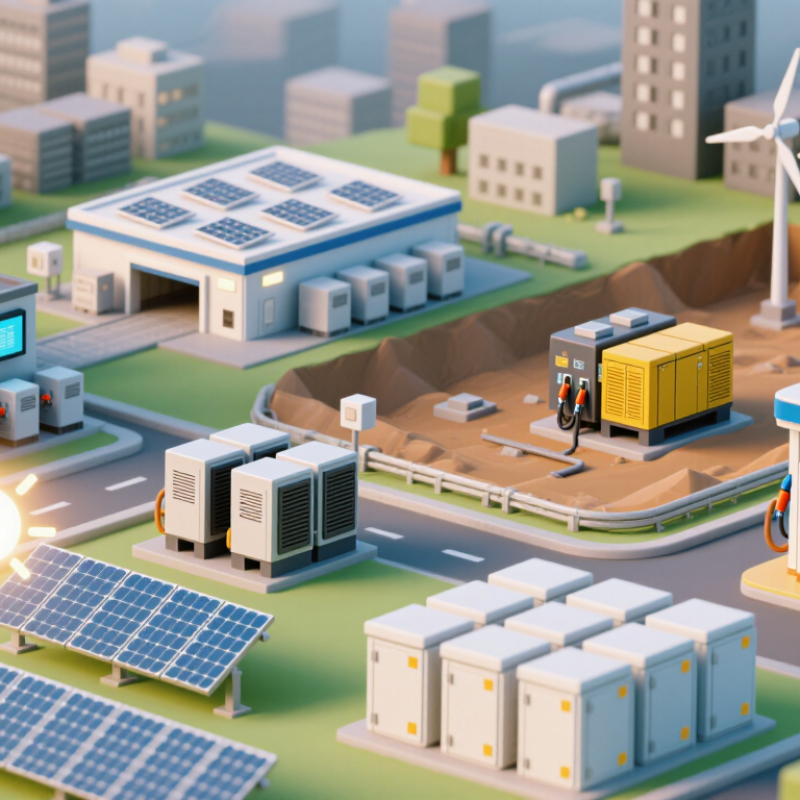
In an industrial setting, decentralized power supply means generating and managing electricity close to where it is used. A plant may combine rooftop solar, a gas-fired generator, batteries, and heat recovery. A local controller balances these sources against changing production loads. It can reduce grid imports during peak periods and, if equipment is designed for it, keep critical systems running during an outage. Then the feeder trips. Pumps, controls, and safety systems need a clear priority order, not just a large battery.
Combined heat and power is useful where boilers and steady electrical loads operate together. The U.S. Department of Energy’s CHP technology fact sheets report total system efficiencies of about 65–80% when recovered heat is put to work, compared with roughly 50% for separate heat and power generation. The International Energy Agency’s Energy Efficiency 2023 report identifies industry as a major share of global energy use, making site-level efficiency consequential. Real performance still depends on whether a plant can use heat year-round. A control screen may show ample stored energy, yet cold weather or a sudden motor start can expose weak assumptions. Engineers should test islanding, fuel availability, protection settings, and restart sequences against actual operating data. One awkward detail: decentralization adds equipment and maintenance tasks, so resilience is designed, not automatic.
Evaluating industrial power solutions starts with the site’s real load profile, not its nameplate rating. Record peak demand, start-up surges, and critical equipment loads across a typical shift. A system that handles average demand may still falter when compressors or pumps start together. Numbers can mislead.
Reliability depends on more than generation capacity. Check how the system responds to component failure, planned maintenance, and sudden changes in demand. Ask for test results, outage records, and clear procedures for restoring service. For remote facilities, spare parts and technician access matter as much as elegant control software. These details are easy to overlook.
Compare lifecycle costs, including installation, fuel or stored-energy replacement, inspections, and eventual equipment renewal. Review safety provisions, emissions data, and compliance documentation against the site’s operating conditions. Monitoring should show useful readings, such as voltage, temperature, and fault history, without requiring specialist interpretation for every alert. I would not treat any single score as decisive; operating data can be incomplete, and site conditions change. A small pilot or witnessed load test can expose gaps before full deployment.
Industrial sites can combine seven decentralized power technologies: solar photovoltaics with batteries, onshore wind, combined heat and power, biogas or biomass generators, fuel cells, small hydro, and geothermal systems. Rooftop solar can serve daytime loads, while batteries cover short evening peaks. Wind may complement solar, but output varies with local weather. Combined heat and power is especially relevant where factories need both electricity and process steam. The U.S. Environmental Protection Agency reports typical CHP total efficiencies of 65–80%, depending on system design and operation.
Biogas can use suitable organic residues, though fuel quality and supply need careful checks. Fuel cells offer quiet, modular generation, but their emissions depend on the fuel and production pathway. Small hydro requires a dependable water resource; geothermal works only where heat is accessible and economical.
No universal fit. IRENA’s Renewable Power Generation Costs in 2023 found that 81% of newly commissioned renewable capacity had lower generation costs than fossil-fuel alternatives. That global finding is useful context, not a factory-level cost guarantee.
Before choosing, engineers should compare hourly load profiles, space, grid conditions, maintenance skills, and backup needs. A mixed system may improve resilience, but integration can be harder than the equipment brochures suggest.
Decentralized industrial power can reduce exposure to grid outages, but its real cost includes more than equipment. Count installation, fuel, maintenance, backup capacity, and the cost of production interruptions. Solar paired with batteries has low operating emissions and predictable daytime output. Its upfront cost and storage needs can rise sharply at sites with limited sunlight or round-the-clock demand.
Wind with storage can supply power beyond sunny hours, though output depends on local wind patterns. Small hydro may deliver steady electricity where water flow is reliable, but suitable sites are limited.
Biomass combined heat and power can use local residues and produce useful heat; fuel supply and air emissions need careful assessment. Natural-gas combined heat and power offers controllable output, but still releases carbon dioxide and depends on fuel availability. Fuel-cell systems can provide steady power, yet costs and emissions vary with the hydrogen or other fuel used.
Modular battery microgrids can support critical loads and smooth variable generation, but batteries do not create energy. They add replacement and recycling considerations. Compare options using site-specific load data, fuel prices, and lifecycle emissions estimates—not headline efficiency alone.
One uncomfortable trade-off remains. A system that looks inexpensive on paper may require costly backup during a long, cloudy week. Check maintenance records, spare-part access, and measured outage performance. A brief power interruption can stop a production line, even when annual reliability figures look strong.
Planning a decentralized industrial power system starts with measured demand, not equipment lists. Start with the load. Record power use at short intervals during normal production, startup, and shift changes. A large motor can create a brief peak that a monthly utility bill hides. Separate critical loads, such as controls and safety systems, from equipment that can pause. Check power quality too; sensitive drives may react badly to voltage dips or harmonics.
Then match local generation, storage, and controllable loads to those patterns. Solar or wind output can vary, while batteries respond quickly but have limited energy reserves. Keep protection, grounding, and synchronization requirements in the design, especially if the system may operate independently from the grid. Plan how operators will restart equipment after an outage, and test that sequence under realistic conditions. Commissioning should include load steps, alarms, and safe transfer between operating modes. A spreadsheet rarely captures every production quirk; one awkward startup sequence can expose a weak assumption. Review the design with site electricians and operators, then revise it before expanding capacity.
A practical comparison of distributed generation and storage options for industrial sites. Suitability depends on the facility’s load profile, location, fuel access, grid conditions, and permitting requirements.
| Solution | Typical performance | Best-fit industrial use | Key integration considerations | Main limitations |
|---|---|---|---|---|
| 1. On-site solar photovoltaic (PV) | Modular generation; output varies with sunlight, season, and system design. No direct fuel use during operation. | Sites with usable roofs, parking canopies, or nearby land and substantial daytime electricity demand. | Assess roof structure, shading, interconnection limits, protection settings, and how generation aligns with the site’s load. Pairing with storage can shift some energy to later hours. | Variable output; does not provide firm power without storage, grid support, or dispatchable generation. |
| 2. On-site wind generation | Output depends strongly on local wind speed, turbulence, hub height, and turbine design; production can vary over time. | Large or remote sites with a verified wind resource, adequate space, and suitable setback and permitting conditions. | Use a site-specific wind assessment. Check wake effects, foundation and access requirements, noise limits, grid protection, and coordination with other generators. | Resource- and location-dependent; construction, permitting, and maintenance access can be challenging. |
| 3. Natural-gas engine combined heat and power (CHP) | Dispatchable electricity with recoverable heat. Overall useful-energy efficiency can be substantially higher when heat is productively used. | Facilities with steady electrical demand and a consistent need for hot water, steam, or process heat. | Size against both electric and thermal loads. Plan for gas supply, exhaust treatment, heat recovery, maintenance, emissions permits, and safe islanding controls. | Depends on fuel availability and price; emissions and carbon impacts must be evaluated for the site. |
| 4. Microturbine CHP | Compact, modular gas-fired generation; electrical efficiency is generally lower than that of larger high-efficiency engines, while heat recovery can improve total fuel utilization. | Sites needing smaller, modular units and a dependable use for recovered heat. | Review fuel pressure and quality, heat-recovery temperature requirements, exhaust emissions, operating hours, and unit redundancy. | Economics are sensitive to fuel cost, operating hours, and the value of recovered heat. |
| 5. Biogas or biomass CHP | Dispatchable generation when a suitable, consistent fuel supply is available; CHP can use recoverable heat on site. | Food processing, wastewater treatment, agriculture, and other facilities with dependable organic residues or biomass supply. | Confirm fuel quantity, moisture and contaminant levels, storage, preprocessing, digesters or boilers, emissions controls, and management of digestate or ash. | Fuel logistics and feedstock quality can be complex; output depends on a reliable supply chain and suitable permits. |
| 6. Fuel-cell generation | Electrochemical electricity generation; efficiency and emissions depend on fuel, fuel-cell type, and system configuration. Some systems can provide useful heat. | Sites seeking quiet, modular on-site generation with access to an appropriate fuel and a suitable operating profile. | Assess fuel availability and conditioning, electrical conversion, thermal integration, ventilation, maintenance arrangements, and backup strategy. | Capital cost, fuel infrastructure, and technology-specific service requirements can affect project feasibility. |
| 7. Battery energy storage system (BESS) | Stores electricity for later use; it is not a primary energy source. Commercial systems commonly achieve high, but not complete, round-trip efficiency; actual performance varies by design and operating conditions. | Peak management, renewable-energy shifting, short-duration backup, ramp-rate support, and improved control of site loads. | Define power and energy requirements separately. Design for thermal management, fire safety, battery controls, inverter functions, protection coordination, and end-of-life planning. | Duration is limited by installed energy capacity; storage requires charging energy and has conversion losses. |
Planning note: Treat performance as project-specific rather than guaranteed. Begin with interval load data, critical-load mapping, resilience targets, fuel and renewable-resource studies, and an interconnection review. A coordinated system may combine several options with controls that manage dispatch, protection, and safe grid-connected or islanded operation.
It means generating and managing electricity near the equipment that uses it. A plant might combine rooftop solar, batteries, a generator, and recovered heat.
A controller can prioritize pumps, controls, and safety systems when grid power fails. A large battery alone is not enough. Priorities matter.
Short-interval measurements reveal peaks during startup and shift changes. A large motor may draw a brief surge hidden by a monthly bill. Start with the load.
Separate essential loads, such as safety controls, from equipment that can pause. Write down the restart order and test it with operators.
Batteries respond quickly to sudden demand, but their stored energy is limited. Cold weather or a motor starting unexpectedly can challenge the plan.
It can suit sites with steady electrical demand and boilers that can use recovered heat year-round. Total efficiency may reach about 65–80% when that heat is useful.
Test islanding, fuel availability, grounding, protection settings, and synchronization. Include realistic load changes and safe transfer between operating modes.
Test alarms, load steps, and outage restart sequences under realistic conditions. A spreadsheet can miss a troublesome startup. Review and revise the design before expansion.
Decentralized Industrial Power Supply gives factories and other industrial facilities ways to generate, store, and manage electricity closer to where it is used. This article explains how local energy resources and control systems can support operations, reduce dependence on a single centralized source, and provide greater flexibility. It also outlines key evaluation criteria, including capacity, reliability, operating costs, maintenance needs, scalability, and compatibility with existing equipment.
Seven technology options are examined, from on-site renewable generation and energy storage to combined heat and power and microgrids. Their costs, resilience, and environmental impacts are compared to help readers understand the trade-offs involved. The article concludes with practical guidance for planning and integrating a decentralized system, including assessing energy demand, selecting suitable technologies, coordinating controls, and preparing for changing operational needs.