A railway power system rarely offers a gentle place for electronics. Voltage can fluctuate, cabinets can run hot, and vibration continues long after installation. Choosing a Railway DC DC Converter therefore involves more than matching input and output voltage. The right unit must fit its electrical environment and the realities of service.
Start with the supply range, output load, and isolation requirements. Check the converter’s behavior during startup, brief interruptions, and changing loads. A unit rated for the nominal voltage may still be unsuitable when the actual supply varies. Look closely at operating temperature, vibration resistance, electromagnetic compatibility, and protection against overload or short circuits. These details matter inside a crowded cabinet, where airflow may be limited and access for maintenance can be awkward.
Specifications are useful. Testing is better. Compare the datasheet with the equipment’s required standards, and ask manufacturers for clear test reports, installation guidance, and evidence of consistent production quality. Review efficiency and thermal performance at the expected load, not only under ideal conditions. Consider service life, available support, and replacement options too. A small difference in price can look attractive; downtime may tell another story.
There is no universal best choice. The details can be easy to overlook. Even a technically compliant converter may perform poorly if its wiring, cooling, or mounting is wrong. This guide explains how to assess key requirements, compare candidate models, and identify questions worth asking before purchase. Some trade-offs remain. A careful selection process makes them visible before the converter enters service.
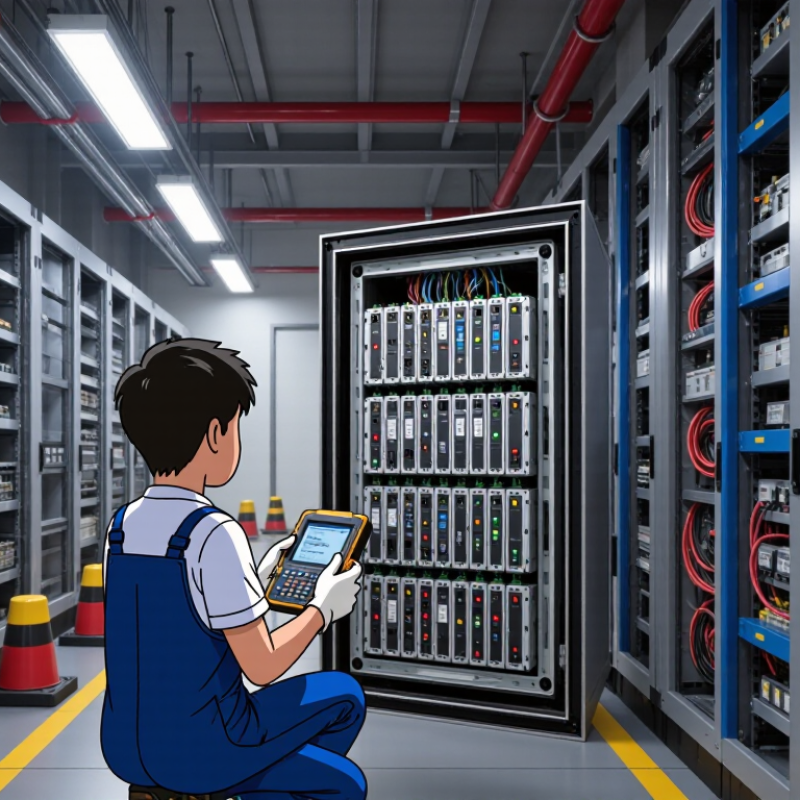
A railway DC-DC converter is not merely a voltage reducer. It stabilizes power for control units, communication systems, sensors, lighting, and protection circuits. Define its role before selecting ratings. Is it feeding safety-related equipment, charging batteries, or isolating two electrical domains? Each function changes the required output accuracy, redundancy, isolation, and fault response.
Operating conditions are equally important. Railway supply networks face voltage swings, regenerative transients, vibration, dust, humidity, and rapid temperature changes. EN 50155 defines environmental and electrical expectations for electronic equipment, while IEC 61373 addresses shock and vibration testing. The IEA’s The Future of Rail report states that rail carries about 8% of global passenger activity and 7% of freight tonne-kilometres, while using only around 2% of transport energy. That efficiency depends on dependable onboard electronics. Check the real input range, peak load, startup current, cooling method, and allowable interruption time. A converter that works on a laboratory bench may fail inside a crowded, poorly ventilated cabinet.
Tips: Build a load profile from actual operation, not nominal labels. Record cold starts, braking events, battery aging, and simultaneous loads. Specify isolation voltage and EMC performance early. A small omission here can become a major maintenance problem.
Do not select efficiency alone. A high-efficiency unit may still be unsuitable if it lacks thermal margin or surge tolerance. The difficult part is accepting imperfect field data. Measurements may be incomplete, and assumptions should be documented, tested, and reviewed before approval.
| Selection Dimension | Role or Operating Condition | What to Check When Selecting | Practical Design Guidance |
|---|---|---|---|
| Power-conversion role | Converts a railway DC supply into a regulated DC output for control electronics, communications, sensors, or other onboard equipment. | Confirm the required output voltage, output-current range, load behavior, and whether the output must remain regulated during input changes. | Define the loads and their operating states first. Include startup, normal operation, standby, and any short-duration peak demand. |
| Input supply | Railway systems may use different nominal DC battery or auxiliary-bus voltages, such as 24 V, 48 V, 72 V, 96 V, or 110 V. | Check the actual nominal voltage and the minimum, maximum, ripple, interruption, and transient conditions specified for the installation. | Do not select a converter from nominal voltage alone. Its permitted input range must cover the supply conditions at the converter terminals. |
| Output requirements | The converter supplies a stable voltage to equipment whose operation may be sensitive to undervoltage, overvoltage, or excessive ripple. | Verify output voltage tolerance, ripple and noise limits, load regulation, transient response, and required output power. | Allow for load growth and startup current where applicable. Check the manufacturer’s derating curves at the intended input and temperature. |
| Isolation and grounding | Galvanic isolation can separate input and output circuits and help meet system insulation and grounding requirements. | Determine the required isolation voltage, insulation coordination, creepage and clearance, and whether the output is floating or referenced to chassis. | Set isolation requirements from the system design and applicable railway standards; an isolation rating by itself does not establish system compliance. |
| Temperature and location | Conditions differ between protected equipment cabinets and exposed or poorly ventilated locations. Ambient temperature and self-heating affect service life and available power. | Identify the equipment’s location, minimum and maximum ambient temperatures, airflow, mounting arrangement, and nearby heat sources. | Use the applicable temperature class and installation conditions defined for the project. Check output-power derating at the highest expected temperature. |
| Vibration and shock | Rail vehicles experience mechanical vibration and shock that can affect components, connectors, solder joints, and mounting hardware. | Check that the converter and its mounting arrangement are suitable for the vehicle location and the vibration and shock requirements of the project. | Consider connector retention, cable strain relief, fastening method, and the mechanical qualification evidence for the intended installation. |
| Electromagnetic compatibility | Converters can both emit electrical noise and be affected by disturbances from traction systems, switching equipment, and other onboard electronics. | Review conducted and radiated emissions, immunity, input filtering, wiring layout, bonding, and the applicable railway EMC requirements. | Assess the converter as part of the complete installation, including cable length, shielding, grounding, and nearby equipment. |
| Protection and fault behavior | Input faults, overloads, short circuits, or excessive temperature can disrupt the supplied equipment or damage the power system. | Check available protection features, current-limit behavior, thermal protection, restart behavior, and coordination with upstream fuses or breakers. | Confirm that a fault will not cause unacceptable effects on other loads and that recovery behavior meets the system’s operating requirements. |
| Reliability and service life | Railway equipment may need to operate continuously and remain maintainable throughout a long vehicle service life. | Review expected operating duty, component temperature, cooling method, environmental exposure, diagnostics, and maintenance strategy. | Compare reliability and lifetime data under conditions relevant to the installation, rather than relying only on nominal ratings. |
| Standards and documentation | Railway projects can require evidence covering electronic equipment, EMC, insulation coordination, and fire behavior of materials. | Identify the standards and editions specified by the project, including relevant parts of EN 50155, EN 50121-3-2, EN 50124-1, and EN 45545-2 where applicable. | Confirm scope, test conditions, and documentation with the project requirements. The cited standards address different aspects and are not interchangeable. |
| Note: Voltage examples and selection checks are general guidance, not a specification for a particular vehicle. Actual limits, qualification classes, and required standards depend on the railway system, installation location, and project documentation. | |||
It may supply control units, communication equipment, sensors, lighting, or protection circuits. Define each load before choosing ratings.
Record actual loads during cold starts, braking, and simultaneous operation. Include battery aging and startup current. Field data gets messy.
Railway supply voltage can fluctuate. Compare its real operating range with measured supply conditions, including brief transients.
Check temperature changes, cabinet airflow, dust, humidity, vibration, shock, and altitude. A crowded cabinet can run hotter than expected.
No. Review thermal margin, overload behavior, short-circuit protection, and derating curves. Peak loads may exceed normal readings.
Electrical noise can disrupt nearby communication, signaling, or control equipment. Request test results for emissions and immunity.
Look for traceable safety and environmental test reports. Check test limits, conditions, revision dates, and laboratory details.
Identify which electrical domains need separation and what equipment they serve. Specify isolation voltage early; assumptions can be wrong.
Choosing the right Railway DC DC Converter requires a clear understanding of its role, operating conditions, and installation environment. Begin by defining whether the converter will support control systems, communication equipment, signaling devices, lighting, or other onboard and trackside applications. Then confirm the required input voltage range, output voltage, power capacity, load characteristics, and any needs for voltage isolation or redundancy. These factors help ensure stable operation under fluctuations, vibration, temperature changes, and electrical transients.
Safety and reliability are equally important. The selected converter should meet applicable railway safety, EMC, insulation, surge, fire, and environmental requirements. Compare available topologies by efficiency, thermal performance, size, maintainability, and protection against overvoltage, overcurrent, short circuits, and overheating. Finally, evaluate the manufacturer’s engineering capability, testing procedures, quality control, technical support, and experience with long-term railway applications. Reviewing service life data, environmental test results, warranty terms, and field performance can help confirm that the Railway DC DC Converter will deliver dependable operation throughout its intended lifecycle.