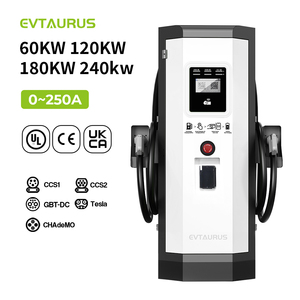
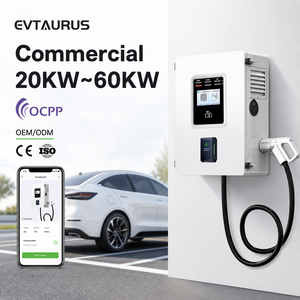
Engineered with soft-switching zero-voltage topologies for high-density, low-loss power distribution across New Zealand commercial, industrial, and fleet applications.
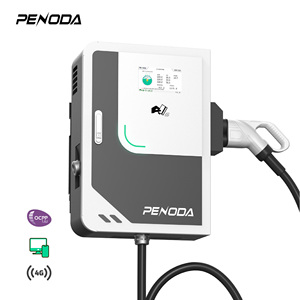
As New Zealand accelerates its electrification journey across commercial transportation, agricultural processing, marine networks, and distributed renewable energy grids, traditional hard-switched pulse-width modulation (PWM) power conversion architecture faces severe thermal and operational limitations. Resonant Converters—specifically LLC and bi-directional CLLC topologies—represent the gold standard in ultra-high-efficiency DC conversion by replacing brute-force hard switching with soft-switching mechanisms: Zero Voltage Switching (ZVS) and Zero Current Switching (ZCS).
In high-power direct current (DC) EV charging stations operating from 30kW up to 240kW, as well as industrial DC/DC conversion modules operating at input voltages up to 900V DC, switching power losses account for over 60% of total internal heat generation in legacy designs. By leveraging an LC or LLC resonant tank operating near resonant frequency, the power transistors switch states precisely when the voltage across or current through the device is zero. This drastic reduction in electromagnetic interference (EMI) and thermal stress enables unprecedented switching frequencies exceeding 150kHz to 300kHz, allowing for compact planar magnetics and reducing magnetics volume by over 40%.
For New Zealand system integrators, electrical engineers, and network operators, selecting the right converter topology is fundamental to ensuring long-term system efficiency, grid compliance under AS/NZS standards, and low total cost of ownership (TCO).
| Engineering Metric | LLC / CLLC Resonant Converter | Standard Hard-Switched PWM Converter | Operational Impact for NZ Projects |
|---|---|---|---|
| Switching Topology | Soft-Switching (ZVS at turn-on, ZCS at turn-off) | Hard-Switching (High overlap voltage/current) | Eliminates primary switching dissipation spikes. |
| Peak Energy Efficiency | 97.5% - 98.6% Conversion Efficiency | 89.0% - 92.5% Conversion Efficiency | Saves megawatt-hours annually across fleet networks. |
| Electromagnetic Noise (EMI) | Ultra-low dV/dt & dI/dt noise emission profile | High harmonic distortion & high dV/dt noise | Easier compliance with AS/NZS 61000 EMC standards. |
| Thermal Dissipation & Cooling | Low heat generation, suitable for Contact Cooling / Potted housings | High localized heat, requires heavy forced liquid or fan air cooling | Prevents premature failure in dust/moisture-laden environments. |
| Power Density (kW/L) | High (3.5 - 6.0 kW per Litre using Planar Transformers) | Low (1.0 - 2.0 kW per Litre using bulky toroidal cores) | Enables compact wallbox chargers & space-saving cabinets. |
| Bi-directional V2G / V2X | Native support via symmetrical CLLC resonant tanks | Complex dual-stage active topologies required | Prepares New Zealand for Vehicle-to-Grid energy arbitrage. |
An LLC resonant converter consists of three reactive elements: a resonant inductor ($L_r$), a magnetizing inductor ($L_m$), and a resonant capacitor ($C_r$). The dynamic gain characteristics of the resonant network allow voltage transformation over wide variation in input DC bus voltage and output battery levels—such as transitioning seamlessly between 400V legacy battery architectures and modern 800V/900V passenger and commercial electric vehicle platforms.
When operating above the resonant frequency ($f_0$), the resonant tank input impedance is inductive, ensuring that the primary-side MOSFET switches turn on with zero voltage. This completely eliminates capacitive turn-on losses and dampens high-frequency ringing on the primary switching node, preventing severe high-frequency radiated emissions that could otherwise interfere with delicate industrial control telemetry, CAN bus links, or microgrid monitoring devices commonly deployed across New Zealand energy grids.
From the high-humidity coastal ports of Tauranga to the vast agricultural regions of Canterbury and Waikato, our resonant conversion solutions are engineered to withstand New Zealand's unique climatic and electrical challenges.
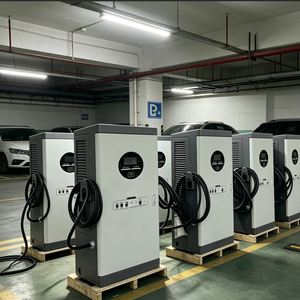
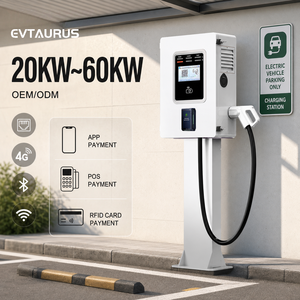
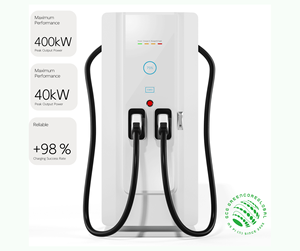
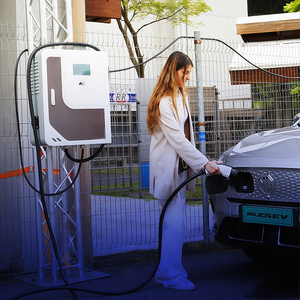
Deploying 30kW to 240kW DC fast-charging stations across major transit corridors (SH1 from Auckland to Wellington and Christchurch to Dunedin). Resonant converters maintain sub-3% harmonic distortion and 98% efficiency, mitigating phase imbalance issues on rural SWER (Single-Wire Earth Return) and distribution lines managed by Orion, Vector, and Powerco.
New Zealand's agricultural sector demands rugged, high-reliability power conversion. Fully potted industrial power supplies and DC/DC resonant converters deliver isolated 24V/48V control logic directly inside dairy processing units (Waikato, Taranaki) exposed to intensive daily washdowns, airborne particulate matter, and ambient moisture.
Coastal and maritime electrification in ports like Lyttelton and Auckland requires galvanic isolation and marine-grade corrosion defense. Resonant converters featuring potted contact-cooling eliminate salt-air ingestion into delicate electrical enclosures, guaranteeing operational longevity for tugboat chargers and crane auxiliary power units.
Heavy machinery operating in remote South Island forestry sites demands shock-and-vibration-proof power electronics. Our DVCx3 and high-voltage DVCHx3 resonant converters (up to 900V input) convert traction battery energy into stabilized low-voltage power with active CAN bus (SAE J1939) monitoring.
Integrating customer-side energy storage with New Zealand's dominant hydro power grid requires high-speed dynamic control. Bi-directional CLLC resonant converters allow seamless energy handshakes between local solar/hydro arrays, stationary battery storage, and EV loads with sub-millisecond dynamic response.
Empowering local NZ manufacturing lines with automated electrical end-of-line test systems. Driven by proprietary DTS test software, our custom benches deliver precision voltage/current profiling, insulation breakdown checks, and functional CAN verification on multi-variant production batches.
Combining over 35 years of German power-electronics engineering with localized distribution and technical service tailored to the New Zealand market.

Unlike suppliers who outsource manufacturing to third-party contract assemblers, our entire development and manufacturing pipeline—including SMD/THT printed circuit board assembly, custom planar transformer winding, full polyurethane vacuum potting, and automated stress testing—occurs entirely under one roof.
This vertical integration ensures that every resonant power supply and charger unit destined for New Zealand maintains rigorous quality control, full component traceability, and long-term repairability.

High-power electronics deployed across New Zealand face varied environmental challenges, from coastal salt air to dust-laden agricultural sheds. Our converter families utilize planar magnetics bonded directly to contact-cooled aluminium cold-plates.
By eliminating internal liquid coolant pipes and forced-air fans, we eliminate the primary points of mechanical failure in traditional converters, providing IP65/IP67 sealed operation with fanless thermal dissipation.

Modern industrial energy networks require real-time visibility. All our resonant converters and charging systems feature parameterizable CAN bus (CANopen, SAE J1939) and Ethernet interfaces connected to the DC-Connect software architecture.
Furthermore, our in-house DTS (Deutronic Test Software) platform powers custom automated end-of-line test benches, guaranteeing that every unit shipped to New Zealand meets strict electrical, safety, and compliance parameters before installation.
New Zealand's energy landscape is defined by its target of achieving 100% renewable electricity generation by 2030, coupled with rapid adoption of heavy electric vehicle fleets (trucks, buses, agricultural machinery) encouraged by the Energy Efficiency and Conservation Authority (EECA) funding programs.
All grid-connected DC converters and EV chargers must satisfy rigorous Electromagnetic Compatibility (EMC) regulations under AS/NZS 61000 standards. Our resonant converter designs natively damp switching harmonics, preventing voltage flicker and high-frequency harmonics on local distribution lines.
Service calls in regional New Zealand (e.g., West Coast, Gisborne) carry high logistics costs. Deploying fanless, fully potted resonant converters reduces preventive maintenance intervals, eliminating fan filter replacements and liquid coolant flushes over a 15-year service lifecycle.
Consult with our senior power-electronics engineers to select, configure, or custom-design high-efficiency resonant converters, DC fast chargers, or automated test systems tailored to your New Zealand installation.
Get Catalog