
Engineered with planar magnetics, contact/liquid cooling topologies, and integrated CAN SAE J1939 communication capabilities for seamless deployment in hydrogen fuel cell power systems.
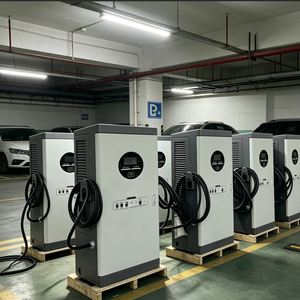
Industrial-grade fast charging power stack engineered for fuel cell hybrid microgrids and commercial vehicle depots in high ambient environments.
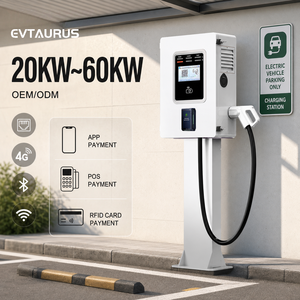
Multi-protocol commercial charging unit featuring multi-variant wide voltage output (200V-900V DC) and dynamic load distribution.
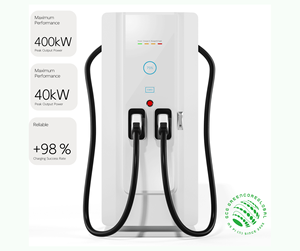
OCPP 1.6J compliant heavy-duty station certified for continuous zero-emission public transport hub charging operations.
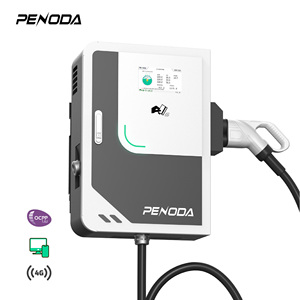
Compact form-factor wall-mounted converter ideal for hydrogen fuel cell secondary battery buffering systems.
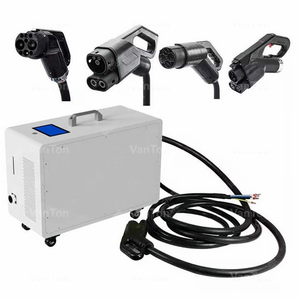
Rugged, field-deployable mobile fast charger designed for remote site hydrogen generator auxiliary power testing.
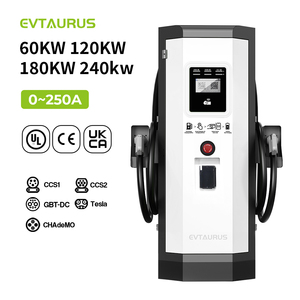
Scalable power architecture featuring parallel hot-swappable converter blocks engineered for zero downtime industrial plants.
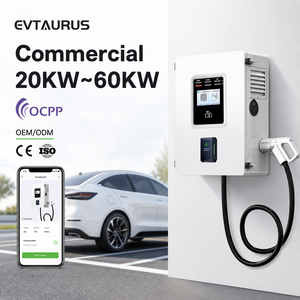
IP55 rated contact-cooled power conversion unit optimized for space-constrained machine rooms and marine platforms.
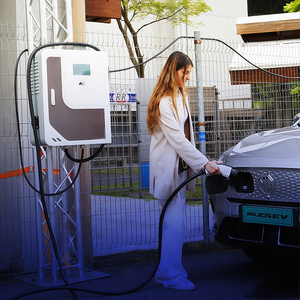
Advanced planar transformer DC/DC platform offering wide input tolerance, minimal ripple voltage, and CAN bus integration.
An in-depth technical analysis on matching dynamic Proton Exchange Membrane (PEM) output characteristics with high-voltage DC transport buses in arid and high-demand energy ecosystems.
Israel's rapid transition toward a decentralized clean-tech power structure has accelerated demand for ultra-reliable Fuel Cell DC DC Converters. As hydrogen fuel cell systems feature highly variable output voltages—dropping significantly as electrical load increases—a specialized bidirectional boost DC/DC converter is required to match the stringent voltage demands of modern 400V and 800V DC energy storage buses.
Partnering with China’s premier fuel cell power electronics manufacturer provides Israeli system integrators with unparalleled technical advantages: military-grade IP67/IP69K encapsulation, wide-temperature thermal tolerance, planar magnetic transformer topologies, and competitive production scales backed by rigorous testing systems.

Our OEM manufacturing facility combines German-engineered topological precision with high-volume manufacturing capabilities to deliver uncompromised reliability.
Custom power electronics tailored specifically to overcome Israel’s distinct environmental, grid, and operational challenges.
In high-ambient desert installations where summer temperatures routinely surpass 45°C, solar-hydrogen microgrids rely on our contact-cooled contact-potted DC/DC converters. Designed without prone-to-failure internal fans, these units withstand intense thermal stress, airborne dust, and extreme diurnal temperature shifts while maintaining dynamic grid stabilization.
Maritime logistics centers in Haifa and Ashdod are aggressively transitioning Automated Guided Vehicles (AGVs), straddle carriers, and yard tractors to zero-emission hydrogen fuel cells. Our high-power density planar converters integrate seamlessly into vehicle chassis, providing stable low-voltage 24V/12V auxiliary power alongside 600V main traction boost drive control.
Urban bus networks in the densely populated Gush Dan metropolis require rapid transient response times to manage stop-and-go acceleration dynamics. Our bidirectional fuel cell DC/DC converters manage power flow between fuel cell stacks and supercapacitor/lithium battery hybrid systems with sub-millisecond control loop bandwidth.
Under the Israeli Ministry of Energy’s 2030 Sustainable Energy Plan, Israel is positioning itself as a regional hub for hydrogen technology innovation and production. The national strategy highlights local decarbonization across heavy transport, glass and chemical manufacturing, and emergency backup infrastructure for critical facilities.
Key market drivers currently shaping power electronics procurement in Israel include:

Combining German technology legacy with China's agile, high-volume manufacturing capabilities to deliver uncompromised value, customizability, and scale.
From Surface Mount Technology (SMT) and Through-Hole Technology (THT) PCB assembly to high-voltage magnetic winding, aluminum housing CNC machining, and thermal potting—100% of production occurs in-house under strict IATF 16949 and ISO 9001 quality standards.
By substituting traditional wire-wound transformers with planar magnetics integrated directly into multi-layer PCBs, our fuel cell DC/DC converters achieve high power densities exceeding 3.5 kW/L, enabling ultra-low profile chassis installation.
Every single fuel cell converter manufactured in our facility undergoes 100% automated End-of-Line (EOL) testing powered by proprietary DTS diagnostic software. Full load burn-in thermal imaging reports are compiled and shipped with every unit.

We recognize that standard off-the-shelf power converters rarely fit specialized fuel cell projects. Whether your system requires customized software protocol mapping (e.g., tailored CAN identifiers), specialized mechanical mounting plates, or high-voltage potting for submersion resilience, our technical team provides rapid prototyping and hardware adaptation.
Our OEM services include full system co-engineering, custom PCB layouts, conformal coating options for coastal corrosion defense, and lifecycle after-sales support managed directly by experienced application engineers.
Contact UsAddressing engineering, regulatory compliance, thermal performance, and logistics questions common to procurement managers in Israel.
Our fuel cell converters feature a contact-cooling baseplate designed for direct thermal mounting onto a cold plate or external aluminum heatsink. Combined with high-efficiency Silicon Carbide (SiC) power switches operating at low switching losses and full IP67 polyurethane potting, our units deliver continuous full rated power up to +60°C baseplate temperature before entering gentle thermal derating.
Yes. All standard fuel cell DC/DC converters and DC charging systems carry full CE, RoHS, and IEC 61851 / IEC 62109 certifications. We routinely provide full test reports and technical construction files required by Israeli importers to streamline SII customs clearance and local electrical safety approval.
Our fuel cell converter portfolio covers low input voltage platforms (DVC series starting from 18V-100V DC) up to high voltage platforms (DVCH series operating up to 900V DC). Custom wide-range input ratios (such as 1:5 step-up) can be parameterised specifically to prevent stack starvation during transient step-load events.
Yes. Our in-house firmware development team configures software parameters—including CAN baud rates (250kbps, 500kbps, 1Mbps), Node IDs, heartbeats, and proprietary J1939 PGN arrays—prior to shipment. On-site or remote firmware flashes are also supported via standard CAN interfaces.
Standard OEM converter platforms are produced with a 4-to-6 week factory lead time. Air freight shipments to Ben Gurion International Airport (TLV) take 3-5 business days, while ocean freight shipments to Haifa or Ashdod ports average 22-28 days. Express engineering sample shipments are expedited via courier service.
We provide a standard 24-month manufacturer warranty with optional extensions up to 5 years for industrial microgrid projects. In the rare event of a component issue, our application engineering team provides immediate remote diagnostics and dispatches replacement modules directly from stock.
Consult directly with our power electronics application team. Send us your system specs—voltage ranges, power rating, cooling constraints, and target deployment timeline—for a detailed engineering quotation.
Contact Us