
Certified modular power converter topologies engineered for robust operational performance across Irish commercial, fleet, and industrial grid environments.
Ireland’s transition toward net-zero emissions, governed by the Climate Action Plan 2024/2025 and enforced by regulatory mandates from the Sustainable Energy Authority of Ireland (SEAI), has rapidly transformed the demands placed on local power conversion infrastructure. With target goals of achieving up to 80% renewable electricity generation—primarily driven by onshore and offshore wind energy—the Irish electrical grid, managed by EirGrid and operated by ESB Networks, faces unprecedented phase volatility and capacity constraints.
Consequently, procurement managers, system integrators, and electrical engineers across Ireland’s key economic hubs—from the biopharma corridors in Cork and Galway to the data center clusters around Greater Dublin—are steering away from legacy monolithic power converters. Instead, technical preferences have shifted overwhelmingly toward high-density modular power converters and DC fast-charging topologies.
Key Technical Shift: Modular power architectures allow Irish industrial operators to scale system capacity in granular 15kW to 40kW increments while providing hot-swappable N+1 redundancy. This mitigates operational downtime risks during severe Atlantic weather events or localized grid load shedding.
ESB Network grid capacity constraints in Dublin and regional industrial parks require converters with active power factor correction (PFC > 0.99) and integrated energy storage interfaces to prevent heavy harmonic distortion.
Ireland’s high atmospheric salt mist content, relentless precipitation, and ambient humidity require power electronics built with fully potted magnetics, contact cooling, and IP55/IP65 sealed enclosures.
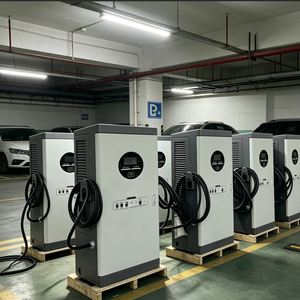
Logistics hubs along the M50, M4, and M8 corridors are upgrading depot power systems to support high-power DC fast charging for heavy-duty commercial EVs and industrial transport fleets.
To ensure seamless interconnectivity with Irish low-voltage and medium-voltage distribution systems, modular converters exported to Ireland must strictly conform to European and local technical frameworks:
| Standard / Regulation | Technical Requirement Scope | Impact on Modular Converter Selection |
|---|---|---|
| EN 50549-1 / EN 50549-2 | Requirements for generating plants connected in parallel with distribution networks. | Mandates automated anti-islanding protection, frequency response ride-through, and adjustable active/reactive power control. |
| IEC 61851-23 / -24 | DC electric vehicle charging station safety, communication, and power transfer standards. | Ensures interoperability between modular power converter modules and vehicle battery management systems (BMS). |
| IS EN 60529 (IP Ratings) | Degrees of protection provided by enclosures against water and dust ingress. | Requires minimum IP54 for indoor industrial spaces and IP55 to IP65 with C4/C5 anti-corrosion coating for outdoor coastal deployments. |
| CE & UKCA Directives | EMC Directive 2014/30/EU and Low Voltage Directive 2014/35/EU compliance. | Guarantees low total harmonic distortion (THD < 5%) to protect sensitive industrial electronics from voltage spikes. |
Evaluating international manufacturers and export suppliers capable of fulfilling Ireland’s stringent industrial power specifications requires assessing engineering depth, topology innovation, component quality, and localized technical support capability. Below is an authoritative analysis of the top 10 global manufacturers and exporters supplying modular power conversion solutions into the Irish market.
Specialty: German power electronics engineering, automotive end-of-line battery chargers, high-voltage DC/DC converters (up to 900V input), and potted industrial power supplies.
Key Advantage: 35+ years of R&D heritage with complete in-house SMT/THT PCB assembly, contact cooling topology (eliminating fan failure points), and CAN-bus/SAE J1939 automation capabilities ideal for harsh Irish industrial sites.
Specialty: Global power management solutions, modular server power supplies, and commercial DC fast-charging converter modules.
Key Advantage: High conversion efficiency (up to 97.5%) and broad distribution networks across Europe, offering scalable 30kW rack-mounted modules for EV infrastructure.
Specialty: FusionSolar microgrid converters, smart string energy storage converters, and modular DC charging power units.
Key Advantage: Advanced AI-driven thermal management and digital twin telemetry integration suitable for large-scale utility storage projects across Ireland.
Specialty: Heavy industrial power supplies, medium-voltage modular converters, and rail transport electrification modules.
Key Advantage: Deep integration with European grid codes and broad compliance certification for heavy infrastructure and rail power lines in Ireland.
Specialty: Industrial rectifiers, modular DC sub-stations, and high-power EV charging infrastructure (Terra series).
Key Advantage: Extensive local Irish engineering service support and proven track record in high-reliability marine and commercial building microgrids.
Specialty: Industrial UPS systems, bi-directional AC/DC modular converters, and continuous power solutions for critical process industries.
Key Advantage: High-tolerance fault isolation systems designed to protect sensitive biopharma manufacturing plants in Cork and Shannon from grid brownouts.
Specialty: Programmable AC/DC & DC/DC power modules, high-density DIN rail power supplies, and medical-grade power converters.
Key Advantage: Precision voltage output control and ultra-low electrical noise figures, ideal for high-tech manufacturing cleanrooms in Galway.
Specialty: Active Power Filters (APF), Static Var Generators (SVG), and modular bi-directional energy storage converters.
Key Advantage: Cost-effective modular power modules optimized for commercial energy management, harmonic mitigation, and microgrid peak shaving.
Specialty: Ultra-high-density Factorized Power Architecture (FPA), chip-scale DC/DC converters, and defense/aerospace power systems.
Key Advantage: Industry-leading volumetric power density for space-constrained onboard vehicle conversion and advanced robotic AGV platforms.
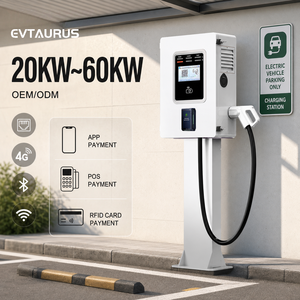
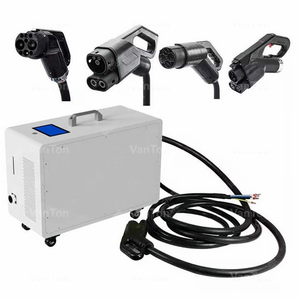
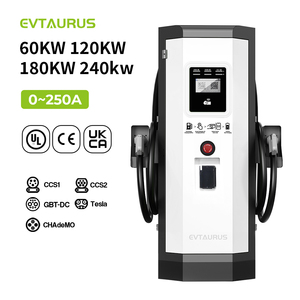
Specialty: Export-grade modular EV chargers, portable rescue DC converters, and versatile wallbox power conversion platforms.
Key Advantage: Flexible OEM customization options, multi-standard charging interface support (CCS1/CCS2/GB-T), and competitive lead times for Irish distributors.
Modular converters exported to Ireland must perform flawlessly under localized operating conditions. Below are four key deployment scenarios illustrating how advanced modular converter technology resolves specific engineering challenges faced by Irish enterprises.
Location Context: Ringaskiddy & Little Island Industrial Estate, Co. Cork
Engineering Challenge: Pharmaceutical manufacturing cleanrooms require uninterrupted DC power supplies for process automation, continuous batch control, and sensitive environmental monitoring. Voltage sags on the 400V 3-phase grid can lead to batch losses running into millions of Euros.
Modular Solution: Deploying contact-cooled, potted modular DC/DC converters with dual-redundant inputs and wide operating input ranges (18V to 900V DC). The absence of internal cooling fans prevents air turbulence and particle dispersal within sensitive cleanroom enclosures, while hot-swappable sub-modules ensure continuous process uptime during routine servicing.

Location Context: M50 Logistics Parks & Port of Dublin Freight Hubs
Engineering Challenge: Logistics operators electrifying urban delivery vans and heavy trucks face strict ESB maximum import capacity (MIC) limits. Traditional high-power fixed-block chargers overload local substation transformers during peak fleet turnaround times.
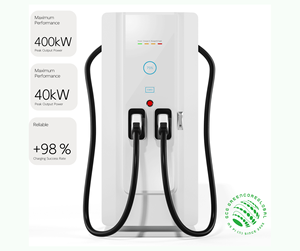
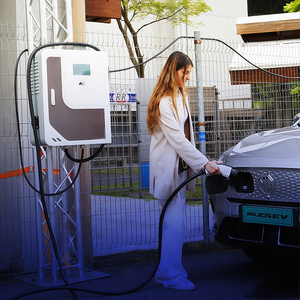
Modular Solution: Installing high-power modular DC charger stations equipped with 30kW SiC converter sub-modules and dynamic power matrix software. System power automatically shifts between charging guns based on connected vehicle state-of-charge (SoC). Integrated CAN-bus control communicates directly with depot energy storage systems to execute peak shaving.

Location Context: Agricultural & Forestry Operations in the Irish Midlands
Engineering Challenge: Mobile machinery operating in rural Ireland faces extreme shock, continuous mechanical vibration, mud, and water immersion. Standard commercial off-the-shelf power supplies rapidly experience solder joint fractures and moisture short-circuits.
Modular Solution: Utilizing potted, contact-cooled DC/DC converter series designed for mobile transportation. Sealed against moisture ingress (IP67 protection level) and thermally coupled to the vehicle chassis, these units step down traction battery voltages (400V/800V) to stable 12V/24V auxiliary power for steering, safety systems, and telemetry instruments.

As standard-setters in power conversion engineering, leading OEM suppliers like Deutronic Elektronik GmbH combine full lifecycle design control with rigorous automated quality control to provide long-term procurement security for international buyers.
Unlike simple assembly vendors, top-tier power electronics exporters execute all critical manufacturing stages internally:

Atmospheric salt mist and high humidity lead to dielectric breakdown and electrolytic corrosion in unsealed power electronics. Premier manufacturers utilize fully potted magnetic components, conformal PCB coating, and contact-cooled aluminium housings rated to IP65. Heat is dissipated through a cold-plate chassis interface rather than drawing moist, salty air across internal electronics via forced-air fans.
Modern battery traction systems operate across wide voltage envelopes. High-voltage series converters cover input ranges from 200V DC up to 900V DC (compatible with both 400V and 800V architecture standards), stepping power down to regulated 12V, 24V, or 48V DC buses for auxiliary vehicle loads, control logic, and safety sensors.
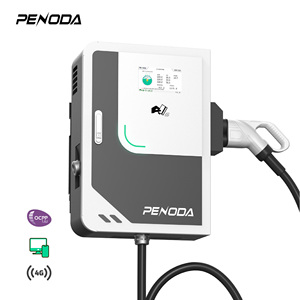
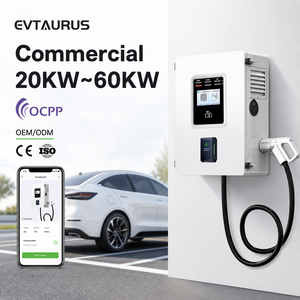
Yes. All featured commercial modular chargers support Open Charge Point Protocol (OCPP 1.6J and 2.0.1). This allows system operators to interface with third-party software for automated dynamic load balancing, peak shaving during high ESB tariff hours, and integration with local solar PV/battery storage microgrids.
In a single-block converter station, internal power switch failure renders the entire charger inoperable. In an N+1 modular matrix system (e.g., eight 30kW modules delivering 210kW required load), if one module encounters a fault, the system isolated module automatically offloads power, allowing the station to remain online at 90%+ capacity while alerting service technicians for a hot-swappable replacement.
Standard exporter lead times range from 4 to 8 weeks for catalog series products, with customized mechatronic modifications requiring 10 to 14 weeks. Deliveries are typically handled under DDP (Delivered Duty Paid) or CIF Dublin/Cork ports, with products backed by 2-year to 5-year commercial factory warranties and comprehensive CE documentation.
Consult with our engineering team to select, configure, and import certified modular converters, custom DC fast chargers, or potted industrial power supplies optimized for your Irish operational requirements.