
Engineered for warehouse automation, commercial transport depots, and extreme industrial facilities operating across Iraq's trade corridors.
As the Republic of Iraq accelerates its infrastructure reconstruction and logistics expansion—anchored by strategic commercial hubs such as the Port of Umm Qasr, Erbil’s logistics parks, Basra's oilfield support zones, and Baghdad's central distribution corridors—exporters and factory operators face an escalating challenge: securing continuous, zero-failure electrical power in unconditioned, extreme operational environments.
Industrial power supplies operating within Iraqi logistics facilities must overcome a unique combination of environmental and grid stresses. Ambient summer temperatures frequently exceed +52°C (+125°F) in southern regions, pushing internal electrical control enclosure temperatures beyond +80°C. Concurrently, airborne particulate contamination consisting of fine silica dust and sand (frequently brought on by Shamal dust storms) quickly compromises standard fan-cooled power conversion hardware by clogging ventilation grilles, causing thermal runaway, or inducing premature dielectric breakdown across printed circuit boards (PCBs).
Technical Insight for Iraqi Procurement Engineers: Standard commercial-off-the-shelf (COTS) industrial power supplies designed for European or North American climate-controlled cleanrooms exhibit an average Mean Time Between Failures (MTBF) drop of over 75% when exposed to unconditioned Iraqi warehouse environments. Fully potted, contact-cooled power supplies represent the only proven mitigation strategy for true continuous industrial duty cycles.
This technical whitepaper provides system integrators, factory managers, logistics exporters, and industrial automation engineers across Iraq with an exhaustive analysis of potted power supply engineering, high-voltage DC/DC conversion platforms, planar magnetics, and fleet electrification infrastructures. Leveraging over 35 years of German power-electronics engineering expertise pioneered by Deutronic Elektronik GmbH, this document establishes clear design criteria for resilient industrial power architectures.
Potting (or full thermal encapsulation) is an advanced manufacturing process in which an entire assembled printed circuit board (PCB) and its magnetic components are completely submerged and cured within a high-grade, thermally conductive synthetic resin compound—typically two-part polyurethane (PU), high-grade epoxy, or silicone-based polymers.
Potting creates a solid physical barrier that renders electrical components completely impervious to fine airborne sand particles, ambient humidity, corrosive salt vapors around Arabian Gulf port zones, and moisture ingress.
Instead of relying on dust-sensitive fans, potting compounds act as a thermal bridge, conducting internal component heat directly to aluminum outer heat sinks for efficient contact cooling at ambient temperatures up to +55°C.
Logistics automation—including Automated Guided Vehicles (AGVs), overhead monorails, and heavy forklift battery chargers—subjects electronics to constant mechanical shock. Potting immobilizes all components, preventing solder joint fatigue.
In conventional air-cooled power units, hot spots form around primary switching MOSFETs, planar transformers, and output rectifiers. Under high ambient temperatures, air density drops, drastically reducing natural convection. In contrast, Deutronic’s potted industrial power supplies utilize specialized polyurethane potting compounds featuring high thermal conductivity metrics (>1.5 to 3.0 W/m·K). Heat generated by power semiconductors is efficiently transferred via conduction across the solid dielectric substrate directly to the ruggedized aluminum chassis. This contact-cooling architecture eliminates moving parts (fans), thereby avoiding single-point fan motor failures.
Building on more than three decades of specialized power-electronics development in Adlkofen, Germany, our technical solution matrix addresses every tier of modern factory logistics and fleet electrification:

Deutronic is a recognized market leader in automotive and industrial battery charging systems. Our intelligent charging computers keep industrial batteries optimized across their operational life cycle—from vehicle production lines and end-of-line testing to automated warehouse charging bays.

Combining planar magnetics with low-profile, ultra-compact housings, our DVCx3 and high-voltage DVCHx3 converter platform delivers exceptional power density. Designed for contact cooling, these units bridge high-voltage traction batteries directly to low-voltage auxiliary systems without liquid cooling circuits.

Our centralized and decentralized industrial power supply systems are built specifically for severe continuous duty cycles. Factory managers can deploy fully potted units directly on exposed machine frames or elect 19″ rack and DIN-rail formats inside control cabinets.

The D-Sinus family represents the cutting edge of motor drive technology. By regulating motor current to a pure sine wave, these controllers deliver exceptionally smooth torque output, eliminating acoustic noise and motor vibration in automated warehouse conveyors, pumps, and fans.

We build tailored, end-of-line electrical testing stations designed to verify quality compliance for complex electrical components. Driven by our proprietary DTS (Deutronic Test Software), these stations combine modular hardware instrumentation into automated quality assurance benches.
Deploying electrical power conversion equipment in Iraq demands deep contextual knowledge of regional operational realities. Below are three primary application environments where potted power supplies and high-power DC charging stations deliver decisive operational reliability:
The Port of Umm Qasr serves as Iraq's primary maritime gateway for containerized freight, raw industrial materials, and heavy machinery. Operating in immediate proximity to the Arabian Gulf, logistics hardware in Basra is exposed to high ambient relative humidity, airborne saline moisture, and intense heat.
Standard open-frame power supplies succumb rapidly to salt-spray galvanic corrosion, causing short circuits on high-voltage tracks. By deploying hermetically potted power supplies (IP67) across port gantry crane automation, automated container gate sensors, and diesel-generator hybrid lighting towers, operators guarantee 24/7 continuous operation without corrosion-induced downtime.
Logistics hubs in the Kurdistan Region of Iraq serve as key transshipment depots for goods entering via Turkey. Automated warehouses in these zones rely heavily on continuous motorized conveyor networks, barcode scanners, high-density racking AGVs, and temperature-monitored cold storage suites for food and pharmaceutical exports.
Unscheduled power interruptions or grid sags caused by regional grid switching can produce transient high-voltage spikes on factory lines. Potted power conversion modules equipped with integrated wide-range input stages (100–264V AC or wide DC ranges) and multi-stage Transient Voltage Surge Suppression (TVSS) shield delicate automation microcontrollers against grid volatility.
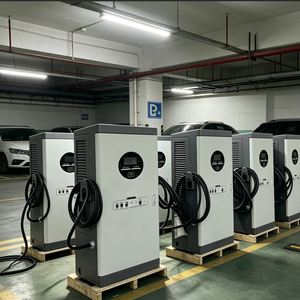
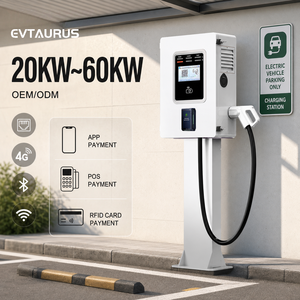
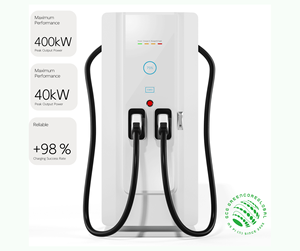
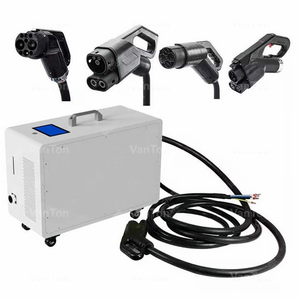
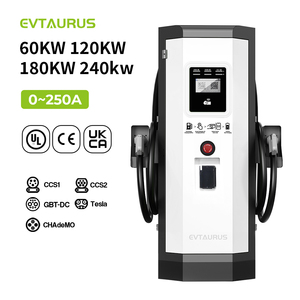
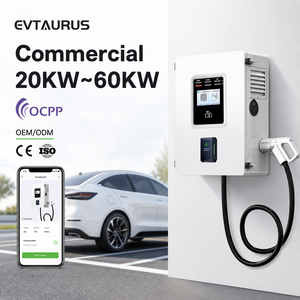
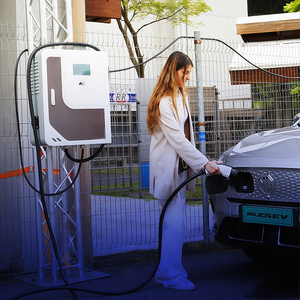
As Iraqi fleet operators transition towards hybrid and fully electric commercial transport trucks, delivery vans, and industrial yard tractors, high-power DC fast charging infrastructure (spanning 30kW up to 240kW) is vital along major trade arteries connecting Baghdad, Hillah, Karbala, and Basra.
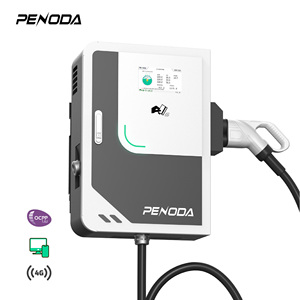
Deploying heavy-duty chargers (such as our CCS2 and GB/T ground-mounted DC stations) engineered with sealed electronic bays, liquid- or contact-cooled power modules, and intelligent OCPP microgrid controllers ensures rapid fleet turnaround times even during intense midday summer heatwaves.
To assist industrial procurement officers in calculating Total Cost of Ownership (TCO) and operational risk, the table below compares standard ventilated power units against fully potted, Deutronic-engineered industrial power supplies within an Iraqi operating environment:
| Evaluation Parameter | Standard Fan-Cooled COTS Power Supply | Deutronic Potted Industrial Power Supply |
|---|---|---|
| Ingress Protection (IP Rating) | IP20 – IP30 (Exposed ventilation slots) | IP65 / IP67 / IP68 Hermetic |
| Dust & Silica Sand Resistance | Poor (Dust builds up on PCBs, causing shorts) | Immune (Encapsulated in solid resin compound) |
| Thermal Cooling Method | Forced-air fan (High single-point failure rate) | Contact Cooling (Conduction via outer chassis) |
| Continuous Ambient Operating Temp | 0°C to +40°C (Requires severe derating above 40°C) | -40°C to +55°C (Full output with contact heatsink) |
| Vibration & Shock Resistance | Low (Vibration fatigues solder joints over time) | Extreme (Resin dampens shock and vibration) |
| Corrosion & Humidity Immunity | Conformal coating only (Degrades in salt-spray) | 100% Sealed (Resists saline & chemical vapor) |
| Estimated MTBF in Iraqi Summer | < 12,000 Hours | > 100,000 Hours |

Beyond our standard catalog of potted power supplies and chargers, DEUTRONICsystems offers full-service contract development, engineering, and manufacturing for original equipment manufacturers (OEMs) and industrial exporters across global markets.
From schematic capture and embedded firmware development to automated surface-mount (SMD) and through-hole (THT) PCB assembly, vacuum potting encapsulation, and final automated DTS testing—we deliver turn-key mechatronic assemblies built precisely to customer specifications.
Consult with our senior application engineers to specify potted power supplies, high-voltage DC/DC converters, or DC fast charging infrastructure tailored to your exact facility requirements in Iraq.