

Industrial Landscape & Demand for Modular Converters in Pakistan
The Pakistani industrial and energy ecosystem is undergoing a dramatic structural transformation. Driven by the National Electric Vehicle Policy (NEVP), escalating commercial electricity tariffs, and the expansion of the China-Pakistan Economic Corridor (CPEC), industrial enterprises, logistics operators, and commercial charge point operators (CPOs) face an urgent mandate: deploying high-reliability power electronics capable of thriving under exceptionally tough grid conditions.
In regions such as Karachi, Lahore, Faisalabad, and Multan, electrical infrastructure is frequently plagued by severe voltage fluctuations (dropping below 180V AC or surging beyond 460V AC), brownouts, high ambient temperatures exceeding 50°C, and heavy dust loading. Standard off-the-shelf power converters and fixed-topology EV chargers often suffer early semiconductor failure, thermal throttling, or continuous grid tripping under these stress conditions.
Strategic Insight for Pakistani Procurement: Modular converter architecture with active power factor correction (PFC > 0.99), wide input voltage tolerance, contact-cooled potted magnetics, and hot-swappable N+1 redundancy represents the only viable path to eliminating industrial downtime and maximizing Return on Investment (ROI) in Pakistan's power climate.
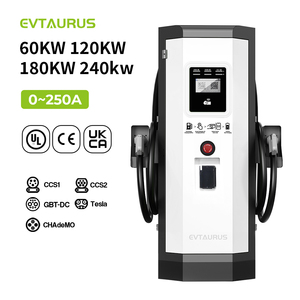
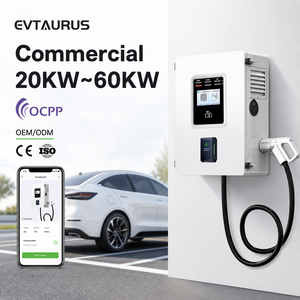
Modular DC/DC converters and modular fast-charging topologies solve grid instability by decoupling internal DC bus voltage regulation from incoming line disturbances. Utilizing modern Silicon Carbide (SiC) MOSFETs, planar transformers, and digital signal processors (DSP), our modular converter systems dynamically adjust charging curves and power output to preserve system integrity without interrupting critical operations.


