Engineered & manufactured in Germany — Adlkofen / Bavaria Global service network in 40+ countries
Industry Whitepaper & Technical Architecture

Modular Converter Factories & Exporters for the Uruguay Market

Next-Generation DC Power Conversion, Fast Charging Infrastructure & E-Mobility Grid Integration Engineered for South American Utility & Fleet Ecosystems

Commercial DC EV Fast Chargers & High-Voltage Converters

Industrial-grade power electronics engineered for heavy-duty operational uptime, featuring full compliance with Mercosur grid standards, OCPP 1.6/2.0 protocols, and dual-connector flexibility.
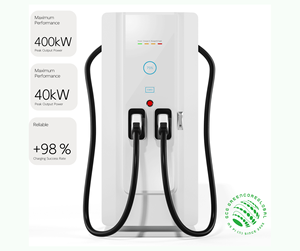
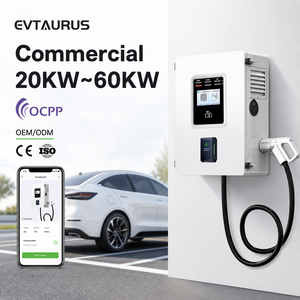
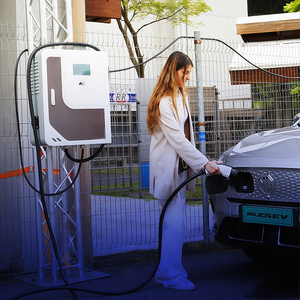
High Power DC EV Charger 30kW-240kW Fast Charging Station
High Power DC EV Charger 30kW-240kW Fast Charging Station for Electric Vehicles
CCS2 GBT Chademo DC EV Charger Commercial Station
CCS2 GBT Chademo DC EV Charger 15kw-60kw Commercial Station With App POS RFID
GCG 80kW GB/T DC EV Charger Dual Connectors
GCG 80kW GB/T DC EV Charger Dual Connectors Ground-Mounted with OCPP CE Certified
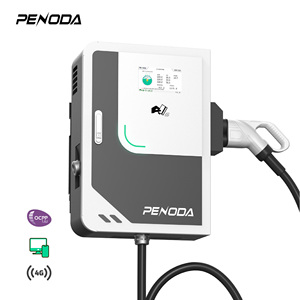
New Smart DC EV Charger 20kW-40kW Wallbox Station
New Smart DC EV Charger 20Kw-40Kw Wallbox Fast Charging Station Commercial CCS1 CCS2 GBT
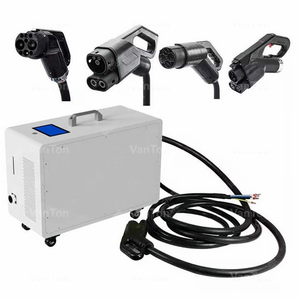
VanTon Mobile CCS2 EV Fast Charger 20kw Movable Station
VanTon Electric Car Mobile CCS2 EV Fast Charger 20kw Single Gun Movable Station 5m
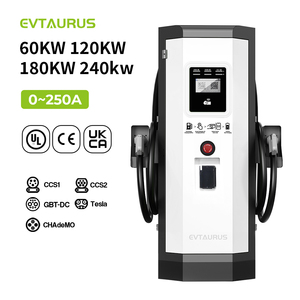
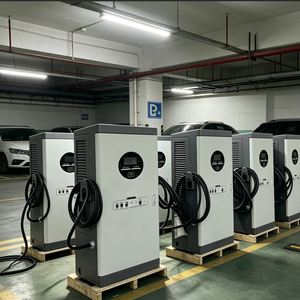
60kw to 240kw DC Commercial EV Power Charging Station
60kw 80kw 120kw 160kw 240kw DC New EV Power Charging Station GB/T CCS2 Dual Port
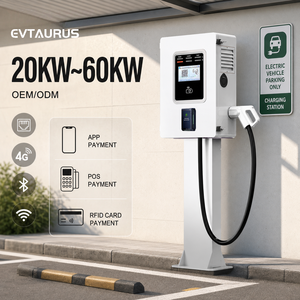
Wall Mounted Single Gun 20KW-60KW DC EV Charger
Wall Mounted Single Gun 20KW 30KW 40kw 60kw CCS1 CCS2 GB/T CHAdeMO Fast DC Charger
Penoda DC Wallbox Car Charger IP55 Fast Station
Penoda DC Wallbox Car Charger 20kw 30kw 40KW CCS1 CCS2 CHAdeMO GB/T IP55 Fast 400v

Uruguay Energy Transformation & Fleet Metrics

Quantifiable performance indexes driving commercial vehicle electrification across Montevideo, Canelones, and Mercosur logistics corridors.

98%+
Renewable Grid Generation (UTE)
900V DC
Max Input Converter Topology
96.5%
Peak Conversion Efficiency
IP55/IP65
Coastal & Humidity Protection

Executive Technical Overview: Modular Power Electronics for Uruguay's Electrification Transition

The Oriental Republic of Uruguay stands out as a global model for renewable power generation, regularly producing over 98% of its electricity from hydro, wind, solar, and biomass sources via the national utility provider, Administración Nacional de Usinas y Trasmisiones Eléctricas (UTE). However, translating this decarbonized generation capacity into zero-emission transportation and resilient industrial operations requires sophisticated power electronics infrastructure. As commercial fleet operators, municipal bus networks, logistics hubs, and agricultural processing facilities transition away from fossil fuels, the demand for high-reliability modular converter factories and qualified international exporters has accelerated rapidly.

This whitepaper outlines the structural parameters, power conversion topologies, grid interface mechanics, and local application frameworks necessary for deploying high-power DC fast charging systems and modular DC/DC converters across Uruguay. Grounded in 35+ years of German power-electronics engineering excellence, our modular conversion systems bridging high-voltage DC buses (up to 900V DC) and dynamic load distribution matrices provide the technical benchmark for international B2B procurement teams.

Information Gain & Architectural Key Takeaway

Deploying energy equipment in Uruguay requires harmonizing European CCS2 and Asian GB/T connector standards while assuring faultless operation under UTE’s 3-phase 380V/400V 50Hz nominal grid architecture. Modular DC converters with contact-cooling and potted electronics solve localized thermal and atmospheric degradation risks common to coastal regions like Montevideo and Colonia.

1. The Mechanics of Modular Power Conversion Architecture

Traditional monolithic power converters present single points of failure, rigid capacity ceilings, and elevated maintenance costs for fleet depots and industrial installations. Modular converter systems overcome these limitations through scalable, hot-swappable power blocks operating in parallel. In high-power DC fast chargers (ranging from 30kW to 240kW+), high-frequency switching modules utilizing Silicon Carbide (SiC) MOSFETs enable power densities exceeding 3.5 kW/L while delivering conversion efficiencies above 96.5%.

Key operational advantages of our modular factory architectures include:

  • Dynamic Power Allocation: Multi-channel output matrices automatically route power modules based on real-time vehicle battery management system (BMS) requests. A dual-connector 160kW charging station can deliver 160kW to a single heavy truck or split dynamically into 80kW + 80kW to simultaneously charge two commercial vans.
  • Redundant Power Topologies (N+1 Isolation): If a single module encounters an over-temperature or grid transient fault, internal logic instantly decouples the affected block while remaining modules continuously supply power without disrupting the charging cycle.
  • Wide DC Output Voltage Windows (150V DC – 1000V DC): Designed to serve legacy 400V battery architectures as well as next-generation 800V/900V heavy transit buses and commercial e-trucks without requiring supplementary transformer hardware.
Deutronic Modular DC Converter Generation with Contact Cooling

2. Localized Application Scenarios Across Uruguay’s Strategic Corridors

The operational landscape in Uruguay presents diverse geographical and climatic demands, spanning coastal port facilities to inland agricultural centers. Engineering converters for this market requires matching technical specifications with site-specific realities:

Montevideo & Canelones Urban Fleet Depots

Municipal bus electrification and last-mile urban logistics demand high-duty DC wallboxes and floor-mounted chargers. High power factor (>0.99) minimizes THD on urban feeder lines.

  • OCPP 1.6J / 2.0.1 smart load balancing
  • Dual CCS2 / GB/T connector options
  • Compact footprint for dense maintenance bays

Ruta Eléctrica Inter-City Fast Charging

Stretching along Route 1, Route 9, and Route 5, Uruguay’s national charging network requires ultra-fast ground-mounted stations (120kW - 240kW) to facilitate seamless transit between Montevideo, Punta del Este, and Salto.

  • IP55 weather-sealed outdoor enclosures
  • Integrated POS credit card terminal & RFID
  • All-weather operational rating (-25°C to +55°C)

Agribusiness & Forestry Machinery Conversion

Heavy machinery operating around Tacuarembó and Fray Bentos faces harsh dust, vibration, and moisture. Contact-cooled, potted DC/DC converters supply low-voltage auxiliary systems directly from high-voltage traction batteries.

  • Planar magnetics for high shock/vibration resistance
  • Galvanic isolation up to 3.0 kV AC
  • CAN bus & SAE J1939 telemetry interface

3. Macroeconomic Trends & Policy Drivers in Uruguay

The Uruguayan government, through the Ministry of Industry, Energy and Mining (MIEM) and executive initiatives like Movilidad Eléctrica, has established aggressive decarbonization goals. Key growth catalysts driving foreign export demand include:

  1. COMAP Investment Tax Incentives: Corporate buyers importing energy-efficient capital equipment, modular converters, and EV chargers benefit from substantial IRA (Impuesto a la Renta de las Actividades Económicas) exemptions under COMAP project evaluations.
  2. IMESI & Import Duty Exemptions: Zero-rated tariffs on eligible commercial EV chargers and high-efficiency converters reduce total cost of ownership (TCO) for fleet operators by up to 28% compared to non-certified equipment.
  3. Second Energy Transition (Segunda Transición Energética): Beyond wind and hydro generation, Uruguay’s strategic focus has shifted to electrifying heavy transport, port logistics at Puerto de Montevideo, and developing green hydrogen pilot plants. High-power DC conversion electronics serve as the vital coupling layer in all three sectors.

4. Manufacturing Excellence & Exporter Quality Assurance (E-E-A-T Principles)

When procurement managers in South America evaluate overseas factory partners, long-term reliability and technical documentation outweigh initial capital cost. Our manufacturing methodologies are rooted in 35+ years of German power-electronics engineering (Deutronic background), ensuring every module meets world-class quality thresholds:

Automated Electrical Test System for Quality Control
  • In-House SMT & THT PCB Assembly: Complete quality control over component placement, solder joint integrity, and thermal relief design.
  • Potted Power Supplies & Sealed Sub-Assemblies: Protective potting compounds isolate sensitive components from ambient moisture, coastal saline air, and airborne dust particles.
  • DTS Automated End-of-Line Testing: Every modular charger and converter undergoes full-load burn-in, dielectric withstand testing, EMC verification, and simulated fault injection using proprietary DTS testing software before international export packaging.
  • CAN Bus & Remote Firmware Diagnostics: Fully integrated parameterization over CAN, SAE J1939, or RS485 enables localized fleet managers in Uruguay to monitor cell health, system temperature, and historical power curves in real time.

Engineering Superiority & Factory Specifications

Detailed technical benchmarks designed for procurement engineers, grid consultants, and enterprise buyers in South America.

High-Voltage DC/DC Platform

Covering input ranges up to 900V DC (DVCHx3 series), providing robust voltage stepping for railway, e-bus, and industrial vehicle auxiliary circuits.

  • Contact cooling architecture
  • Minimal thermal resistance design
  • Galvanic isolation standard

Automotive Charging Computers

Proven across global vehicle assembly lines and workshop maintenance environments, featuring parameterizable lithium & lead-acid curves.

  • DC-Connect plant networking
  • EMC immune in noisy environments
  • Complete charge data traceability

Sinusoidal Motor Controllers

D-Sinus family motor speed controllers delivering true sine-wave output to minimize torque ripple and acoustic noise in pump and drive systems.

  • High efficiency across speed range
  • Smooth, quiet motor operation
  • Custom firmware adaptations

Custom DTS Automated Test Systems

Modular end-of-line test stations combining high-precision instrumentation with proprietary software for multi-variant product lines.

  • Manual to fully automated benches
  • Automated limit & report generation
  • Global commissioning support

Frequently Asked Questions for Uruguayan Buyers

Address common technical, regulatory, and logistics inquiries regarding modular converter and charger imports to Uruguay.

? Are your DC EV chargers compatible with Uruguay’s UTE 3-phase grid infrastructure?
Yes. All our commercial DC fast chargers (30kW to 240kW) are engineered to operate on standard 3-phase 380V/400V AC at 50Hz, matching UTE’s low and medium voltage distribution networks. Integrated active power factor correction (PFC > 0.99) prevents harmonic feedback into local sub-stations.
? How do you handle dual connector standards (CCS2, GB/T, CHAdeMO) for mixed vehicle fleets?
Uruguay’s vehicle market includes European, American, and Chinese electric models. Our dual-connector chargers (such as our 60kW–240kW ground-mounted and wallbox units) can be custom-configured at the factory with CCS2 + GB/T or dual CCS2 outputs, operating under smart matrix controllers to charge any incoming EV seamlessly.
? What compliance documentation is required for LATU and URSEA approval in Uruguay?
Our products carry full CE certifications, ISO 9001 factory quality management credentials, and IEC 61851 / IEC 62196 safety testing reports. These international test reports facilitate streamlined clearance with LATU (Laboratorio Tecnológico del Uruguay) and URSEA (Unidad Reguladora de Servicios de Energía y Agua).
? How do contact-cooled DC/DC converters perform in high humidity and coastal environments like Montevideo?
Contact-cooled and potted converters (such as the DVCx3 and DVCHx3 series) eliminate the need for internal open-air fans that draw in humid, saline air. Heat is conducted directly to an aluminum chassis cold-plate, protecting sensitive planar magnetics and SMT PCBs from corrosion and moisture ingress (rated IP65/IP67).
? Can these chargers integrate into local utility management platforms via OCPP?
Absolutely. All smart chargers feature native support for OCPP 1.6-JSON (upgradable to OCPP 2.0.1). They connect via Ethernet, 4G LTE, or Wi-Fi to any third-party central management system (CMS), enabling automated billing, remote diagnostics, dynamic tariff management, and load capping.
? What is the typical factory delivery timeline and technical support structure for exporters to South America?
Standard modular units ship within 3 to 4 weeks from order confirmation. Custom engineering variants (specific input voltages, custom branding, specialized CAN protocols) generally ship within 6 to 8 weeks. We provide full technical documentation, wiring schematics, spare module stocking, and direct engineer-to-engineer remote assistance.

Request Technical Specifications & Factory Pricing

Partner with an established exporter of modular converters and fast charging systems tailored for Uruguay and Latin American industrial markets.

Get Catalog