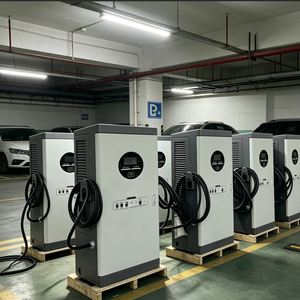
Explore our series platforms deployed by Tier-1 OEM manufacturers, autonomous vehicle developers, and commercial EV charging hubs across the San Francisco Bay Area.
In modern industrial electrification, galvanic isolation is not merely a safety compliance feature—it is a critical architectural requirement for noise immunity, ground loop prevention, and system resilience. As an established isolated converter manufacturer partnering with San Francisco’s technology leaders, our power conversion systems employ planar magnetics and advanced high-frequency transformer topologies to completely segregate primary input lines from sensitive secondary output electronics.
Standard non-isolated step-down converters expose vulnerable lower-voltage control circuits, sensors, and CAN-bus telemetry to high-voltage transients, common-mode noise, and potential catastrophic ground offset voltages. By establishing a physical dielectric barrier capable of withstanding test voltages up to 4.2 kVDC, our galvanically isolated DC/DC converters safeguard onboard microcontrollers, autonomous sensor suites, and telemetry nodes operating across complex microgrid environments.
Utilizing multi-layer printed circuit board (PCB) windings instead of traditional wire-wound magnetics drastically reduces leakage inductance and proximity losses. Operating with Phase-Shifted Full-Bridge (PSFB) or LLC resonant zero-voltage switching topologies, our converters achieve thermal-efficient power conversion exceeding 96.5% peak efficiency even under maximum load in dense Bay Area installations.
San Francisco commercial campuses and hardware testing labs mandate rigorous electromagnetic compatibility. Our isolated power supplies integrate differential and common-mode LC filtering stages, complying with CISPR 25 Class 5 and EN 55032 Class B limits to ensure zero interference with high-frequency RF transmitters, LiDAR sensors, and precise automotive diagnostic tools.
Dust, salt spray from the Pacific Ocean, airborne grease, and variable ambient humidity in the San Francisco Peninsula render conventional fan-cooled power supplies prone to premature field failure. Fans introduce mechanical wear points and continuously pull airborne particulates into internal power components. Our DVCx3 and DVCHx3 high-voltage isolated DC/DC converter platforms feature a contact-cooled chassis design.
By transferring internal heat dissipations directly through a planar aluminum baseplate onto the vehicle chassis or external liquid cold-plates, our converters achieve optimal heat dissipation without internal airflow requirement. For harsh industrial plants and unconditioned outdoor enclosures, fully potted polyurethane or silicone encapsulations provide IP67 to IP69K sealing against moisture, vibration shock up to 10g, and corrosive coastal marine boundaries.
From the Port of San Francisco to South San Francisco's biotech corridors and Silicon Valley hardware incubators, custom isolated converters solve distinct regional electrification challenges.
San Francisco serves as the global capital for real-world Autonomous Vehicle (AV) testing and robotaxi fleet deployments. Autonomous platforms require ultra-clean, isolated DC power conversion to step down high-voltage traction batteries (400V–800V DC) to low-voltage (12V/24V DC) domains powering LiDAR systems, computing clusters, and drive-by-wire actuators. Our DVCHx3 converters provide CAN-bus dynamic parameterization (SAE J1939), delivering stable isolated power during intense stop-and-go urban drive cycles through SF's steep grade topography.
With stringent zero-emission regulations implemented by the California Air Resources Board (CARB), waterfront terminal operators along the San Francisco Bay area are transitioning to automated guided vehicles (AGVs), electric tugboats, and shore-to-ship power links. Potted, high-power DC/DC converters resist aggressive salt-fog corrosion and vibration shock in yard tractors, offering continuous galvanic protection between the grid-tied DC fast-charging bus and sensitive marine control systems.
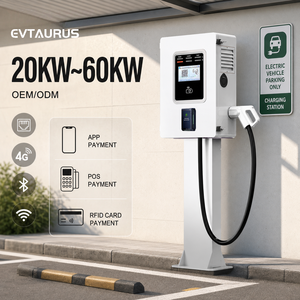
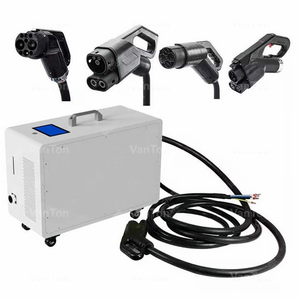
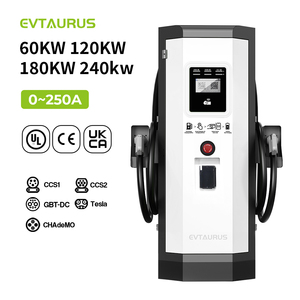
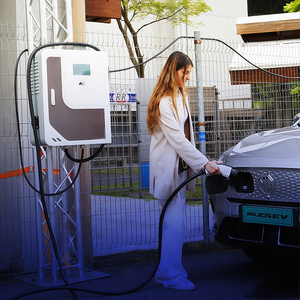
Commercial delivery operations in San Francisco face strict zero-emission vehicle mandates under California’s Advanced Clean Fleets (ACF) rule. Fleet maintenance facilities throughout Bayview-Hunters Point and the I-880 corridor demand heavy-duty DC charging computers (30kW to 240kW) with multi-protocol support (CCS1, CCS2, CHAdeMO) integrated with back-end OCPP 1.6/2.0.1 management systems for automated energy load balancing and telemetry logging.
Modern technology campuses in Silicon Valley and SoMa operate private DC microgrids coupling solar photovoltaic arrays, localized Battery Energy Storage Systems (BESS), and emergency power backups. Galvanically isolated bidirectional converters enable smooth power exchange across DC distribution buses, ensuring cleanroom automated assembly lines and semiconductor fabrication test benches remain immune to utility voltage sags and ground transients.
California continues to lead North America in regulatory standards, energy efficiency mandates, and fleet decarbonization goals. Navigating this ecosystem requires an engineering partner thoroughly versed in state and municipal regulatory frameworks.
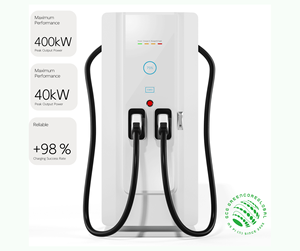
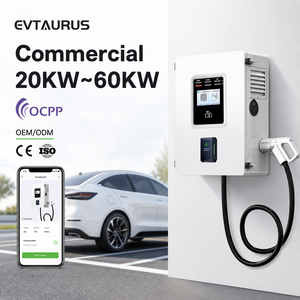
Under the California Energy Commission’s (CEC) Title 24 guidelines and CARB’s ACF regulations, commercial building developers and industrial operations in San Francisco are required to install scalable EV-ready infrastructure with active load management. High-power DC fast-charging stations (from 30kW wallbox units up to 240kW ground-mounted stations) deployed at commercial facilities must deliver peak operating efficiency (>95%), smart grid integration (IEEE 1547 / CA ISO Rule 21 compliant), and robust power factor correction (>0.99).
Our intelligent charging computers utilize built-in DC-Connect network architecture, allowing plant managers and charging hub operators across the Bay Area to remotely trace every charge cycle, monitor individual module thermal metrics, and regulate peak power draw to prevent expensive utility demand charges during peak evening hours.
The industry shift from traditional Silicon (Si) IGBTs to Wide Bandgap (WBG) Silicon Carbide (SiC) MOSFETs represents a generational leap in isolated converter performance. SiC devices enable significantly higher switching frequencies (100kHz to 500kHz), dramatically shrinking the physical volume of planar transformers and output inductor filters while reducing thermal losses by up to 60%.
For San Francisco industrial clients where footprint and cabinet volume are at a premium, our SiC-based isolated converters offer industry-leading power density (W/in³), operating reliably across extreme input voltage windows (ranging from lower 12V/24V mobile systems up to 900V DC high-voltage architectures) while meeting stringent UL 2202 and UL 1741 safety standards.
Backed by over three decades of German power electronics leadership, we manage every development stage internally—from schematic design to final automated end-of-line testing.

Our charging systems are the global gold standard for vehicle production lines, end-of-line diagnostic stations, and dealership service bays. Designed to maintain stable voltage under severe electrical noise, they ensure seamless software flashing and diagnostic testing for lithium-ion and lead-acid battery chemistries.

Built to bridge traction batteries with auxiliary power systems in commercial electric vehicles, rail systems, and autonomous machinery. The DVCHx3 series operates effortlessly with high-voltage inputs up to 900V DC, converting power down to isolated 12V, 24V, or 48V outputs.

Engineered for decentralized mounting directly on machine frames, warehouse automated guided vehicles (AGVs), and industrial control cabinets. Encapsulated housings protect internal power components from shock, vibration, humidity, and aggressive dust environments.

The D-Sinus family regulates motor currents into pure sine waves, eliminating torque ripple and acoustic motor noise. Ideal for electric pumps, ventilation systems, and precision drive actuators in sensitive noise-critical environments.

We build turnkey manual, semi-automated, and fully automated end-of-line test stations for electromechanical production. Driven by our proprietary DTS (Deutronic Test System) software suite, our test benches deliver verified quality assurance for multi-variant products on a single bench.
Addressing the technical, compliance, and custom integration questions asked by Northern California power electronics engineers and purchasing directors.
Our DVCx3 series covers lower DC input ranges (e.g., 12V, 24V, 48V, up to 110V DC for rail and industrial applications), while the DVCHx3 high-voltage series operates effortlessly with input voltages up to 900V DC. All series are available with contact cooling and customizable CAN-bus interfaces.
Our galvanically isolated converter series offer standard dielectric strength ratings of 3,000 VAC / 4,200 VDC isolation test barriers. This ensures complete electrical separation, preventing high-voltage spikes or ground potential shifts on traction buses from damaging low-voltage control circuitry or CAN networks.
For installations exposed to San Francisco Bay salt fog, ambient moisture, or industrial contaminants, we supply potted power modules rated up to IP67/IP69K. Thermal transfer occurs via baseplate contact cooling onto a heat sink or vehicle frame, eliminating internal fans that pull corrosive air into the circuit.
Yes. Because circuit schematic design, PCB assembly (SMD/THT), potting, mechanical housing fabrication, and automated testing are performed in-house, we readily adapt firmware, communication protocols (CANopen, SAE J1939, Ethernet/IP), and mechanical bracket mounting even for specialized low-to-medium series volumes.
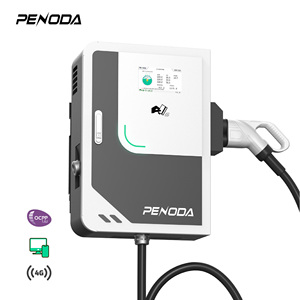
Our commercial DC fast chargers (ranging from 15kW/20kW wallbox units up to 240kW ground-mounted stations) support universal international standards including CCS1, CCS2, CHAdeMO, and GB/T connectors, complete with OCPP 1.6 J and 2.0.1 connectivity for cloud management integration.
Every isolated power converter and charging module undergoes 100% automated end-of-line functional testing, burn-in thermal cycling, and safety isolation verification before shipment. We provide full documentation packages, CE certifications, and UL safety compliance support tailored to California industrial deployment standards.