
High-Voltage Galvanically Isolated DC/DC Converters: Engineering Superiority for Spanish Industrial & Mobility Infrastructure
As the European Union accelerates its aggressive decarbonization mandates under the Fit-for-55 package, Spain’s industrial landscape is undergoing a massive structural transformation. From the automotive assembly strongholds in Catalonia, Navarre, and Valencia to the expansive solar PV microgrids in Andalusia and the electrified rail freight corridors managed by ADIF, the demand for robust, high-efficiency electrical power conversion hardware has reached an unprecedented zenith. Central to this transition is the reliance on galvanically isolated DC/DC converters and high-power DC charging systems engineered to operate flawlessly under rigorous thermal, mechanical, and electrical stresses.
1. Technical Architecture of Galvanically Isolated Converters: Magnetics, Silicon Carbide, and Heat Dissipation
Modern isolated converters engineered by top-tier exporters serving Spain rely on advanced power electronics topologies designed to maximize gravimetric power density while minimizing acoustic and electromagnetic noise. Key engineering pillars include:
Planar Transformer Integration
Replacing traditional wire-wound transformers with low-profile planar magnetics directly embedded within multilayer printed circuit boards (PCBs). This delivers near-zero leakage inductance, superior thermal contact, and ultra-compact physical footprints essential for space-constrained chassis and charging cabinets.
Wide Bandgap (SiC/GaN) Switching
Utilizing Silicon Carbide (SiC) MOSFETs operating at high switching frequencies (100 kHz – 500 kHz). High-frequency operation drastically reduces the physical volume of passive capacitive and inductive filter components while pushing energy conversion efficiency beyond 96.5% under full load conditions.
Contact Cooling & Thermal Potted Packaging
In lieu of failure-prone liquid pumps or maintenance-heavy forced-air fans, state-of-the-art industrial converters employ baseplate contact cooling coupled with full internal polyurethane/silicone potting. Heat is directly conducted to the vehicle chassis or cold-plate heat sink, offering IP67 ingress protection against humidity and abrasive airborne dust.
2. Spain Market Dynamics: PNIEC 2023-2030, PERTE VEC, & Regional Industrial Demand Drivers
To succeed as an exporter supplying the Spanish territory, converter factories must align with regional regulatory structures and industrial modernization programs. Spain’s updated Integrated National Energy and Climate Plan (PNIEC 2023-2030) targets 5.5 million electric vehicles on Spanish roads and a 81% share of renewable power in the national grid matrix by 2030.
Simultaneously, the Spanish Government’s PERTE VEC (Strategic Project for the Recovery and Economic Transformation of the Electric and Connected Vehicle) has injected billions of Euros into domestic manufacturing facilities. Key localized application sectors requiring isolated DC/DC power conversion hardware include:
- Automotive Assembly Plants (Martorell, Vigo, Zaragoza, Valencia): Heavy-duty industrial power supplies and high-voltage DC/DC converters operating inside Automated Guided Vehicles (AGVs) and Autonomous Mobile Robots (AMRs) handling intralogistics on assembly floors. Units must withstand continuous vibration, magnetic interference, and round-the-clock 24/7 duty cycles.
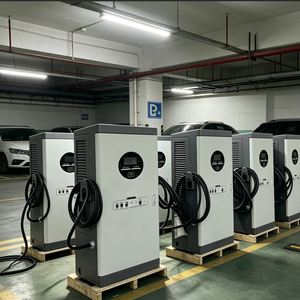
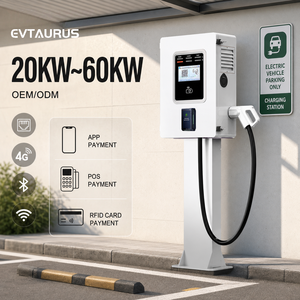
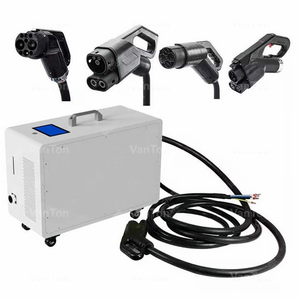
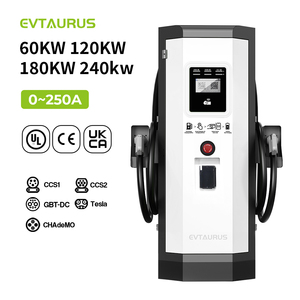
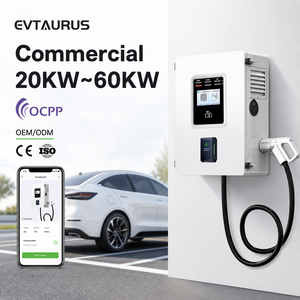
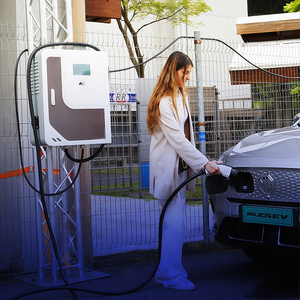
- Iberian Renewable-Coupled EV Fast Charging Hubs: Off-grid and weak-grid EV fast-charging plazas along the AP-7 Mediterranean Highway and A-1 North Corridor. Chargers require wide input-voltage isolated converters capable of handling solar PV direct-DC microgrid coupling (400V–900V DC input) to charge commercial trucks and passenger EVs seamlessly.
- Railway & Rolling Stock (RENFE, ADIF, Local Tramways): Specialized isolated converters certified under EN 50155 standards for railway applications. These units convert high-voltage catenary or auxiliary DC lines down to low-voltage control circuits, cabin HVAC signaling, and safety diagnostics in harsh electromagnetic environments.
- Maritime & Port Electrification (Barcelona, Algeciras, Valencia Ports): Heavy-duty potted converters for electric tugboats, container stackers, and shore-to-ship power systems exposed to corrosive saline atmosphere and extreme thermal fluctuations.
3. Technical Specifications Comparison Matrix: DVC & DVCH High-Voltage Converter Platforms
The following engineering matrix outlines the technical differentiation across primary isolated converter product series supplied to OEM integrators in Spain:
| Parameter / Series | DVCx3 Low-Voltage Series | DVCHx3 High-Voltage Series | Commercial Fast-DC Charger Module |
|---|---|---|---|
| Nominal Input Voltage Range | 24V DC - 110V DC (Wide 4:1) | 400V DC - 900V DC (High Voltage) | 400V AC ±15% (3-Phase Grid Input) |
| Output Voltage Regulation | 12V / 24V DC Adjustable (±0.5%) | 13.8V / 27.6V DC Isolated Auxiliary | 150V - 1000V DC Stepless Adjustable |
| Galvanic Isolation Rating | 1.5 kV DC / 1 minute | 3.0 kV AC / 4.2 kV DC Primary to Sec. | 3.5 kV AC Grid Isolation |
| Cooling Mechanism | Baseplate Contact Cooling | Contact Cooled / Integrated Cold-Plate | Forced Air / Isolated Ducting |
| Communication Protocols | CAN Bus / SAE J1939 | CAN 2.0B / SAE J1939 / Diagnostics | OCPP 1.6J / 2.0.1 / CAN / Ethernet |
| Ingress Protection (IP) | IP67 Sealed (Full Potting) | IP67 / IP69K Resistant | IP54 / IP55 Outdoor Enclosure |
| Target Application in Spain | AGV / Forklift / Solar Aux Systems | E-Bus / Commercial EV / Rail Traction | Highway Fast Charging / Fleet Hubs |
4. Enterprise Strengths: Why Spanish Procurement & Engineering Teams Choose Our Factory Direct Solutions
As a premiere manufacturer and international exporter of isolated power electronics, our organization combines rigorous German-standard design engineering with flexible, high-capacity production facilities. We eliminate supply-chain vulnerabilities for European OEMs by offering end-to-end control over the entire product lifecycle.
Single-Source In-House Production
From PCB layout and SMD/THT automated component placement to resin potting, chassis machining, and final burn-in testing, every phase occurs within our unified manufacturing ecosystem. This ensures total control over trace resistance, solder joint integrity, and thermal potting quality control.
Automated DTS End-of-Line Testing
100% of manufactured converters and EV charging stations undergo rigorous automated testing driven by our proprietary DTS (Deutronic Test Software) suite. High-voltage hi-pot insulation, thermal stress profiling, and real-time CAN bus telemetry validation guarantee zero-defect delivery to Spanish ports.
Custom Firmware & Protocol Adaptability
Spanish industrial clients frequently require customized CAN bus messaging, specific SAE J1939 baud rates, or proprietary charge parameter curves. Our embedded software engineering team provides custom firmware flashing and long-term diagnostic updates throughout the equipment deployment cycle.