
Pre-tested, CE/GB/T/CCS certified conversion hardware built with planar magnetics, contact-cooling, and isolated CAN bus interfaces for seamlessly integrated power electronics.
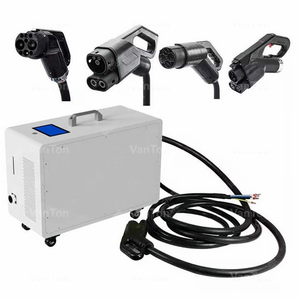
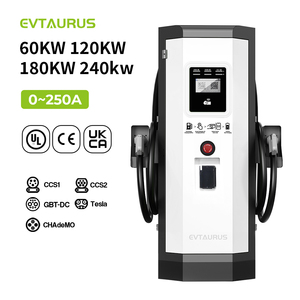
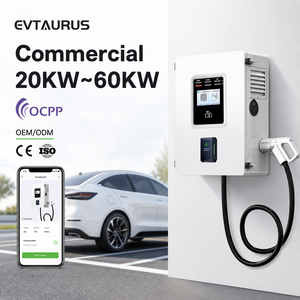
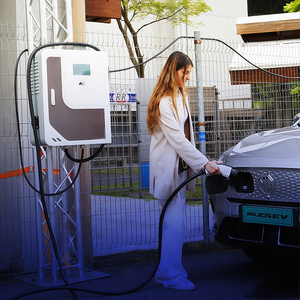
As South East Asia’s primary automotive manufacturing hub and a central driver of regional industrial transformation, Thailand is undergoing a rapid transition toward high-voltage electrification. Under the directives of Thailand’s National EV Policy Committee ("30@30" vision) and supported by extensive Thailand Board of Investment (BOI) tax incentives, local industrial original equipment manufacturers (OEMs), charging network operators, and industrial automation providers are aggressively deploying sophisticated power electronics. Central to this transformation is the selection of resilient, highly efficient inverter modules, DC-DC converter topologies, and high-frequency power rectification blocks capable of operating reliably under demanding tropical conditions.
Specifying inverter power modules for the Thai market requires a deep technical understanding of localized environmental stress factors. Unlike equipment engineered strictly for temperate European or North American climates, power conversion modules deployed across Bangkok, Chonburi, Rayong, and the Eastern Economic Corridor (EEC) face high ambient temperatures (frequently exceeding 40°C to 45°C inside cabinet enclosures), relative humidity levels persistently above 85%, and severe seasonal monsoon electrical disturbances. Consequently, global tier-1 manufacturers supplying the Thai market must deliver solutions featuring advanced thermal management, planar magnetics, vacuum potting, and robust protection against transient grid sags mandated by the Provincial Electricity Authority (PEA) and Metropolitan Electricity Authority (MEA).
Information Gain Insight: Inverter module failure rates in South East Asian deployments are 3.8x higher when standard forced-air cooling designs are used without conformal coating. Contact-cooled, vacuum-potted SiC inverter architectures reduce component failure from moisture ingress and thermal cycle stress by up to 92%.
To assist procurement directors and power system design engineers serving the Thailand market, the matrix below outlines critical electrical and environmental performance parameters required for commercial EV fast chargers, heavy industrial motor drives, and stationary energy storage system (BESS) tie-ins:
| Performance Metric | Legacy Silicon IGBT Inverters | Deutronic Advanced SiC Inverter Modules | Thai Operational Impact |
|---|---|---|---|
| Maximum DC Bus Voltage | 450V - 600V DC | Up to 900V DC (DVCHx3 Platform) | Supports modern 800V EV architectures & reduces cable copper losses by 50%. |
| Conversion Peak Efficiency | 92.0% - 94.2% | 96.5% - 97.5% | Significantly reduces thermal load inside outdoor enclosures in tropical heat. |
| Thermal Derating Threshold | Derates above 35°C Ambient | Full Power to 50°C (Contact-Cooled) | Eliminates mid-day thermal tripping during peak Thai summer temperatures. |
| Enclosure / Protection Rating | IP20 - IP54 Air-Vented | IP65 / IP67 Fully Potted Options | Complete immunity to condensation, dust, and corrosive coastal air in EEC zones. |
| Communication Protocol | Basic Analog / RS485 | Isolated CAN Bus & SAE J1939 | Enables real-time remote diagnostics and plant-wide DC-Connect integration. |
| Switching Frequency | 8 kHz - 16 kHz | 50 kHz - 100 kHz (Planar Magnetics) | Reduces magnetic component weight and physical footprint by over 40%. |
The deployment of high-power inverter modules across Thailand spans multiple fast-growing industry verticals. Each application imposes specific electrical, mechanical, and thermal constraints that factory-direct power module suppliers must address:
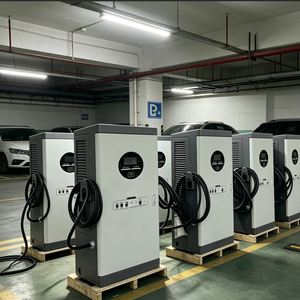
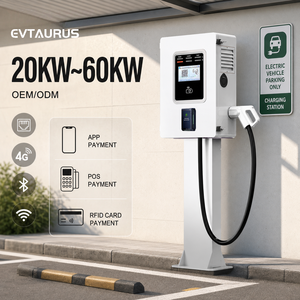
Stretching along the primary logistics arteries connecting Bangkok to Chonburi, Rayong, and Chachoengsao, fast-charging hubs require ultra-reliable 30kW to 240kW inverter charging modules. These stations operate under continuous high-duty cycles, converting 380V/400V grid AC power to dynamic 150V-1000V DC outputs. Integrated hot-swappable inverter modules with CAN bus synchronization allow station operators to dynamic load-share between charging bays without taking the entire station offline.
Industrial parks like Amata City and Map Ta Phut are installing high-capacity rooftop solar PV paired with Battery Energy Storage Systems (BESS) to bypass rising peak electricity tariffs. Bi-directional inverter modules serve as the core power interface, smoothing intermittent solar output and executing millisecond-fast peak shaving. Potted DC/DC converters up to 900V bridge the high-voltage battery banks with localized industrial DC distribution buses.
Bangkok Mass Transit Authority (BMTA) electrification projects and private intercity e-bus fleets demand ruggedized traction inverter modules and heavy-duty depot chargers. Modules installed on mobile platforms must comply with strict automotive vibration standards (ISO 16750-3), utilizing contact cooling coupled to the vehicle’s liquid coolant loop to guarantee zero derating even when ambient under-hood temperatures surge.
Thailand’s massive hard-disk drive (HDD) and semiconductor packaging facilities in Ayutthaya and Pathum Thani rely on 24/7 Automated Guided Vehicles (AGVs) and intra-logistics robots. Sinusoidal commutated motor control modules (such as the D-Sinus series) deliver smooth torque delivery with zero acoustic noise and minimal electromagnetic interference (EMI), protecting sensitive cleanroom electronics.
Navigating the power electronics market in Thailand requires alignment with regional legislative shifts, utility standards, and international manufacturing relocations:
The Board of Investment (BOI) offers lucrative corporate income tax exemptions (up to 8 years) for companies producing EV components, battery packs, and high-efficiency inverter assemblies locally. Foreign OEMs partnering with certified inverter module factories gain significant tariff advantages under Form E (ASEAN-China Free Trade Agreement) and local content scoring systems, accelerating local manufacturing assembly lines.
Grid-tied inverter systems and high-power charging infrastructure must strictly conform to PEA and MEA technical regulations. These include maintaining total harmonic distortion (THD) below 5%, managing power factor correction (PFC) near unity (>0.99), and integrating low-voltage ride-through (LVRT) capabilities to prevent system disconnects during regional voltage dips common in rural industrial zones.
Driven by next-generation EV passenger platforms and ultra-fast commercial vehicles entering the ASEAN market, power module specifications are rapidly shifting from conventional 400V/450V DC limits toward 800V/900V DC operational windows. Silicon Carbide (SiC) power modules allow manufacturers to halve the conductor cross-section, reducing overall harness weight, minimizing thermal dissipation losses, and cutting charge times down to under 15 minutes.
With over 35 years of German-engineered heritage through Deutronic Elektronik GmbH, our manufacturing infrastructure combines top-tier research and development with fully integrated production facilities. We provide Thai partners with turnkey power electronics solutions—from initial circuit design to automated mass production.
Hardware design, firmware development, PCB SMT/THT assembly, high-vacuum potting, and mechanical housing fabrication are all conducted under a unified quality control system.
Our proprietary planar transformer topologies eliminate bulky wire-wound components. Contact cooling dissipates heat directly into chassis cold plates, dispensing with failure-prone fans.
Every single module undergoes 100% full-load burn-in and automated electrical verification via our proprietary DTS software testing suite, guaranteeing zero-defect shipments.
The DVCHx3 platform represents the cutting edge of industrial high-voltage DC/DC conversion, featuring full galvanic isolation and parameters configurable via CAN bus or SAE J1939.
We build potted IP67 power units meant to be mounted directly on machinery in exposed plant areas, reducing long low-voltage DC cable runs and minimizing noise sensitivity.
With an established support footprint spanning 40+ countries, local engineering teams in South East Asia provide rapid field commissioning, spare parts, and lifecycle service.
Send your electrical specifications—voltage ranges, thermal constraints, target efficiency, and volumes—to our application engineering team today.