Engineered & manufactured in Germany — Adlkofen / Bavaria Global service network in 40+ countries
Tier-1 Industrial Power Engineering

E Mobility DC DC Converter Suppliers & Exporters serving the Melbourne market

High-Voltage (up to 900V) Power Conversion, Heavy-Duty Railway & Commercial Transport Converters, and Fast EV Charging Infrastructure Engineered for Victoria's Decarbonization Mandate.

Commercial E-Mobility Converters & Fast Charging Solutions

Engineered for high thermal tolerance, low electromagnetic interference (EMI), and continuous 24/7 heavy-duty operation across Melbourne's logistics, public transport, and commercial EV hubs.
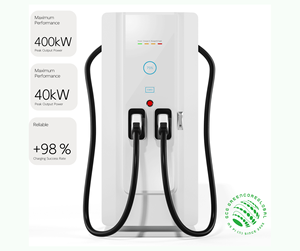
High Power DC High Power DC EV Charger 30kW-240kW Fast Charging Station for Electric Vehicles

High Power DC EV Charger 30kW-240kW Fast Charging Station for Electric Vehicles

  • Output: 30kW to 240kW Modular
  • Dual Connector CCS2 / CHAdeMO
  • OCPP 1.6J Cloud Integration
Get a Quote
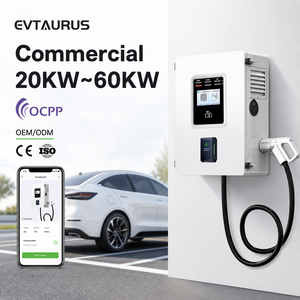
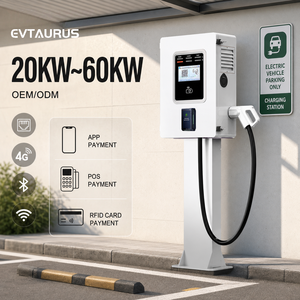
Multi-Standard CCS2 GBT Chademo dc Ev Charger 15kw 20kw 40kw 60kw Commercial EV Charger

CCS2 GBT Chademo dc Ev Charger 15kw 20kw 40kw 60kw Ev Charger Commercial Ev Charging Station With App Pos RFID

  • Power Options: 15kW - 60kW
  • Integrated POS & RFID Payment
  • IP54 Rugged Outdoor Enclosure
Get a Quote
CE Certified GCG 80kW GB/T DC EV Charger Dual Connectors Ground-Mounted

GCG 80kW GB/T DC EV Charger Dual Connectors Ground-Mounted with OCPP CE Certified for Electric Vehicle Charging Stations

  • 80kW Continuous Heavy-Duty Power
  • Dual Port Dynamic Load Balancing
  • Industrial Ground-Mounted Chassis
Get a Quote
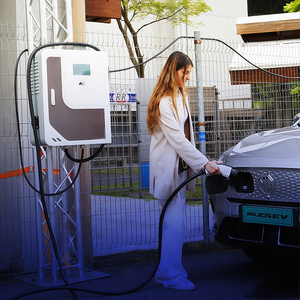
Smart Wallbox New Smart DC EV Charger Wallbox Fast Charging Station

New Smart DC EV Charger 20Kw 30Kw 40Kw Wallbox Fast Charging Station Commercial Home Garage CCS1 CCS2 GBT OCPP1.6

  • Compact 20kW / 30kW / 40kW DC
  • Wall-Mount & Garage Space-Saving
  • Intelligent Energy Control Firmware
Get a Quote
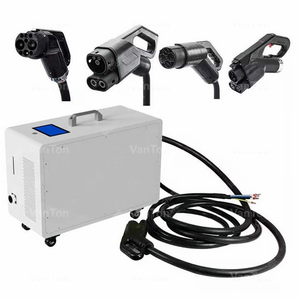
Mobile Fast DC VanTon Electric Car Mobile CCS2 Ev Fast Charger 20kw

VanTon Electric Car Mobile CCS2 Ev Fast Charger 20kw Single Gun Fast Ev Car Dc Charger Movable Charging Station 5m

  • 20kW Movable On-Demand DC Power
  • Heavy Duty Caster Wheels & Handle
  • 5-Meter Heavy Flexible Cable
Get a Quote
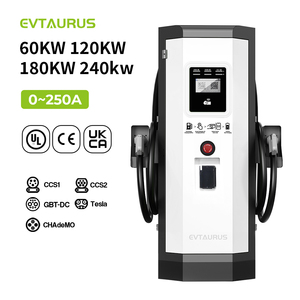
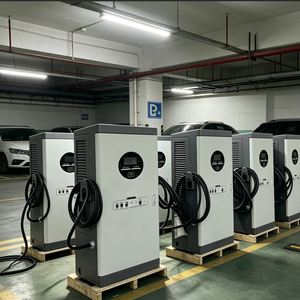
Fleet Charging Commercial Electric Car Charger 60kW to 240kW DC

60kw 80kw 120kw 160kw 240kw DC New EV Power Charging Station Commercial Electric Car Charger GB/T CCS2

  • Scalable Grid Modules 60kW - 240kW
  • Ultra-Fast Depot Charging Hub Ready
  • IP55 Industrial Grade Protection
Get a Quote
Commercial & Home Wall Mounted Single Gun DC EV Charger Station

Wall Mounted Single Gun 20KW 30KW 40kw 60kw CCS1 CCS2 GB/T Chademo Dc Ev Charger Station for Commercial and Home Use

  • 20kW to 60kW Single-Gun Output
  • Flexible CCS1 / CCS2 / CHAdeMO
  • Low Maintenance Aluminium Housing
Get a Quote
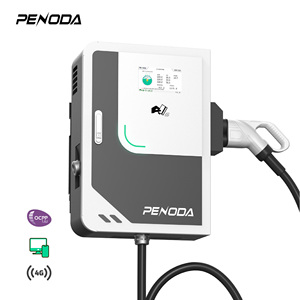
400V / 800V DC Penoda DC Wallbox Car Charger 20kw 30kw 40KW CCS1 CCS2

Penoda DC Wallbox Car Charger 20kw 30kw 40KW CCS1 CCS2 CHAdeMO GB/T IP55 Fast DC EV Charging Station Commercial New 400v

  • High Density 400V DC Architecture
  • IP55 Sealed Operational Safety
  • Commercial Fleet & Depot Ready
Get a Quote
900V DC
Max Input Voltage Range
> 96.5%
Peak Conversion Efficiency
IP67/IP6B
Contact Cooled Enclosure
35+ Yrs
German Engineering Heritage

1. Strategic Electrification Landscape across Greater Melbourne & Victoria

The State of Victoria and Greater Melbourne are undergoing a rapid transformation toward zero-emission transportation and heavy-duty industrial electrification. Under the Victoria Zero Emission Vehicle (ZEV) Roadmap, the Victorian Government has committed to ensuring 50 percent of all new light vehicle sales are zero-emission by 2030, alongside complete decarbonization of the public transport bus network. Achieving these aggressive milestones requires robust power conversion hardware capable of withstanding Australia's demanding operational conditions, including severe ambient heat spikes exceeding 40°C during Victorian summers, high dust loads in suburban freight corridors, and rigorous electrical safety standards governed by AS/NZS regulations.

As a senior supplier and engineering exporter of high-power E Mobility DC DC Converters and fast DC charging systems serving the Melbourne market, our technology bridges high-voltage battery storage architectures (ranging from 400V to 900V DC) with auxiliary low-voltage power networks (12V, 24V, or 48V DC). Whether integrated into municipal transit buses across the Melbourne CBD, automated guided vehicles (AGVs) operating around the Port of Melbourne, or off-highway heavy machinery across Victoria's civil infrastructure projects, isolated step-down power converters serve as the mission-critical heartbeat of the modern electric powertrain.

Technical Information Gain: Planar Transformer Architecture vs. Traditional Wire-Wound Converters

In high-power commercial vehicle electrification, conventional bulky wire-wound magnetic components introduce excessive parasitic inductance, thermal bottlenecks, and vulnerability to mechanical vibration. Our latest DVCx3 and DVCHx3 DC/DC converter platforms utilize low-profile planar magnetic cores coupled with direct contact cooling plates. This engineering architecture achieves power densities exceeding 2.5 kW/L while delivering galvanic isolation rated up to 3.0 kV AC, dramatically extending mean time between failures (MTBF) in harsh transit environments.

2. High-Voltage DC/DC Converter Architecture: DVCx3 & DVCHx3 Engineering Breakdown

Power conversion within electric commercial vehicles, light rail transit, and heavy mobile equipment demands absolute electrical stability and total galvanic isolation. Fluctuations from traction batteries during rapid acceleration or regenerative braking must be suppressed before reaching sensitive control electronics, lighting, braking systems, and telemetry units.

High-Voltage Input Coverage

The DVCHx3 Series supports ultra-wide DC input voltage ranges from 400V up to 900V DC, making it ideal for 800V commercial truck platforms, fuel cell electric vehicles (FCEVs), and high-voltage energy storage systems without requiring external step-down pre-regulators.

Maintenance-Free Contact Cooling

By eliminating internal liquid coolant passages or forced-air cooling fans, our potted contact-cooled housing dissipates internal heat directly into the vehicle's structural chassis. This sealed IP67 design prevents ingress of dust, coastal salt spray, and moisture.

CAN Bus & SAE J1939 Telemetry

Real-time parameter configuration, thermal diagnostics, output voltage ramping, and fault messaging are managed digitally via standard automotive CAN 2.0B or SAE J1939 protocols, enabling seamless integration with Vehicle Control Units (VCUs).

3. Regional Application Scenarios Serving Greater Melbourne

The Melbourne metropolitan region features unique geographical, industrial, and transportation dynamics that require tailored power conversion engineering. Below are the primary deployment vectors where our DC/DC converters and fast charging stations deliver verifiable efficiency gains:

Deutronic Contact Cooled DC/DC Converters for Heavy Transport

A. Commercial Bus & Truck Fleet Electrification (West & North Freight Corridors)

Distribution centers in Laverton, Truganina, and Campbellfield are rapidly transitioning heavy truck fleets and delivery vans to zero-emission drive systems. Our DVCHx3 900V DC/DC converters power 24V auxiliary power steering pumps, air compressors, and HVAC systems directly from the main high-voltage traction pack, maintaining maximum electrical efficiency across extended suburban routes.

900V Max DC Input SAE J1939 Protocol 24V Auxiliary Power
Deutronic Industrial Battery Chargers for Automotive Assembly and Depot Maintenance

B. Port of Melbourne Automation & Heavy Yard Logistics

As Australia's largest container port, the Port of Melbourne relies heavily on automated straddle carriers, yard tractors, and heavy electric forklifts. These vehicles experience high vibration, constant shock loads, and corrosive maritime air. Our fully potted, contact-cooled power supplies and DC/DC converters ensure uninterrupted sub-system power under 24/7 duty cycles.

Vibration Resistant Potted Enclosure IP67 Protection
Deutronic Automated Electrical End of Line Test Systems

C. Heavy Rail & Yarra Trams Auxiliary DC Power Networks

Melbourne operates the largest operational urban tram network in the world. Auxiliary power conversion units deployed on suburban rail systems must comply with strict railway electromagnetic compatibility (EMC) standards and operate under fluctuating overhead DC catenary lines. Our custom-engineered rail-spec converters provide clean, galvanically isolated low-voltage power for onboard signal telemetry, passenger wifi, and emergency lighting systems.

Railway EMC Compliant 3.0kV Isolation Transient Protection

4. Enterprise Engineering Heritage & Vertically Integrated Manufacturing

Selecting an E-Mobility DC/DC converter vendor requires auditing more than simple datasheet specifications. International OEM procurement managers in Victoria prioritize long-term component availability, localized technical support, strict quality traceability, and robust engineering backing. Building upon over 35 years of German power electronics leadership (Deutronic engineering lineage), our manufacturing ecosystem provides an end-to-end single-source guarantee:

In-House PCB Assembly (THT & SMD)

Complete control over surface-mount (SMD) and through-hole (THT) printed circuit board manufacturing enables rapid design adaptations, high component density, and immediate engineering change control without relying on third-party assembly contractors.

D-Sinus Sinusoidal Motor Controllers

For auxiliary fluid pumps, cooling fans, and hydraulic drive units, our D-Sinus sinusoidal commutated speed controllers reduce torque ripple and acoustic motor noise, ensuring quiet and energy-efficient operation in urban environments.

Automated DTS End-of-Line Test Systems

Every converter and charging computer undergoes rigorous automated testing powered by proprietary DTS (Deutronic Test Software) platforms. Full electrical parameter logging ensures 100% component traceability for automotive OEM audits.

5. Strategic Trends & Future Roadmap for Victoria's E-Mobility Market (2025–2035)

As the commercial EV sector matures across Australia, system integrators are advancing beyond basic component selection to focus on holistic energy management architectures. Key industry trends dominating the Melbourne market include:

  • Transition to 800V/900V Architecture: Next-generation heavy transit buses and commercial trucks are adopting 800V nominal battery packs to reduce copper wire gauge weight and minimize thermal losses. Our DVCHx3 converter platform natively handles 900V peak inputs, providing future-proof security for fleet upgrades.
  • Microgrid & Battery Energy Storage (BESS) DC Integration: Commercial vehicle depots along the M1 Princes Freeway and M3 Eastern Freeway are increasingly deploying stationary battery storage coupled with high-power DC fast chargers (30kW to 240kW). Direct DC-to-DC coupling reduces AC grid demand charges and optimizes solar PV utilization.
  • Bidirectional Telemetry & Cloud Analytics: Modern EV converters must transmit continuous health metrics—such as internal thermal head-room, isolation resistance, and input voltage ripple—to fleet management systems via CAN bus to OCPP cloud bridges, facilitating predictive maintenance before road failures occur.

6. Frequently Asked Questions by Melbourne & Australian Buyers

Which input voltage ranges do your E-Mobility DC/DC converters support?
Our product lines cater to both low and high-voltage vehicle architectures. The DVCx3 series covers standard lower DC input ranges (e.g., 24V, 48V, 110V DC), while the high-voltage DVCHx3 series operates with DC inputs up to 900 V DC. Both families offer contact-cooled heat dissipation, optional galvanic isolation up to 3.0 kV, and programmable parameter setting over CAN bus or SAE J1939.
How do your contact-cooled converters withstand Australian summer heat conditions in Melbourne?
Melbourne frequently experiences extreme heatwaves during summer months where ambient under-chassis temperatures on commercial vehicles can surpass 50°C. Our contact-cooled designs utilize planar magnetics and thermally conductive potting materials to transfer internal component heat directly to the vehicle chassis plate. This eliminates cooling fan degradation from dust, dirt, and water ingress while maintaining reliable thermal performance.
Are your DC EV chargers compliant with Australian Standards (AS/NZS) and OCPP protocols?
Yes. All fast DC charging stations (ranging from 15kW wallboxes up to 240kW ground-mounted dual-connector charging hubs) comply with applicable IEC and AS/NZS electrical safety standards, electromagnetic compatibility (EMC) codes, and CE certifications. They natively support Open Charge Point Protocol (OCPP 1.6J and OCPP 2.0.1) for seamless integration with Australian EV network software platforms.
Can custom voltage outputs or firmware communication profiles be provided for small-to-medium OEM volumes?
Absolute performance flexibility is one of our primary advantages. Because electronics design, software engineering, PCB assembly, potting, and automated testing are performed in-house under vertically integrated facilities, we can customize output voltage setpoints, housing mounting dimensions, and CAN bus messaging parameters even for medium-volume vehicle builds and custom prototypes.
What are the typical export lead times and technical support options for Victorian clients?
Standard product series are shipped efficiently via international air freight or sea freight directly to Melbourne ports. Our global engineering support network assists local system integrators with parameter selection, commissioning diagnostic software, and lifecycle spare parts management to minimize vehicle fleet downtime.

Accelerate Your E-Mobility Project in Melbourne

Contact our application engineering team today to review your electrical specifications—input voltage range, output power requirement, thermal cooling interface, and CAN communication profile.

Get a Quote