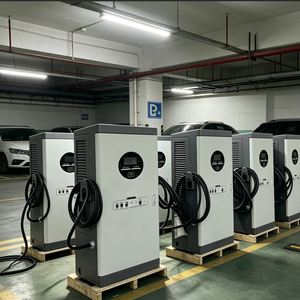
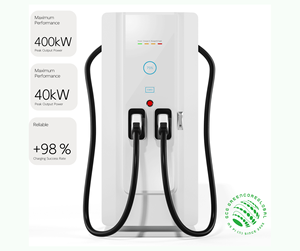
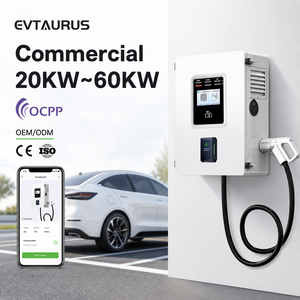
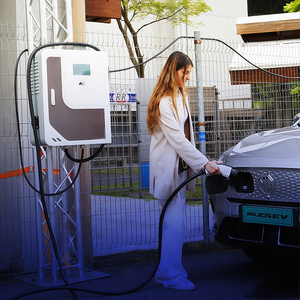
Explore our engineering-proven line of fast DC charging stations, wallboxes, and onboard power components engineered for high reliability, rugged operating environments, and international compliance.
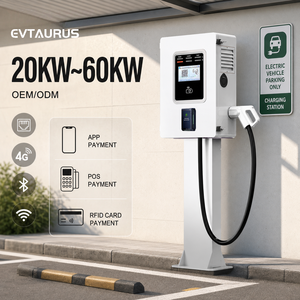
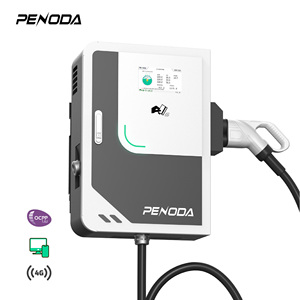
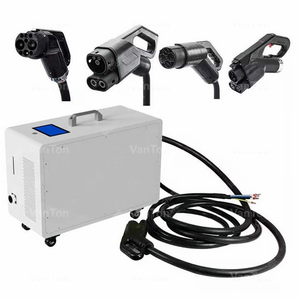
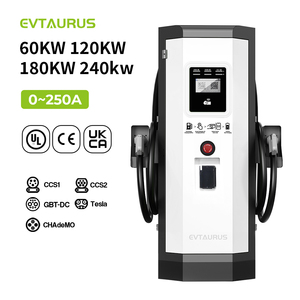
An in-depth analysis of hardware engineering, local environmental mitigation, and custom Onboard Charger (OBC) integration for automotive, 2W/3W, and commercial EV manufacturers in Vietnam.
Vietnam is experiencing one of Asia's most accelerated transitions toward green transportation. Accelerated by government directives such as Resolution 87/NQ-CP and national clean energy roadmaps targeting total fleet electrification, domestic original equipment manufacturers (OEMs), automotive assembly plants in Hai Phong and Da Nang, and fleet operators in Hanoi and Ho Chi Minh City require robust, custom-engineered power conversion hardware.
However, integrating an Onboard Charger (OBC) into vehicles built for the Southeast Asian market presents distinct electrical and environmental challenges. Unlike Western European or North American deployment zones, power conversion electronics operating in Vietnam must tolerate extreme grid voltage fluctuations (180V AC to 264V AC single-phase, or 304V AC to 456V AC three-phase), ambient temperatures regularly exceeding 42°C, and relative air humidity reaching 98% during monsoon cycles.
To deliver maximum power density within strict volumetric constraints, modern custom OEM Onboard Chargers utilize advanced Silicon Carbide (SiC) MOSFET switching topologies. Traditional silicon IGBT architectures suffer from higher thermal switching losses, requiring larger heat sinks and cooling circuits that burden electric vehicle chassis dynamics.
By leveraging high-frequency switching (100 kHz to 300 kHz), SiC-based LLC resonant converters reduce magnetics size by up to 40% while achieving conversion efficiencies above 96.5%. Our engineering team integrates direct liquid-cooling cold plates or high-transfers-per-watt contact cooling plates engineered explicitly to maintain junction temperatures well within safe operational envelopes even under Vietnam’s harsh ambient heat profiles.
| Specification Parameter | Legacy Silicon (Si) OBC Platform | Deutronic Advanced SiC Custom OBC | OEM Operational Benefit in Vietnam |
|---|---|---|---|
| Peak Power Efficiency | 92.0% - 94.0% | 96.5% - 97.2% | Significantly reduced battery energy loss & faster charge times |
| Power Density (kW/L) | 1.2 - 1.8 kW/L | 3.0 - 4.2 kW/L | Frees up internal vehicle chassis space for payload/battery pack |
| Ingress Protection | IP65 (Gasket Sealed) | IP67 / IP68 Full Potting | Complete immunity against dust ingress, flash flooding, monsoon moisture |
| Input Voltage Tolerance | ±10% AC Nominal | 180V - 460V AC Wide Range | Uninterrupted charging across rural and urban Vietnamese grid variations |
| Communication Bus | Standard CAN 2.0B | Dual CAN, J1939, LIN, ISO 15118 | Seamless handshake with BMS, vehicle VCU, and smart grid protocols |
From initial circuit simulation to fully potted mechatronic assembly, our custom OEM onboarding process provides absolute flexibility for automotive, industrial, and marine electric platforms.
Support for Vehicle-to-Load (V2L) and Vehicle-to-Grid (V2G) power flow. Converts DC traction battery power back into 220V AC output to supply power tools, emergency microgrids, or industrial equipment.
Combines a 3.3kW, 6.6kW, or 11kW Onboard Charger with a 1.5kW - 3kW High-to-Low Voltage DC/DC converter (400V/800V to 12V/24V) into a single compact housing.
Designed and manufactured in accordance with strict automotive quality standards. Hardware fault detection, redundant software routines, and ASIL-B compliance guarantee safe operation.
Deploying targeted power electronics across light electric vehicles, commercial logistics fleets, passenger cars, and industrial automation equipment.
Compact, light-weight 6.6kW & 11kW OBCs optimized for Vietnamese urban commuter vehicles and taxi fleets. High efficiency minimizes grid strain during overnight residential AC charging.
Heavy-duty, high-voltage 22kW charging systems designed for commercial bus fleets operating in major metropolitan areas like Hanoi and Ho Chi Minh City. Features robust CANbus diagnostics.
Rugged, potted charging electronics engineered for Automated Guided Vehicles (AGVs) and electric yard tractors operating in major Vietnamese shipping hubs like Hai Phong Port and Cat Lai Port.
Combining over 35 years of power electronics development, in-house SMD/THT PCB contract manufacturing, and proprietary automated testing to deliver absolute product security.
From early conceptual design and circuit modeling to SMD/THT PCB assembly, environmental potting, final assembly, and end-of-line functional safety testing—all engineering processes remain strictly in-house. This eliminates communication gaps and accelerates change-order execution for custom OEM requests.
Every single custom onboard charger unit produced passes through our automated DTS (Deutronic Test System) software suite. We execute 100% full-load burn-in, high-voltage insulation tests, thermal stress sweeps, and automated CAN protocol verification prior to global dispatch.
With an active presence across 40+ countries and expanding support structures in Southeast Asia, we support OEM engineers from initial prototype commissioning through serial production rollout, offering traceable log data and long-term spare parts availability.
Need a customized onboard charger (OBC) matching specific mechanical dimensions, voltage curves, or vehicle CAN protocol requirements? Our application engineering team provides complete technical evaluations and prototype turnaround.
Addressing common queries regarding grid compatibility, customization lead times, environmental protection, and local compliance standards.
Our OEM onboard chargers are designed with an ultra-wide AC input voltage range (180V to 264V AC for single-phase, and 304V to 456V AC for three-phase systems). Integrated active Power Factor Correction (PFC with PF > 0.99) ensures steady, full-power DC output charging even in regions experiencing frequent line voltage sags or electrical noise.
Yes. As a custom OEM manufacturer, we tailor mechanical form factors, mounting bracket locations, connector types (such as Amphenol, TE Connectivity, or Rosenberger), and liquid-cooling inlet/outlet positions to align precisely with your CAD model constraints.
We implement full structural potting using specialized thermal-conductive polyurethane resins combined with IP67/IP68 sealed die-cast aluminum enclosures. This prevents moisture ingress, condensation, and corrosion caused by ambient humidity exceeding 95% or temporary submersion during flash floods.
Absolutely. Our chargers support CAN 2.0B, SAE J1939, and custom CAN communication protocols. We provide OEM customers with complete DBC files and software parameterization tools to configure handshake sequences, dynamic voltage/current limits, and fault reporting.
Engineering sample modifications based on our validated series platforms typically take 6 to 10 weeks, including mechanical and firmware adaptation. Serial production lead times vary based on volume, but in-house PCB assembly and testing allow us to maintain agile production cycles.
Yes. All products undergo rigorous testing to meet CE, IEC 61851, IEC 61000 EMC standards, ISO 26262 functional safety guidelines, and local Vietnamese TCVN electrical safety requirements where applicable.
Contact our power electronics specialists today to discuss technical specifications, request CAD models, or obtain a competitive quotation for your vehicle program in Vietnam.