Ruggedized commercial charging hardware and precision power conversion modules designed for harsh operational environments across Nigeria.
As Nigeria accelerates its Energy Transition Plan (ETP) and shifts away from costly fossil fuel subsidies, commercial enterprises, mini-grid operators, industrial plants, and telecommunications providers across Lagos, Abuja, Kano, and Port Harcourt face an unprecedented demand for resilient power electronics. The core bottleneck in deploying modern DC bus architectures, high-voltage battery storage networks, and fast electric vehicle (EV) charging stations lies in input voltage variability and extreme environmental stressors.
Standard off-the-shelf step-up DC/DC converters frequently fail under Sub-Saharan ambient operational profiles. Unstable grid supply, frequent sags, wide solar PV output sweeps during intermittent cloud cover, and ambient temperatures exceeding 45°C during peak dry seasons require specialized power conversion topologies. As a premier **Custom OEM Boost Converter Manufacturer & Supplier serving Nigeria**, our engineering framework leverages over 35 years of advanced German power electronics legacy (derived from our core technology roots in high-voltage industrial converters, automated DTS test suites, and planar magnetics packaging) to deliver customizable, heavy-duty boost converter solutions built specifically for West Africa's electrification challenges.
Technical Insight: A boost converter (step-up converter) raises a lower input DC voltage to a higher output DC voltage. In Nigerian industrial microgrids and commercial EV hubs, custom boost topologies are essential to step up fluctuating 48V–480V solar or battery voltages to standardized high-voltage DC buses (750V–900V DC) required by modern fast-charging platforms and industrial motor drives.
Our custom OEM boost converter systems are designed from the silicon up to maximize total energy yield while mitigating thermal stress and electrical noise:
To achieve maximum ROI and operational continuity, energy projects across Nigeria rely on boost converter architectures customized for distinct operational environments:
Deploying boost converters in industrial parks (e.g., Agbara, Ikeja, Sagamu) to step up variable solar PV string voltages up to 750V DC buses, reducing diesel generator dependency by over 65%.
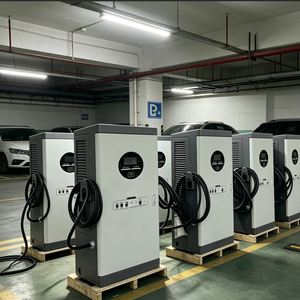
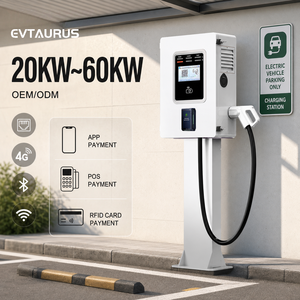
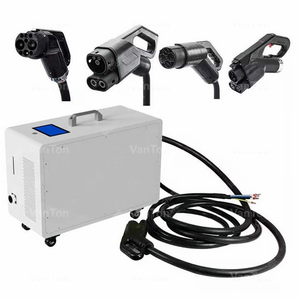
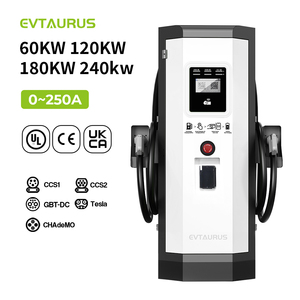
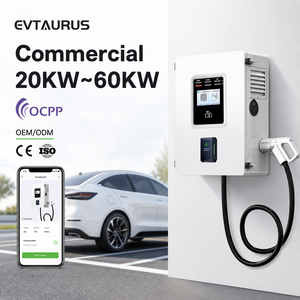
Custom step-up converter modules serving as the backbone for high-power DC fast-charging depots (30kW–240kW) for electric buses, commercial delivery fleets, and 2/3-wheeler swap hubs.
Stepping up low-voltage 48V lithium energy storage arrays to higher DC voltages for off-grid remote tower sites across Northern Nigeria, ensuring 99.99% network uptime.
Nigeria experiences two distinct climatic challenges that destroy standard electronics: high humidity in coastal southern zones (Lagos, Rivers, Delta) and severe airborne silica dust coupled with ambient temperatures reaching 48°C in northern regions (Kano, Sokoto, Maiduguri) during the Harmattan season.
Standard cooling fan assemblies draw in ambient airborne dust, clogging heat sinks and causing rapid dielectric breakdown or thermal shutdown. Our custom OEM boost converter designs overcome this through advanced **contact-cooling techniques and full potting resin technology** (similar to our heavy-duty automotive and rail-grade converter platforms). Heat is conducted away from key power switches (SiC/IGBTs) directly to an extruded aluminum cold plate or external passive heat sink without exposing sensitive SMD/THT PCB traces to ambient air.
We work directly with Nigerian system integrators, EPC contractors, and OEM product developers to engineer tailored step-up power stages matching exact voltage, current, and form-factor requirements.
| Parameter | Standard Range | High-Voltage OEM Custom Series | Industrial Utility Grade |
|---|---|---|---|
| Input Voltage Range | 12V DC – 90V DC | 200V DC – 600V DC | 400V DC – 900V DC |
| Output Boost Voltage | 24V, 48V, 110V DC | 400V – 750V DC | Up to 1000V DC (Customized) |
| Power Rating Options | 1kW – 10kW Modules | 15kW – 80kW Stackable | 100kW – 300kW Substation Level |
| Cooling Topology | Forced Air / Sealed Heat Pipe | Contact Cooled / Baseplate Liquid | Fully Potted Heavy-Duty Aluminum Chassis |
| Conversion Efficiency | 94.5% – 96.0% | 97.2% – 98.4% (SiC Switching) | > 98.0% Peak |
| Communication Interface | RS485 / Modbus RTU | CAN 2.0B / SAE J1939 | OCPP 1.6J / 2.0.1 / Ethernet SCADA |
| Environmental Protection | IP54 Enclosed | IP65 Tropicalized Conformal | IP67 Sealed Potted Unit |
The rapid removal of PMS (petrol) and AGO (diesel) fuel subsidies by the Nigerian Federal Government has fundamentally altered the economics of commercial and industrial power generation. Historically, manufacturing facilities and commercial hubs relied on diesel generator sets operating at an average cost of $0.45–$0.65 per kWh. Today, shifting toward **Solar-plus-Storage DC Microgrids** combined with local high-voltage battery banks yields a levelized cost of energy (LCOE) under $0.14 per kWh.
However, to successfully interconnect diverse energy sources—such as roof-mounted solar arrays, second-life EV batteries, and central high-power DC fast chargers—high-efficiency OEM boost converters act as the critical power bridge. By stepping up fluctuating source voltages directly to a stabilized DC bus, industrial operators avoid unnecessary DC-AC-DC conversion stages, eliminating conversion losses by up to 18%.
Developing custom boost converters for demanding regional deployment requires more than theoretical design—it demands proven manufacturing controls, exhaustive automated testing, and comprehensive life-cycle support.
Drawing from our full-stack manufacturing facilities (encompassing advanced SMT/THT PCB assembly lines, automated DTS test systems, planar magnetics winding, and automated resin potting), we provide complete end-to-end OEM/ODM custom development services:
Complete control over hardware topology, multilayer PCB layout, and firmware control loops tailored to your exact system requirements.
Every single manufactured unit undergoes 100% full-load burn-in testing and automated electrical insulation verification prior to shipment.
Established supply chain channels serving major Nigerian entry hubs including Apapa Port, Tin Can Island, Lekki Deep Sea Port, and Murtala Muhammed Airport.
Speak directly with our power electronics application team to discuss input/output specs, thermal management requirements, and target deployment profiles across Nigeria.
Contact Us