
Customizable OEM platforms engineered with Japanese-grade THT soldering integrity, advanced thermal potting, and robust EMI/EMC compliance.
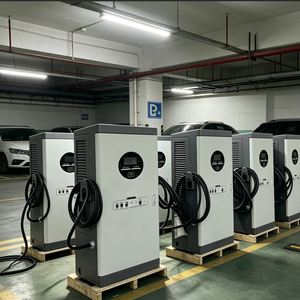
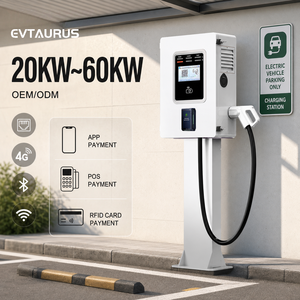
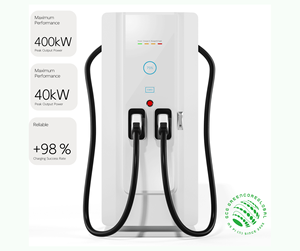
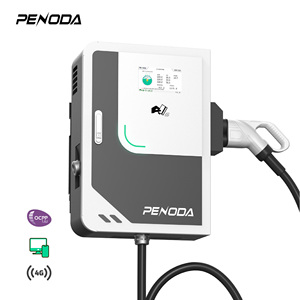
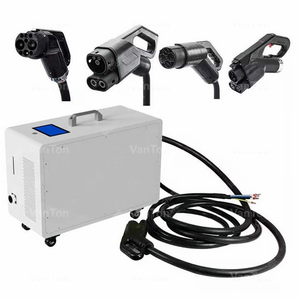
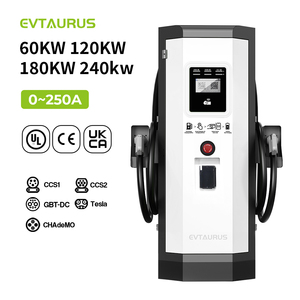
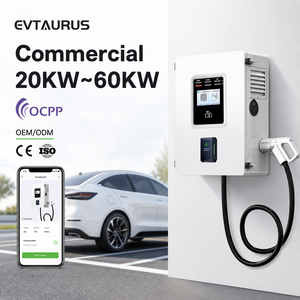
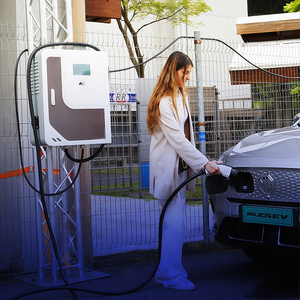
In the modern power electronics landscape, Surface Mount Technology (SMT) dominates lightweight consumer electronics. However, for mission-critical industrial applications, electric vehicle (EV) charging stations, high-voltage DC/DC converters, and heavy industrial power supplies destined for Japan, Through-Hole Technology (THT) assembly remains the indispensable backbone of structural and electrical integrity.
Japanese original equipment manufacturers (OEMs) enforce some of the world’s most stringent quality benchmarks—often summarized under the philosophy of Monozukuri (craftsmanship and engineering perfection). When Japanese industrial buyers source wholesale THT assemblies from Chinese manufacturing partners, mechanical robustness, thermal dissipation, solder joint fillet quality, and long-term vibration resistance under JIS (Japanese Industrial Standards) are non-negotiable parameters.
High-power applications (such as 30kW–240kW DC EV fast chargers and 900V DC/DC converters) subject printed circuit board assemblies (PCBAs) to continuous thermal cycling, electromagnetic stress, and high mechanical current forces. THT components—such as heavy transformers, electrolytic capacitors, high-current busbars, and power inductors—offer mechanical anchorage strength up to 10 times higher than equivalent SMT components.
To understand why Japanese automotive and industrial firms consistently specify THT for power distribution units (PDUs) and converter stages, examine the structural differences highlighted below:
| Engineering Parameter | Through-Hole Technology (THT) Assembly | Surface Mount Technology (SMT) | Impact on Japanese Compliance (JIS/PSE) |
|---|---|---|---|
| Mechanical Bonding Strength | High: Component leads penetrate PCB substrate holes, secured by 360° solder fillets. | Moderate: Surface-level copper pad adhesion; susceptible to shear stress. | Crucial for high-vibration automotive & rail applications (JIS C 60068). |
| Current Carrying Capacity | Superior: Handles heavy copper layers (up to 6oz–12oz) and massive pin diameters. | Limited: Constrained by thin foil traces and small pad contact areas. | Essential for 240kW EV chargers & high-power industrial rectifiers. |
| Thermal Dissipation | Direct thermal dissipation through thick lead pins and heat sink mechanical mounts. | Relies heavily on thermal vias and surface heatsinks. | Prevents thermal runaway during continuous high-duty-cycle operation. |
| Failure Rate under Thermal Shock | Extremely Low: Lead elasticity absorbs thermal expansion coefficient (CTE) mismatches. | Higher risk of solder joint micro-cracking over thousands of heat cycles. | Ensures 10+ year operational lifespan expected by Japanese B2B end-users. |
Traditional manual THT soldering introduces human variability, voiding, and flux residue contamination—defects unacceptable under Japan’s METI (Ministry of Economy, Trade and Industry) safety regulations. As leading wholesale THT assembly suppliers serving Japan, our manufacturing infrastructure employs state-of-the-art Selective Wave Soldering Machines paired with inert Nitrogen (N2) shielding atmospheres.
Selective soldering permits precise control over contact time, wave height, and solder temperature for each individual THT pin on complex mixed-technology PCBAs. This eliminates thermal stress on adjacent fine-pitch SMT components on the reverse side of the board while achieving 100% vertical solder fill (IPC-A-610 Class 3 standard).
Full adherence to Japan Electrical Appliance and Material Safety Law (PSE Mark certification), incorporating rigorous creepage and clearance routing rules for 400V–900V architectures.
Automated selective acrylic, polyurethane, or silicone encapsulation protects THT power circuits against Japan’s high coastal humidity, salt spray, and industrial dust.
Custom Automated Electrical End-of-Line (EOL) test rigs running advanced DTS software perform 100% full-load functional burn-in and safety isolation testing before shipment.
From Tokyo’s commercial EV charging hubs to automated logistics centers in Osaka and heavy industrial plants in Nagoya, our THT power assemblies drive Japan's core electrification systems.

Japan is aggressively expanding its nationwide fast-charging network, integrating CHAdeMO 3.0 (ChaoJi protocol) capable of ultra-high power output up to 500kW. High-power DC chargers require heavy-duty THT power assemblies capable of switching hundreds of amperes without micro-arc degradations.
Our THT production lines manufacture custom power factor correction (PFC) modules, high-frequency transformer boards, and main rectifier assemblies specifically designed for 30kW–240kW wallbox and ground-mounted fast charging stations. Heavy copper weight (up to 8oz), combined with potted magnetic THT chokes, ensures zero thermal throttling under continuous 100% duty cycles.

Commercial electric buses, agricultural machinery, and heavy construction equipment manufactured by Japanese OEMs require DC/DC converters operating at input voltages reaching 900V DC. Converting high-voltage battery power to standard 12V/24V auxiliary power demands strict galvanic isolation and rugged mechanical design.
We integrate planar magnetics with through-hole high-voltage pin connections, delivering contact-cooled converter units (DVCx3 and high-voltage DVCHx3 series). Built-in CAN bus and SAE J1939 telemetry allow real-time diagnostic reporting to the vehicle control unit (VCU), fully aligned with Japanese automotive CAN protocols.

Automated Guided Vehicles (AGVs) and autonomous mobile robots (AMRs) operating in high-density Japanese logistics centers require extremely compact, vibration-tolerant power supplies. Exposure to humidity, continuous stop-and-go mechanical shocks, and wide ambient temperature swings necessitates fully potted power electronics.
Our decentralized power supply modules feature DIN-rail and 19-inch rack mounting mechanisms alongside fully potted IP67 enclosures. By anchoring heavy THT capacitors and inductors directly into thermal compound resins, mechanical strain on solder joints is virtually eliminated.

Japanese workspace regulations emphasize low acoustic noise and minimal torque ripple in motor-driven equipment. Our D-Sinus family of sinusoidal commutated motor controllers utilizes heavy-current THT MOSFET networks to regulate motor current into a smooth, true sine wave.
This approach drastically reduces mechanical vibration and audible noise in industrial pumps, cooling fans, and electric drive trains, meeting Japanese acoustic and electromagnetic compatibility standards (VCCI Class A/B).

Quality assurance is the cornerstone of Japanese supplier qualification. Beyond contract PCB assembly, we offer complete system-integration manufacturing (DEUTRONICsystems concept). We design bespoke, automated End-of-Line test benches powered by our proprietary DTS (Deutronic Test Software) environment.
Every THT assembly produced for Japanese clients undergoes fully automated optical inspection (AOI), X-ray inspection (AXI) for lead hole solder barrel fill, high-voltage withstand testing, and functional load emulation. Full data logging guarantees complete component-level traceability across the supply chain.
Understanding Japan’s regulatory shifts and technological roadmap is essential for successful cross-border electronics manufacturing partnerships. As China’s premier wholesale THT assembly manufacturer, we actively align our production capabilities with Japan’s key industrial drivers:
Japanese power electronics designers are rapidly adopting Silicon Carbide (SiC) and Gallium Nitride (GaN) power switches to maximize inverter efficiency. Operating at higher switching frequencies requires THT gate drivers and power inductors with ultra-low parasitic inductance and superior heat dissipation copper traces.
Under Japan’s disaster resilience framework, EV charging stations double as emergency power supplies for local communities. Bi-directional V2G charging equipment requires highly reliable dual-stage THT transformer assemblies capable of continuous two-way power inversion without thermal degradation.
Japan was a global pioneer in lead-free electronics manufacturing. Wholesale suppliers must ensure zero lead contamination in solder pots, using specialized SAC305 (Sn-Ag-Cu) or SN100C lead-free alloys, backed by regular XRF spectral analysis reports for total environmental compliance.
Japanese procurement leaders are diversifying their component sourcing matrix to hedge against regional disruptions. By establishing turnkey contract manufacturing hubs in China with direct Japanese-speaking engineering support, we provide rapid NPI (New Product Introduction) turnarounds and scalable volume production.
Combining over 35 years of German-influenced power electronics engineering legacy with China’s unmatched manufacturing scale and agility, our factory group delivers a unique value proposition for Japanese buyers:
From initial circuit schematic review, PCB layout optimization, stencil mask design, THT insertion, selective wave soldering, conformal potting, to automated EOL testing—everything is conducted under one roof.
ISO 9001, ISO 14001, and IATF 16949 certified manufacturing facilities operating strictly under 5S lean production protocols, ensuring zero-defect targets (PPM < 10) for Japanese import batches.
Whether you require low-volume, high-mix custom THT assemblies for specialized industrial test systems or high-volume wholesale EV charger production, our engineering teams adapt hardware and firmware to your exact specifications.
Answers to crucial technical, quality control, and logistical questions raised by Japanese procurement directors and engineering leads.
Submit your CAD files, BOMs, or electrical specifications today. Our bilingual engineering team will conduct a comprehensive DFM (Design for Manufacturability) analysis and provide a competitive wholesale quotation tailored to Japanese quality standards.
Contact Us