
Engineered for harsh industrial environments, North American commercial fleets, and heavy-duty electric vehicle architectures with 900V DC input capabilities.
As the North American market accelerates its transition toward high-voltage commercial electrification, original equipment manufacturers (OEMs), fleet operators, and industrial system integrators face severe operational challenges. Traditional forced-air cooled DC/DC converters and fast-charging power modules fail prematurely when subjected to North America’s extreme environmental stressors—ranging from road salt corridor corrosion in the Midwest to ambient heat spikes exceeding 45°C in the Southwest, coupled with high vibration profiles in Class 8 commercial trucks and off-highway machinery.
As a premier China Top Contact Cooled DC DC Converter Manufacturer & Exporter serving the United States market, our engineering philosophy bridges advanced planar magnetics with vacuum-encapsulated thermal conduction mechanics. By eliminating mechanical fans and vulnerable air-intake filters, contact-cooled (conduction-cooled) topology enables direct heat transfer through aluminum substrate cold plates to vehicle chassis structural frames or liquid cooling loops. This technical whitepaper explores the thermodynamics, electrical safety standards, protocol integrations (CAN bus, SAE J1939), and economic metrics vital for US engineering buyers specifying power electronics.

Contact cooling relies on minimizing thermal resistance ($R_{th}$) between high-frequency switching MOSFETs/SiC diodes and external heat sinks. Our DVCx3 and DVCHx3 series integrate custom planar transformers directly bonded to insulated metal substrates (IMS). Key thermal management specs include:
The US EV market is experiencing a rapid migration from legacy 400V battery buses to 800V/900V architectures in heavy-duty commercial transport, transit buses, and mining haulers. High-voltage operation reduces current draw for identical power throughput, enabling smaller wire gauge harnesses and reducing overall vehicle curb weight. However, this shift imposes extreme dielectric and switching stress on auxiliary power supply units (APUs) and step-down DC/DC converters powering 12V/24V low-voltage control electronics, power steering pumps, and braking actuators.
Our high-voltage DC/DC converter platforms cover wide input ranges from 200V DC up to 900V DC continuous input, delivering regulated 13.8V or 27.6V outputs at efficiencies exceeding 96.5%. Utilizing Silicon Carbide (SiC) semiconductor power switches operating under Zero Voltage Switching (ZVS) topologies, switching losses are drastically curtailed while maintaining exceptional electromagnetic interference (EMI) containment.
Supports low-voltage auxiliary feeds and ultra-high-voltage commercial EV platforms seamlessly across varying state-of-charge states.
Reinforced double insulation meeting UL 2202 and safety isolation limits up to 3000V AC between primary input and secondary output.
Full software parameterization for telemetry, automated diagnostics, voltage dynamic adjustment, and real-time fault logging.
Fully sealed aluminum chassis resistant to pressure washing, salt fog, engine oils, and aggressive environmental particulates.
To meet the strict uptime metrics required by American fleet management firms, our contact-cooled DC/DC converters and power modules are integrated into several key US industry verticals:
Ports such as Los Angeles, Long Beach, and New York/New Jersey are driving heavy adoption of zero-emission yard tractors and drayage trucks. In these duty cycles, our contact-cooled converters step down battery pack voltage (typically 600V–750V) to supply steering hydraulics, air brake compressors, and cabin HVAC units. Mounting directly to the vehicle chassis frame provides passive heat conduction while withstanding continuous road vibration under ISO 16750-3 heavy vehicle standards.
Tier-1 OEM equipment manufacturers in the US Midwest require ruggedized power electronics capable of operating in dusty, high-vibration, non-ventilated enclosures. Traditional air-cooled converters quickly clog with debris, leading to thermal shutdown. Our potted, contact-cooled converters dissipate heat through existing cast-iron structural housings or auxiliary liquid cooling loops, ensuring 100% duty cycle operation under extreme load conditions.
Major US e-commerce fulfillment and distribution hubs rely on 24/7 automated guided vehicles. Space inside AGV chassis is tight, leaving no room for bulky forced-air cooling channels. Our ultra-flat planar converter housings allow direct contact mounting against AGV structural aluminum plates, maximizing payload capacity and battery pack volumetric density.
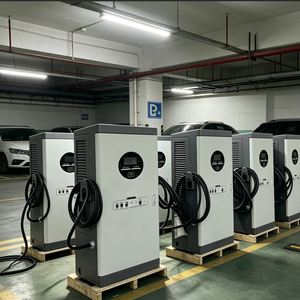
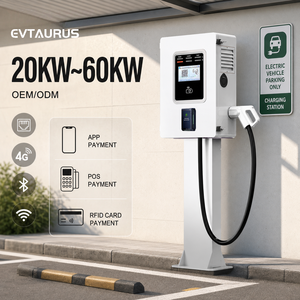
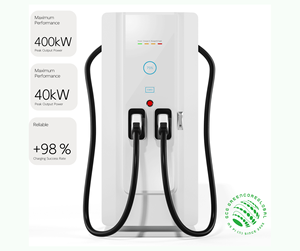
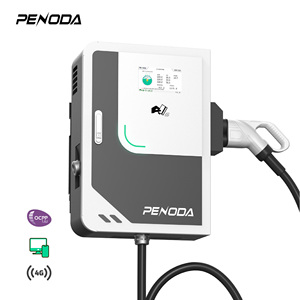
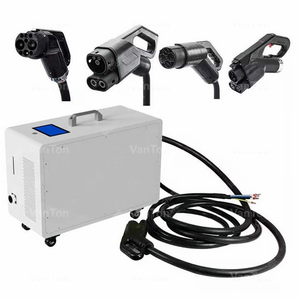
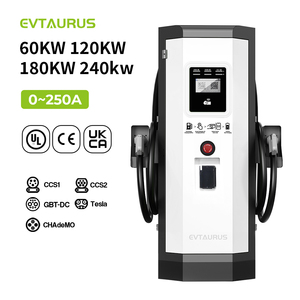
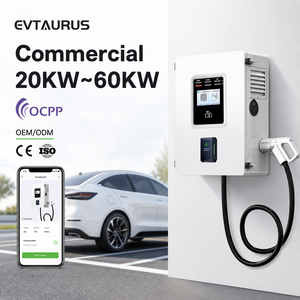
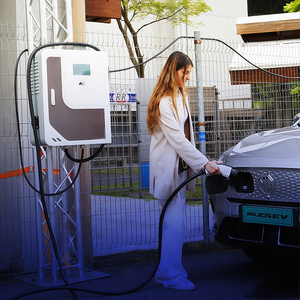
With the widespread adoption of the North American Charging Standard (NACS) alongside CCS1, fast-charging station manufacturers require high-efficiency auxiliary converter blocks and power chargers (30kW–240kW). Our modules provide reliable low-voltage control power to charging station master controllers, liquid-cooled cable pumps, POS payment terminals, and RFID readers even under ambient heat stress.
Choosing the correct thermal topology directly affects system lifespan, mean time between failures (MTBF), total system weight, and overall bill of materials (BOM) cost. Conduction cooling provides an optimal compromise between high power density and mechanical simplicity.
As demonstrated in the comparison table below, contact cooling eliminates pumps, hoses, and fan motors, significantly reducing mechanical failure vectors in high-power applications.

| Performance Metric | Contact / Conduction Cooled | Forced Air Cooled | Direct Liquid Cooled |
|---|---|---|---|
| Enclosure Protection | IP67 / IP69K Potted | IP20 – IP54 Maximum | IP65 – IP67 Sealed |
| Mechanical Failure Vectors | Zero moving parts | High (Fan wear, filter clogging) | Medium (Pumps, hose leaks, coolant degradation) |
| Thermal Resistance ($R_{th}$) | Ultra Low (Direct plate conduction) | High (Ambient air boundary layer) | Very Low (Internal fluid channel) |
| Maintenance Requirements | Maintenance-Free Lifetime | Frequent filter/fan replacement | Coolant flushing & hose check |
| Vibration Resistance | Extreme (Solid potting encapsulation) | Low to Medium | High |
| System BOM & Space Impact | Compact & Cost-Effective | Bulky ducting required | Requires pump, radiator, and plumbing |
Navigating the North American market requires strict adherence to national electrical standards, safety codes, and tariff structures. Chinese manufacturing leadership combined with rigorous international quality standards provides US buyers with an unmatched competitive edge in performance and cost structure.
All power conversion systems exported to the United States market undergo comprehensive certification testing to ensure seamless grid and vehicle integration:
US procurement teams demand complete transparency and tariff compliance (including Section 301 evaluation and harmonized system classification). As a direct manufacturer, we provide tailored export documentation, DDP/DAP logistics options, and dual-sourcing contingency strategies. Our in-house PCB surface-mount technology (SMT) and automated end-of-line (EOL) testing ensure consistent lot-to-lot reliability with full serial traceability.

Every converter leaving our production floor undergoes a rigorous 5-stage manufacturing verification process:
Technical and procurement answers for North American OEMs, engineering leads, and supply chain managers.
Request technical datasheets, 3D STEP models, or schedule an engineering consultation with our high-voltage power conversion team today.
Contact Us