
Engineered specifically to meet Tokyo’s stringent grid stability, compact physical footprint, and heavy duty cycle demands. Explore our certified high-power DC fast-charging electronic modules and multilayer printed circuit board assemblies supplied directly from China's leading manufacturing hub.
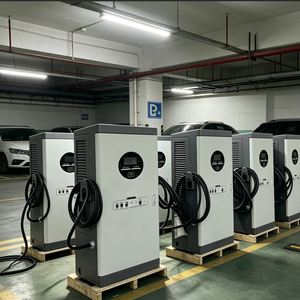
Heavy copper 6-layer power conversion mainboard with integrated thermal management for high-capacity urban charging stations.
Inquire Now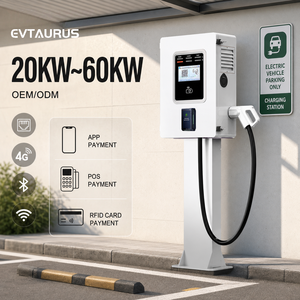
Multi-protocol charging controller board with App, POS terminal interface, and RFID authentication for public charging hubs.
Inquire Now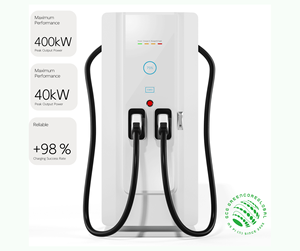
Ground-mounted dual-gun power distribution PCB with embedded OCPP 1.6J/2.0.1 compliance and advanced CAN bus telemetry.
Inquire Now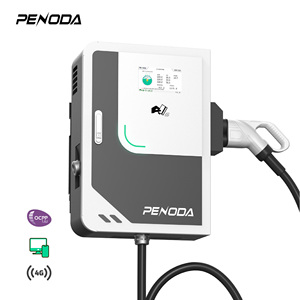
Ultra-compact wallbox driver circuit board with dynamic load balance control for home garages and private commercial fleets.
Inquire Now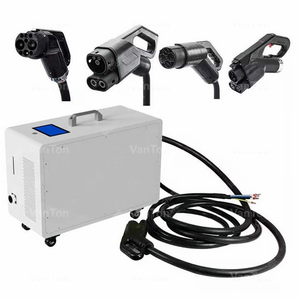
High-vibration resistant mobile charger power electronics board designed for breakdown response and flexible fleet charging.
Inquire Now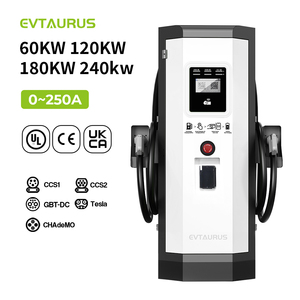
Scalable multi-phase power driver PCB array for high-voltage commercial stations compatible with CCS2 and CHAdeMO 2.0/3.0.
Inquire Now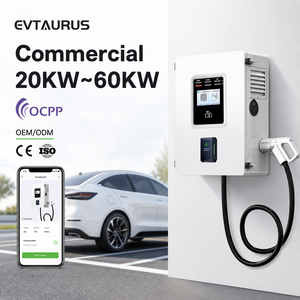
Integrated power control motherboard featuring wide input voltage adaptability and active thermal monitoring sensors.
Inquire Now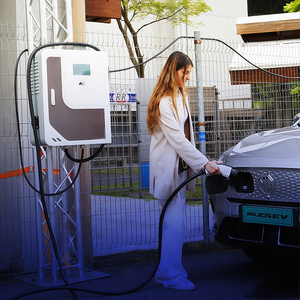
Conformal coated, moisture-proof DC fast charger PCB engineered for harsh outdoor environments and high-humidity coastal zones.
Inquire NowIn the rapidly evolving landscape of global industrial power electronics and electric vehicle (EV) charging infrastructure, circuit board reliability is the foundational pillar of operational safety and economic viability. Originating from over 35 years of rigorous German power electronics R&D heritage and powered by state-of-the-art high-precision PCB fabrication facilities in China, our organization stands as the premier circuit board supplier and exporter for Tokyo's leading industrial OEMs, systems integrators, and infrastructure developers.
Our operational model bridges the gap between ultra-rigorous automotive-grade circuit architecture and cost-optimized, agile production. By maintaining complete control over the entire supply chain—from high-density interconnect (HDI) PCB layout design, substrate manufacturing, Surface Mount Technology (SMT) and Through-Hole Technology (THT) assembly, to specialized protective potting and Automated End-of-Line (EOL) testing—we deliver electronic assemblies that perform flawlessly under relentless thermal and electrical stress.
Engineered with extended creepage and clearance distances, high-isolation planar transformers, and advanced Silicon Carbide (SiC) MOSFET gate drivers, our PCBs reliably manage continuous DC voltages up to 900V for next-generation EV platforms.
For installations exposed to vibration, dust, and humid coastal air, our automated polyurethane potting process ensures complete moisture isolation, zero micro-cracking, and superior heat dissipation directly through the metal chassis.
Utilizing proprietary D-Sinus commutation technology, our drive boards deliver smooth, continuous motor torque with minimal electromagnetic interference (EMI), protecting sensitive CAN-bus nodes in dense control cabinets.
Quality control for mission-critical EV charging infrastructure cannot rely on random sampling. Every circuit board manufactured in our facilities undergoes rigorous automated testing driven by our proprietary DTS (Deutronic Test System) platform.

Tokyo represents one of the world's most sophisticated and demanding environments for electrical infrastructure. The Greater Tokyo Metropolitan Area presents unique engineering challenges, ranging from underground parkings with strict acoustic limits to high-vibration logistics hubs around Tokyo Bay.
Underground commercial parking structures in central Tokyo impose strict noise limits and limited thermal dissipation channels. Our wallbox charger controller PCBs feature high-frequency SiC switching (up to 100kHz) and silent contact-cooling mechanisms, eliminating noisy cooling fans while keeping thermal dissipation efficient.
Heavy logistics hubs around Tokyo Bay and cargo terminals at Haneda Airport rely on 24/7 Automated Guided Vehicles (AGVs). Our circuit boards utilize potted enclosure technology and mechanical anchoring capable of sustaining continuous $5G$ mechanical shocks and high humidity environment resilience.
Residential EV chargers in high-density Tokyo suburbs must comply with Tokyo Electric Power Company (TEPCO) voltage stability rules. Our main control circuit boards integrate sub-millisecond current sensing and CAN-bus grid-feed controls, enabling seamless Vehicle-to-Grid (V2G) and Vehicle-to-Home (V2H) bi-directional power flow.
To maintain market leadership in Tokyo, PCB designs must proactively address evolving Japanese electrical standards and Tokyo Metropolitan Government zero-emission vehicle mandates.
Japan is aggressively deploying CHAdeMO 2.0 (up to 400kW) and co-developing ChaoJi (CHAdeMO 3.0) for ultra-high power commercial charging (up to 900kW). Our China-engineered PCB platforms integrate ultra-fast hardware interrupt loops and dual-microcontroller isolation barriers, allowing effortless software adaptation between CHAdeMO, CCS2, and ChaoJi signaling protocols.
Electrical hardware imported into Tokyo must adhere strictly to Japan's Denan Law (PSE mark) and JIS C 8714 safety standards. Our PCB manufacturing lines enforce rigorous safety margins, using UL94-V0 rated flame-retardant substrates, minimum CTI 600 glass-epoxy materials, and double-insulated internal trace geometry to guarantee instant regulatory approval.
Real estate values in Tokyo mandate maximum power density per cubic meter. By implementing 4oz to 8oz heavy copper inner layers combined with thermal-via matrices, our PCB designs achieve up to 45% footprint reduction compared to conventional layout methods without risking localized hotspots.
A clear comparative analysis of technical parameters demonstrating why top Tokyo EV charger manufacturers partner with our China-based precision fabrication network.
| Engineering Parameter | Standard Commercial PCB | Our Tokyo-Spec Industrial Circuit Board | Performance Advantage |
|---|---|---|---|
| Base Copper Thickness | 1oz - 2oz Outer Layers | 4oz - 8oz Heavy Copper (Inner & Outer) | High continuous current capacity without overheating. |
| Dielectric Material & CTI | Standard FR-4 (CTI 175) | High-Tg (180°C) FR-4 / Isola (CTI > 600) | Prevents tracking arc degradation at 900V DC. |
| Thermal Management | Basic Thermal Vias | Embedded Copper Coins & Aluminum Core | Reduces power MOSFET junction temperature by up to 30°C. |
| Conformal Coating & Potting | Single-Layer Acrylic Spray | Automated Polyurethane / Silicone Potting | 100% protection against Tokyo coastal humidity & dust. |
| Vibration Test Standard | JESD22-B103 (Standard) | IEC 60068-2-6 / ISO 16750-3 Seismic Spec | Resistant to high-vibration AGV & seismic forces. |
| Quality Assurance & Traceability | Sample Batch Testing | 100% DTS EOL Test + Laser Barcode Data | Zero defect escape target (<20 PPM). |
Addressing common technical, logistical, and compliance questions from Japanese procurement managers, R&D engineers, and supply chain directors.
We offer expedited engineering prototype turnaround within 5 to 7 working days. For standard mass production batches (500 to 10,000 units), production takes approximately 2 to 3 weeks. Direct air freight from our Shenzhen/Shanghai manufacturing hubs to Tokyo Narita or Haneda Airports takes only 24 to 48 hours, ensuring seamless Just-In-Time (JIT) delivery to your assembly facilities in Kanto.
Our design team incorporates strict creepage and clearance distances, high-frequency shielding, and low-THD filtering components directly into the PCB layout. All raw materials are UL-certified and conform to RoHS 3 and REACH protocols. We supply full technical documentation packages, Gerber files, schematics, and material test reports required by Japanese registered testing bodies (JET/JQA) for PSE certification.
Yes. Because all electronic engineering, firmware development, and PCB layout are conducted in-house, we can easily modify onboard CAN transceiver circuitry, isolated I/O channels, and microcontroller firmware to comply precisely with CHAdeMO 1.2, 2.0, or ChaoJi (CHAdeMO 3.0) signal timing and safety sequence requirements.
We apply heavy-duty conformal coating or full structural potting using high-thermal-conductivity resin compounds. SMT components subjected to high mechanical stress utilize reinforced solder land patterns and underfill materials, certified against ISO 16750-3 vibration profiles to withstand ambient seismic conditions without solder joint fatigue.
Absolutely. While we possess massive production capacity for high-volume runs, our agile SMT lines are structured to accommodate small and medium production series starting from 100 units. Hardware component swaps, PCB dimensional tweaks, and firmware parameterization can be performed with minimal tooling fees.
Our dedicated international technical support team operates on Japan Standard Time (JST). We provide direct engineering-to-engineering communication via video conferencing, email, and instant messaging, ensuring immediate response to Design for Manufacturability (DFM) inquiries, engineering change orders (ECOs), and technical queries.
Beyond raw circuit boards, we act as a complete system partner. We assemble THT/SMD electronics, integrate sub-assemblies into custom aluminum enclosures, and deliver 100% tested, ready-for-sale devices.
Our eco-friendly manufacturing lines feature heat recovery systems, lead-free soldering processes, and energy-efficient component testing, helping Tokyo partners achieve zero-carbon corporate targets.
As part of an established industrial group, we maintain direct tier-1 relationships with leading semiconductor suppliers (STMicroelectronics, Infineon, TI, Wolfspeed), ensuring stable component pricing and zero supply disruptions.
Whether you are designing a compact 20kW residential wallbox or deploying a multi-megawatt public EV charging park across Greater Tokyo, our engineering team is ready to deliver world-class circuit boards tailored to your exact specification.