
Engineered for automotive production plants, commercial fleet operators, and logistics hubs across France. Compliant with NF C 15-100, IRVE standards, and ISO 15118 protocols.
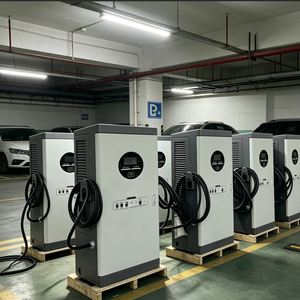
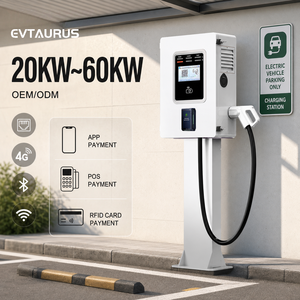
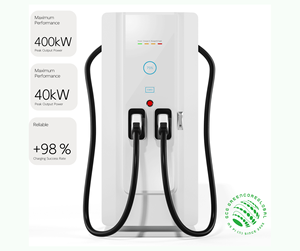
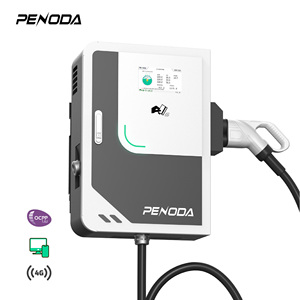
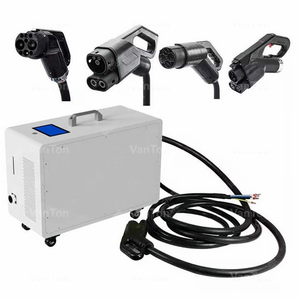
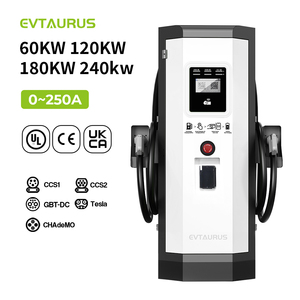
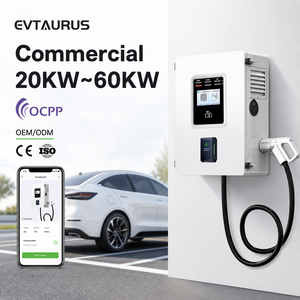
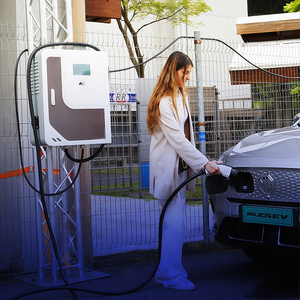
The global transition to electric mobility has transformed automotive manufacturing plants from traditional mechanical assembly hubs into sophisticated electro-chemical integration facilities. In high-volume production facilities across France—ranging from the industrial heartlands of Hauts-de-France to major automotive clusters in Île-de-France and Auvergne-Rhône-Alpes—vehicle production line chargers serve a critical operational function. Unlike public fast-charging infrastructure designed primarily for commercial energy transfer, EV production line chargers and End-of-Line (EoL) power computers are high-precision testing and initial battery conditioning instruments.
During the final assembly stage of an Electric Vehicle (BEV or PHEV), the traction battery system must undergo rigorous initial state-of-charge (SoC) calibration, functional insulation verification, high-voltage interlock loop (HVIL) testing, and vehicle electronic control unit (ECU) parameter flashing. Standard battery chargers fail under these high-demand conditions due to electrical noise, transient load spikes, and lack of real-time protocol feedback. Industrial DC fast chargers manufactured in China with specialized OEM software customization provide the exact power stability, ultra-low ripple voltage, and CAN bus interface capabilities required by French vehicle manufacturers.
Automotive manufacturing environments are filled with severe electromagnetic interference (EMI) generated by automated welding robots, heavy-duty overhead conveyors, and high-frequency variable frequency drives (VFDs). A commercial charger operating in such an environment risks communication dropouts or internal power semiconductor breakdown. Our factory-grade DC production line chargers utilize high-frequency planar transformers and potted power electronics stages that offer complete galvanic isolation between the AC utility grid (400V 3-phase, 50Hz, typical across France's Enedis grid) and the vehicle's high-voltage DC bus.
Featuring a total harmonic distortion (THD) of less than 3% and a active power factor correction (PFC) exceeding 0.99, these chargers maintain power quality without injecting unwanted harmonics back into the factory microgrid, adhering strictly to European Electromagnetic Compatibility (EMC) Directives (2014/30/EU) and EN 61000-6-2/4 standards.
Modern quality assurance systems in French vehicle manufacturing demand complete data logging for every VIN (Vehicle Identification Number) rolling off the production line. Integrated with DC-Connect networking protocols and CAN / SAE J1939 telemetry, our production line chargers automatically sync with plant MES (Manufacturing Execution Systems). When a newly assembled EV enters the EoL test bay, the charger communicates directly with the Battery Management System (BMS), initiating automated charge curves (CC-CV, custom step-charging), evaluating cell voltage symmetry, and documenting thermal response prior to vehicle transport.
Combining high-density power electronics design with scalable manufacturing output to deliver unparalleled cost-to-performance efficiency for European buyers.
Utilizing high-frequency planar transformer cores and SiC/GaN power switches, our DC charger modules achieve up to 96.5% peak efficiency with compact footprints ideal for spatial integration into automated line gantries.
Critical driver boards and magnetic components are fully potted in industrial silicone, sealing out dust, oil droplets, and conductive metallic particulates common in industrial automotive assembly bays.
Native hardware support for ISO 15118-2/20 digital communication interfaces over Powerline Communication (PLC), enabling seamless dynamic TLS encryption authentication with vehicle ECUs.
Tailored engineering adjustments to comply with French national grid requirements, IRVE certification rules, and local electrification policies.
France is accelerating its transition toward sustainable mobility, driven by national legislation such as the Loi Orientation des Mobilités (LOM) and strict target dates for non-emission vehicle fleets. The demand for reliable fast-charging infrastructure spans from high-speed production line charging at OEM assembly facilities to commercial depot charging for urban logistics operators.
| Deployment Scenario | Target Power Range | Recommended Model Variant | Primary Technical Benefit |
|---|---|---|---|
| Automotive OEM EoL Line | 120kW – 240kW | High Power DC EV Charger (Modular) | Ultra-fast initial battery charging, low noise ripple, full MES integration. |
| Mobile Workshop / Line Buffer | 20kW – 30kW | VanTon Mobile CCS2 Fast Charger | Movable high-voltage DC supply for unpowered vehicle transport inside plant. |
| Commercial Fleet Logistics Depot | 60kW – 80kW | GCG Dual Connector Ground Mounted | Simultaneous multi-vehicle charging with RFID access control and balance. |
| Compact Plant Wall-Mount Station | 20kW – 40kW | New Smart DC Wallbox Fast Charger | Minimal footprint installation in tight assembly bays with IP55 sealing. |
Combining decades of industrial power supply expertise with automated PCB assembly, potting technology, and rigid testing systems.
Complete control over electronic assembly lines. Advanced surface-mount technology (SMT) and through-hole technology (THT) process precision guarantees low defect rates and long component lifespan.
Every charging station passes automated electrical safety testing (Hi-Pot, earth bond, insulation resistance) and high-load thermal burn-in under real battery load profiles before export.
We provide localized documentation in French, technical commissioning support, direct spare parts availability, and engineering adaptation for custom plant requirements.
Direct technical answers addressing certification, power integration, delivery schedules, and after-sales service in France.
Our chargers support standard industrial communication interfaces including CAN Bus (SAE J1939), Ethernet TCP/IP, and Modbus TCP. They easily interface with plant Manufacturing Execution Systems (MES) and SCADA networks to automate charge sequence logging, trace VIN data, and enforce remote emergency shutdown commands.
Yes. All units exported to France carry CE certification, comply with Low Voltage Directive (2014/35/EU), EMC Directive (2014/30/EU), and follow EN 61851-1/23/24 safety standards. Hardware options include integrated RCD Type B earth leakage protection compliant with NF C 15-100 requirements.
Absolutely. Our wide-voltage DC power modules operate dynamically between 200V DC and 1000V DC, making them fully compatible with both legacy 400V battery platforms and next-generation 800V high-voltage passenger and commercial vehicles.
Standard modular DC chargers have a manufacturing lead time of 2 to 3 weeks. Custom OEM-branded or specifically modified units require 4 to 6 weeks. Express sea-freight or direct air-freight options to major ports like Marseille-Fos, Le Havre, or Charles de Gaulle Airport ensure seamless supply chain fulfillment.
Because development, SMT board assembly, structural sheet-metal fabrication, and firmware design are conducted in-house, we readily support low-to-medium volume orders with tailored mechanical housings, customized software protocols, and personalized branding.
We provide a comprehensive standard 24-month warranty extended by modular plug-and-play power modules. In case of operational maintenance, spare modules can be swapped rapidly by local plant technicians without unmounting the entire charging station, minimizing downtime.
Consult with our senior power electronics engineers to request customized technical datasheets, CAD models, or a direct factory direct price quote tailored for your projects in France.