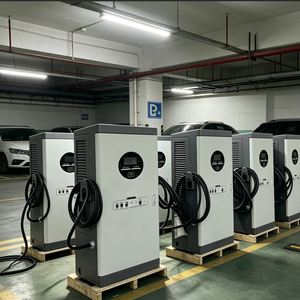
High Power DC EV Charger 30kW-240kW Fast Charging Station
- Power Range: 30kW to 240kW Modular
- Dual CCS1/CCS2/GBT Output Options
- OCPP 1.6J / 2.0.1 Network Integration
- Sub-Zero Heating Thermal Management

Fully qualified for Canadian commercial fleet deployment, municipal transit networks, mining vehicle conversions, and public EV infrastructure charging hubs.
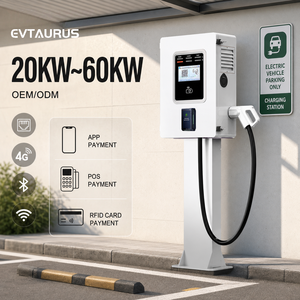
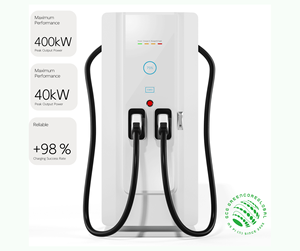
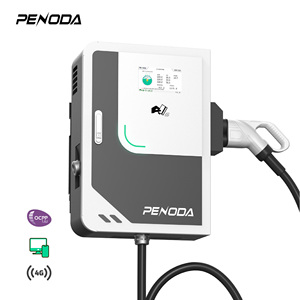
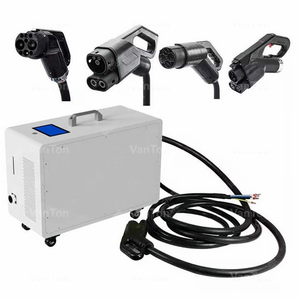
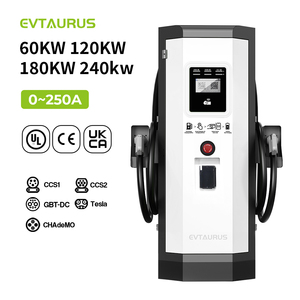
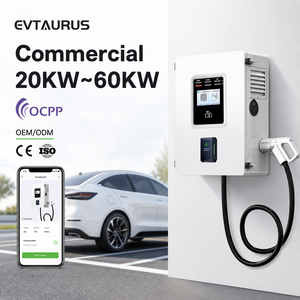
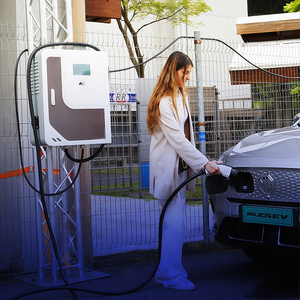
An in-depth analysis of topological architecture, wide bandgap semiconductors, contact cooling, and voltage transformation stability for North American buyers.
Modern Canadian electrification projects demand extreme power density within constrained mechanical footprints. By replacing traditional wire-wound transformers with planar magnetic components and leveraging Silicon Carbide (SiC) MOSFETs switching at frequencies above 150 kHz, our DC/DC converters achieve conversion efficiencies up to 97.8% while reducing physical volumetric mass by over 40%.
This ultra-high efficiency significantly diminishes thermal dissipation requirements, allowing fleet engineers to operate high-voltage auxiliary systems without bulky liquid-cooling radiators.
Operational safety across high-voltage platforms (ranging up to 900V DC) requires absolute galvanic isolation between the traction battery pack and the low-voltage auxiliary 12V/24V control network. Our converters feature high-frequency isolation transformers tested to 3.75 kV AC breakdown voltage for 60 seconds.
This multi-stage safety barrier prevents ground loops, protects sensitive CAN telemetry units, and enforces strict fault mitigation in compliance with CSA C22.2 No. 107.1 guidelines for North American electrical equipment.
Standard forced-air cooling systems frequently fail in harsh environments due to dust accumulation, salt spray, and moisture ingress. Our industrial DC/DC converter platforms utilize contact cooling via cold-plate aluminum bases combined with complete polyurethane resin potting.
This potted architecture ensures absolute isolation against ambient humidity, chemical exposure, vibration shocks up to 10G (ISO 16750-3), and extreme cold thermal cycling down to -40°C in Northern Canadian operating environments.
| Parameter / Specification | Standard Commercial Converters | Deutronic-Powered DVCHx3 Series | High-Power EV Charger Modules |
|---|---|---|---|
| Input Voltage Range | 300V - 600V DC | 200V - 900V DC Continuous | 350V - 950V DC Wide Range |
| Cooling Technology | Forced Air Fans (High Maintenance) | Direct Contact Cold-Plate / Potted | Liquid Cooled / Smart Forced Air |
| Operating Temperature | -20°C to +45°C | -40°C to +85°C Sub-Zero Rated | -35°C to +55°C Climate Control |
| Communication Protocols | Analog 0-10V / Basic CAN | Dual CAN 2.0B / SAE J1939 | OCPP 1.6J / 2.0.1 & ISO 15118 |
| Environmental Protection | IP20 - IP44 Enclosures | Fully Sealed IP67 / IP69K | IP55 NEMA 3R Outdoor Rated |
| North American Compliance | Basic CE Only | CSA C22.2, UL 2202, ANSI Standard | cULus Listed, Measurement Canada |
From sub-zero underground mining rigs in Ontario to zero-emission transit fleets in Vancouver and extreme cold logistics hubs in Alberta.
Canadian winters subject mobile equipment to severe sub-zero thermal shocks. Our DC converters utilize automotive-grade components, low-ESR solid polymer capacitors, and integrated self-heating pre-start circuitry to ensure continuous operation across Alberta, Saskatchewan, and Northern territories without cold-start voltage drops.
Underground mining operations in Sudbury and Quebec require zero-emission electric haul trucks, loaders, and utility vehicles. Our potted 900V DC/DC converters step down traction battery voltage to power steering pumps, hydraulic systems, and 24V safety telemetry while withstanding constant 10G mechanical vibration.
Transit agencies in Toronto (TTC), Montreal (STM), and Vancouver (TransLink) are aggressively electrifying public bus fleets. Our high-power DC fast charging stations (60kW-240kW) with dual CCS1 connectors support automated overnight depot charging and high-speed pantograph top-ups.
Off-grid industrial sites relying on solar PV, wind, and battery energy storage systems (BESS) require bi-directional and isolated DC voltage matching. Our converters deliver precise energy regulation between 400V/800V DC busbars and 48V telecom / control emergency backup banks.
Key regulatory drivers, grid modernization mandates, and engineering requirements shaping DC power conversion procurement across Canada through 2030.
Federal Canadian targets require 100% of light-duty vehicle sales to be zero-emission by 2035, accompanied by aggressive provincial incentives like CleanBC and Quebec’s Drive Green program. Commercial fleets are shifting rapidly to 800V traction architectures, creating strong demand for high-input-voltage 900V DC/DC converters and ultra-fast CCS1 charging hardware.
Canadian buyers are replacing uncertified equipment with fully certified solutions adhering to CSA C22.2 No. 107.1 and UL 2202 safety standards. Commercial billing for public EV charging hubs now mandates compliance with Measurement Canada approval standards, demanding embedded high-accuracy DC revenue metering.
Modern fleet management requires real-time diagnostic visibility. Exporters supplying Canada must provide DC converters featuring native SAE J1939 and CAN 2.0B protocols, enabling fleet operators to monitor converter temperature, input voltage ripple, output current, and insulation resistance remotely.
Combining 35+ years of German power-electronics design heritage with high-capacity Chinese manufacturing agility to provide premium OEM/ODM power solutions.
From raw PCB surface-mount assembly (SMD & THT) to automated magnetic component winding, specialized conformal coating, high-pressure polyurethane potting, and final metal box assembly — every step occurs under strict ISO 9001 and IATF 16949 quality control systems.
Every single converter unit undergoes 100% End-of-Line (EOL) full-load stress testing using our custom automated DTS software. Units undergo 4-hour thermal burn-in, dielectric voltage withstand testing, and dynamic load transient validation to guarantee zero-defect delivery to Canadian ports.
We provide complete DDP / DAP delivery services straight to warehouses and manufacturing facilities across Canada (including Vancouver, Calgary, Toronto, and Montreal). All products include comprehensive customs documentation, HS coding, tariff optimization, and clear compliance certification packages.
Direct engineering and procurement answers covering certifications, custom modifications, cold-weather reliability, and shipping logistics.
Our standard industrial DVCx3 series covers nominal lower-voltage DC ranges (24V, 48V, 80V, 110V DC), while our specialized high-voltage DVCHx3 platform operates seamlessly across wide continuous input bands from 200V DC up to 900V DC. This wide window allows direct integration with both 400V and 800V electric vehicle battery packs, hybrid bus buses, and stationary battery energy storage systems (BESS).
Yes. We engineer our products specifically to meet North American safety requirements. Our power converter systems are built in alignment with CSA C22.2 No. 107.1, UL 2202, UL 2594, and FCC Part 15 Class A EMC standards. Detailed test reports and factory inspection documentation can be provided to support your local Canadian Electrical Code (CEC) field approval process.
Unlike standard commercial power supplies that fail or experience severe thermal shutdown below -20°C, our sub-zero series features fully potted internal electronics, automotive-grade semiconductors, and optional internal warming elements. This ensures reliable full-power cold starts down to -40°C without thermal hysteresis or dielectric insulation breakdown.
Absolutely. Because our core engineering, PCB layout design, firmware development, and mechanical tooling are conducted in-house, we readily support OEM parameter adjustments (such as customized SAE J1939 CAN messaging, special voltage setpoints, modified mounting plates, or custom connectors) even for small-to-medium series production runs.
Standard evaluation samples are typically dispatched within 7 to 10 working days. Production volumes carry a standard manufacturing lead time of 4 to 6 weeks. Express air freight to major Canadian international airports (YYZ, YVR, YUL) takes 5-7 days, while ocean freight to Vancouver or Montreal ports averages 18 to 25 days depending on the shipping line.
Contact our senior application engineering team today for technical datasheets, CAD 3D step files, compliance documentation, or customized OEM pricing tailored for the Canadian market.
Get a Quote