
Technical Architecture of CE Certified Bidirectional Converters for Luxembourg’s Smart Grid Integration
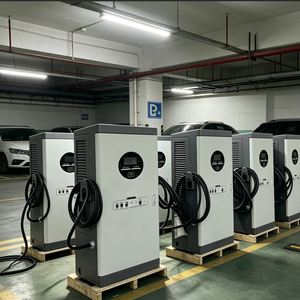
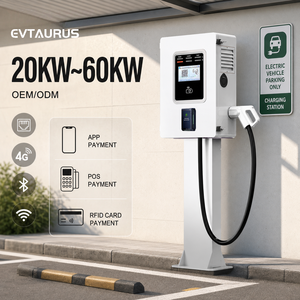
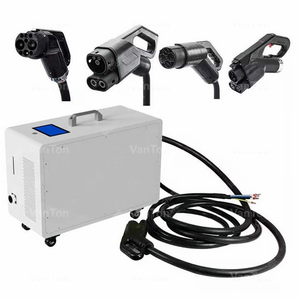
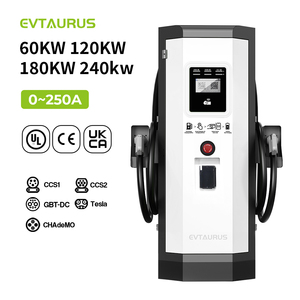
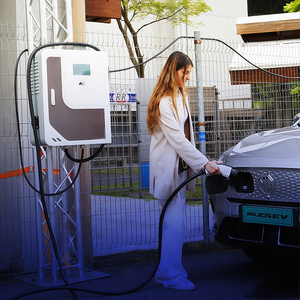
As Luxembourg accelerates its trajectory toward complete decarbonization under the updated Plan National Intégré en Matière d’Énergie et du Climat (PNEC 2021-2030), the demands placed upon localized power distribution networks managed by operators such as Creos Luxembourg S.A. have intensified. The rapid electrification of commercial vehicle fleets, municipal bus networks (RGTR), and private mobility across the Grand Duchy requires advanced power conversion topologies capable of two-way energy flows. CE certified bidirectional DC-DC and AC-DC converters represent the foundational nexus enabling Vehicle-to-Grid (V2G), Vehicle-to-Building (V2B), and industrial Battery Energy Storage Systems (BESS).
Our engineered power electronics leverage Silicon Carbide (SiC) MOSFET wide-bandgap semiconductors, enabling switching frequencies in excess of 100 kHz. This dramatically reduces magnetic core dimensions while maintaining an extraordinary conversion efficiency profile exceeding 98.5%. For energy system engineers and procurement officers sourcing hardware for the Luxembourg market, compliance with CE directives—specifically Low Voltage Directive (LVD) 2014/35/EU, EMC Directive 2014/30/EU, and Radio Equipment Directive (RED) 2014/53/EU—is not merely a regulatory prerequisite; it guarantees electromagnetic compatibility in dense urban centers like Luxembourg City, Kirchberg, and Esch-sur-Alzette.
Technical Superiority Insight: High-frequency SiC-based bidirectional topologies reduce total harmonic distortion (THDi) to under 3% at full load, preventing harmonic pollution on the national 230V/400V distribution grid while conforming strictly to EN 50160 grid quality indices enforced throughout Benelux.
Luxembourg Localized Market Trends & Regulatory Compliance Matrix
Luxembourg occupies a unique position in the European energy landscape. Positioned at the cross-country transit corridor connecting Germany, France, and Belgium, its energy infrastructure must sustain extreme transient peak loads from international logistics while adhering to stringent green building standards (such as HQE and BREEAM certifications prevalent in the Kirchberg financial district).
Grid Interconnection Requirements (Creos & Technical Guidelines)
Interfacing high-power bidirectional conversion hardware with the Luxembourg grid demands compliance with local distribution code standards. Converters must feature automated anti-islanding protection in accordance with DIN VDE V 0126-1-1 and support active dynamic grid stabilization. This includes:
- Reactive Power Compensation: Programmable cos(φ) ranging from 0.8 leading to 0.8 lagging to assist local transformer stations in maintaining voltage stability.
- Frequency-Dependent Active Power Curtailment (P(f)): Automatic reduction of power injection if grid frequency strays beyond the nominal 50.0 Hz threshold.
- ISO 15118-20 Protocol Implementation: Native support for high-level bidirectional communication standards over PLC (Power Line Communication), authorizing bidirectional energy transfers for V2G-capable electric vehicles.

Localized Application Scenarios Across Luxembourg’s Industrial Hubs
1. Kirchberg & Cloche d'Or V2B Building Integration
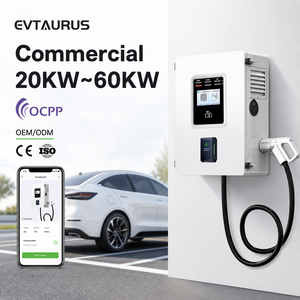
In Luxembourg's prime financial and administrative districts, enterprise headquarters utilize our CE certified bidirectional chargers and DC converters to turn executive electric fleets into distributed energy storage systems. During peak energy tariff hours, vehicle batteries discharge power back into office facilities, shaving building peak loads and reducing reliance on external grid draw.
2. Bettembourg Multimodal Logistics Hub
At Eurohub South in Bettembourg, heavy commercial EVs, yard tractors, and automated guided vehicles (AGVs) demand high-voltage DC power. Our isolated bidirectional DC/DC converters operating up to 900V DC facilitate fast DC energy buffering from stationary battery banks, ensuring continuous 24/7 logistics throughput without overloading regional substation transformers.
3. Minett Industrial Belt Microgrids
In the southern industrial region (Differdange, Esch-sur-Alzette), manufacturing facilities retrofitting solar PV arrays deploy our potted, vibration-proof industrial power converters. These systems manage seamless power routing between DC solar buses, stationary BESS units, and plant machinery under intense dust and thermal stress.
Manufacturer Engineering Advantages & German Manufacturing Rigor
Drawing on over 35 years of engineering leadership from Deutronic Elektronik GmbH, our hardware delivers verified technical longevity rather than mere datasheet claims. Every unit shipped to our Luxembourg customers undergoes exhaustive stress testing, supported by in-house PCB contract assembly (SMD/THT), protective potting operations, and fully automated DTS end-of-line test routines.
Contact-Cooled Thermal Management Technology
Unlike traditional forced-air systems prone to premature fan failure in particulate-laden environments, our high-voltage DC/DC converters (such as the DVCx3 and DVCHx3 series) feature contact cooling (cold-plate technology). Heat generated by switching components is conductively transferred directly into the vehicle frame or liquid-chilled mounting plate. This results in:
- IP67 / IP6K9K Enclosure Ratings: Total protection against high-pressure washdowns, moisture ingress, and airborne contaminants.
- Acoustic Emission Elimination: Silent operation crucial for urban delivery vehicles operating during noise-restricted night hours in Luxembourg municipality zones.
- Extended MTBF: Mean Time Between Failures exceeding 150,000 hours under rated operating conditions.

Automated End-of-Line Quality Control (DTS Software System)
Quality assurance is embedded in our manufacturing DNA. Every bidirectional converter supplied into Benelux undergoes 100% automated electrical testing using our proprietary Deutronic Test System (DTS). DTS measures insulation resistance up to 5kV DC, dynamic transient load responses, thermal dissipation curves, and CAN bus protocol compliance (SAE J1939 / CANopen). Detailed test certificates and serial-number trace data are archive-stored to guarantee total accountability for OEM vehicle assembly line integration.

Complete In-House PCB Assembly & Customization Capabilities
From initial circuit diagram synthesis to final device potting, we retain complete mastery over the manufacturing value chain. Hardware and firmware parameters—including charge profiles for emerging Sodium-ion or advanced LiFePO4 chemistries, specific CAN messaged identifier framing, and mechanical housing dimensions—can be custom-engineered even for small-to-medium series production runs for Luxembourg system builders.