
The Republic of Austria stands as a major high-tech hub within the European Union. From the automotive manufacturing clusters in Styria (Graz) and Upper Austria (Linz/Steyr) to expanding nationwide green mobility projects led by ASFINAG, the demand for precision automated test systems and high-reliability power electronics is surging.
Austria’s industrial backbone relies heavily on high-precision automotive supply chains, industrial automation, commercial vehicle manufacturing, and rail technology. Industry leaders operating across Graz, Steyr, Vienna, and Linz require zero-defect manufacturing workflows. To meet strict EU carbon neutrality targets, production lines are rapidly integrating Automated Test Equipment (ATE) for high-voltage battery modules, electric drive units (EDUs), and onboard DC/DC conversion modules.
Manufacturers importing or operating testing machinery in Austria must comply strictly with national ÖVE (Österreichischer Verband für Elektrotechnik) codes, European standard EN 61851, and low-voltage safety directives to guarantee operator protection and grid compliance.
Deploying automated testers, power supplies, and fast DC charging stations in Austrian environments requires extreme thermal and mechanical robustness. Equipment must perform flawlessly under harsh winter conditions down to -25°C in Alpine transit corridors as well as high summer temperatures up to +50°C inside compact factory enclosures.
Furthermore, integration with Austria’s 400V 50Hz three-phase distribution grid requires advanced electromagnetic compatibility (EMC class A/B), low total harmonic distortion (THD), and active power factor correction (PFC > 0.99) to prevent localized harmonic pollution in sensitive industrial power grids.
Purchasing automated test benched or industrial DC power electronics for the Austrian market requires verified CE documentation, ÖVE standard compliance, CAN/J1939 communication capability, and potted component protection against airborne dust and conductive moisture.
Combining German power electronic engineering with modular DTS software sequencing to deliver robust end-of-line (EOL) test solutions for vehicle manufacturing and subassembly testing.
Automated End-of-Line (EOL) testing is vital for verifying high-voltage isolation, safety ground continuity, functional pinouts, and dynamic load performance before components leave the assembly line.
Engineered for e-mobility, heavy commercial vehicles, and railway equipment, the DVCx3 and high-voltage DVCHx3 series deliver ultra-compact, contact-cooled power conversion.
Providing true sinusoidal current commutation to eliminate acoustic noise and dynamic torque ripple in motor applications across automated logistics and industrial pumps.
| System Category | Core Voltage / Power Range | Cooling Technology | Control & Diagnostic Interfaces | Target Austrian Application |
|---|---|---|---|---|
| Automated EOL Test Benches | 0-1000V DC / 0-500A Load | Air / Integrated Contact | DTS Software, CAN, Ethernet IP, LabVIEW | Automotive assembly, battery pack validation |
| High-Voltage DC/DC Converters | Input up to 900V DC (DVC/DVCH) | Contact Cooled / Cold Plate | CAN Bus 2.0B, SAE J1939 | E-buses, rail vehicles, mobile machinery |
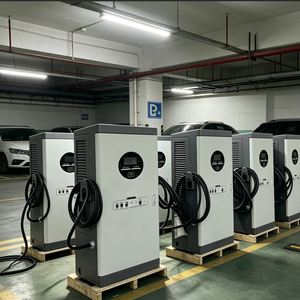
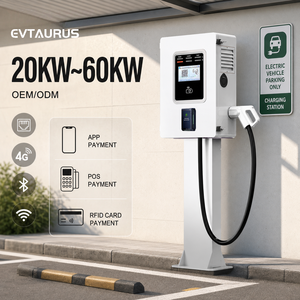
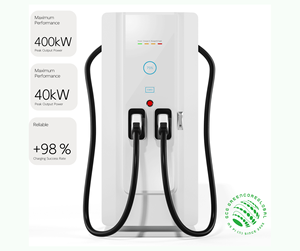
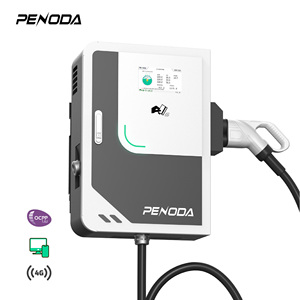
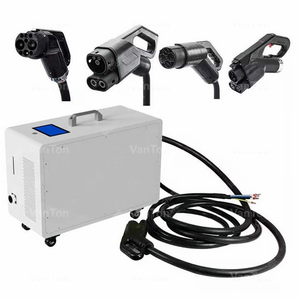
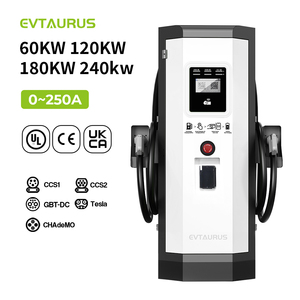
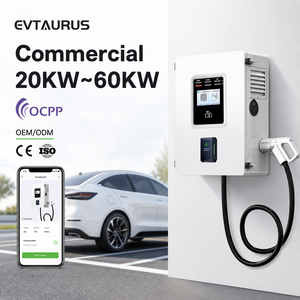
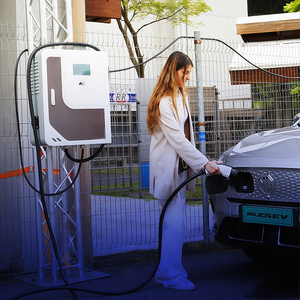
| Fast DC EV Charging Stations | 15kW to 240kW Modular | Forced Air / Low Noise Fan | OCPP 1.6J / 2.0.1, RFID, POS, App | Fleet hubs, highway depots, public charging |
| Industrial Power Supplies | 12V, 24V, 48V DC / DIN-Rail & Potted | Convection / Fully Potted IP65 | Analog / Digital Status Signals | Factory automation, logistics AGVs, logistics hubs |
How automated testing systems and power electronics drive productivity, quality control, and zero-downtime operations across key Austrian industry sectors.
In major automotive vehicle assembly plants in Graz and Steyr, incoming battery modules and traction inverters must pass rigorous automated testing. Our automated test systems utilize the DTS software suite to sequence dielectric tests, high-current pulse testing, and CAN bus calibration in under 45 seconds per unit.
Simultaneously, specialized Deutronic production-line charging computers supply stable 12V and high-voltage power during initial engine flashing and firmware updating, maintaining battery voltage stability despite high transient vehicle computer loads.
Public transport operators in Innsbruck, Salzburg, and Vienna are converting city bus fleets to zero-emission battery electric buses (BEBs). Installing 120kW to 240kW ground-mounted DC fast chargers equipped with dual CCS2 connectors ensures rapid overnight charging and midday top-ups.
Equipped with smart power sharing and OCPP 1.6J integration, these charging stations interface directly with municipal depot energy management systems to minimize peak demand charges from Austrian utility suppliers.
High-density automated logistics centers along the A1 West Autobahn network utilize automated guided vehicles (AGVs) operating continuous 24/7 schedules. Vibration-proof, fully potted IP65/IP67 power supplies and DVC series DC/DC converters handle sudden shock impacts, dust, and continuous mechanical stress.
The compact footprint allows system integrators to embed power electronics directly inside low-profile AGV chassis without thermal overheating issues.
Austrian railway networks and alpine tunnel construction equipment operate under severe electrical interference and fluctuating catenary voltages. Contact-cooled DVCHx3 series converters efficiently convert high DC link voltages down to stable 24V auxiliary power for control electronics, radios, and safety sensors.
Eliminating fluid pumps or external fan maintenance significantly reduces system maintenance costs in remote mountain installations.
Stay ahead of European technological directives, smart grid integration, and next-generation test automation requirements.
Austrian factory automation is rapidly shifting toward connected testing architectures. Automated test benches now export live operational telemetry via MQTT and OPC UA directly to cloud MES systems, creating a complete digital twin for every manufactured component.
The roll-out of ISO 15118-20 in Austria enables bidirectional charging (Vehicle-to-Grid V2G) and automated handshake encryption. Modern DC chargers and testing benches must integrate ISO 15118 software stacks to validate vehicle communications seamlessly.
With Austria investing heavily in hydrogen corridors for heavy transport, test equipment is evolving to accommodate dual fuel-cell and battery hybrid testing, requiring wide voltage input acceptance (up to 900V DC) and spark-proof enclosure designs.
Single-source German engineering, internal PCB manufacturing, and comprehensive worldwide lifecycle support.
From initial circuit layout to THT and SMD surface mount assembly, potting, and final stress testing—everything is performed in-house. This single-source control allows custom hardware adaptations and firmware modifications for small and medium series without prolonged lead times.
Our DTS software suite provides a modular, hardware-agnostic platform to build complex automated test sequences. Integrating instruments from leading international metrology suppliers, DTS handles pass/fail parameterization, automated safety cutoffs, and export of standardized audit-ready test reports.
Trusted for over 35 years by top tier automotive OEMs, fleet operators, and industrial system integrators globally. Our power electronics are rigorously pre-tested to exceed EN, IEC, CE, and ÖVE safety and electromagnetic compatibility guidelines.
We ensure rapid technical support, commissioning assistance, spare parts delivery, and equipment calibration throughout Austria and neighboring DACH countries, keeping factory downtime to an absolute minimum.
Technical details regarding voltage compliance, software integration, local standards, and export logistics for Austria.
Our converter line is split into standard input (DVCx3 series for lower industrial DC bus voltages) and high-voltage input (DVCHx3 series handling up to 900V DC). Both series feature contact cooling, full galvanic isolation options, and parameterization over CAN bus 2.0B or SAE J1939 to match Austrian industrial vehicle standards.
Yes. All test systems, charging equipment, and power supplies fully comply with relevant European CE directives, low-voltage safety standards (IEC/EN 61010-1, EN 61851), and ÖVE standards required for installation and operation in Austria.
Absolutely. Deutronic charging computers utilize our DC-Connect network architecture. This allows production supervisors to remotely program charging curves for 12V lead-acid and lithium battery chemistries, record full charging history per vehicle VIN, and sync data directly with plant management systems.
DTS software allows engineers to define dynamic, recipe-based test sequences. A single automated physical bench can identify different product variants (via barcode scanner or CAN handshake) and automatically execute the correct electrical test parameters, limits, and reporting routines.
Because R&D, SMD assembly, mechanical enclosure design, and potting are conducted under one roof, we can implement custom pinouts, specialized voltage outputs, tailored software protocols, and custom mechanical brackets even for small to medium production runs.
Standard series products are maintained in European logistics hubs for rapid dispatch. Custom automated test stations undergo full factory acceptance testing (FAT) prior to shipment. On-site commissioning, operator training, and annual maintenance calibration are supported directly across Austria.
Consult with our senior technical engineering team today. Send us your technical specifications—input/output voltages, automated testing parameters, communication interfaces, and volume requirements—for an immediate engineering review and quote.
Send an Inquiry