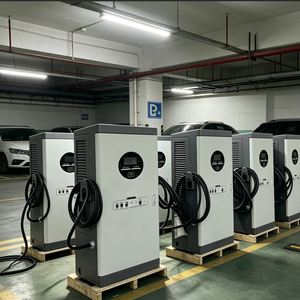

Explore our premium product portfolio engineered with zero-voltage switching (ZVS), high power density, planar magnetics, and ruggedized housing for demanding environments.
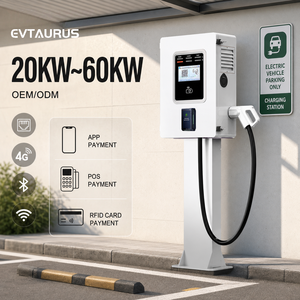
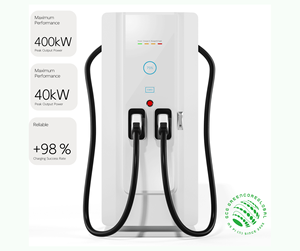
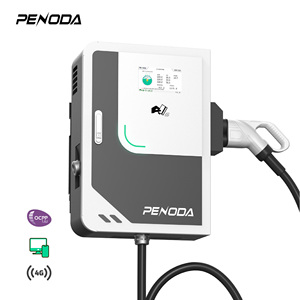
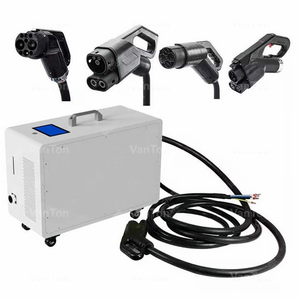
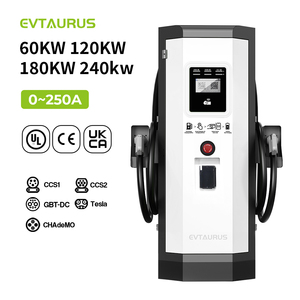
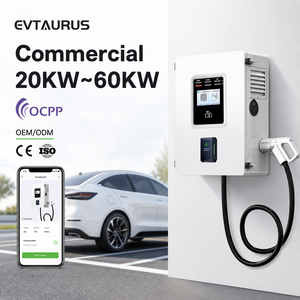
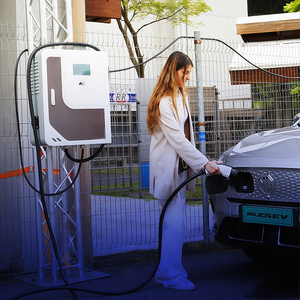
A comprehensive analysis of topology innovations, thermal dynamics, and procurement benchmarks for next-generation B2B power conversion architectures.
Modern industrial automation, heavy transportation, intralogistics, and electric vehicle (EV) charging networks place unprecedented demands on electrical infrastructure. Traditional linear power supplies are no longer viable for high-power industrial applications due to high thermal losses, bulk mass, and low power conversion efficiency. High-frequency switched-mode power supplies (SMPS) have evolved into the essential backbone of energy systems, utilizing wide-bandgap (WBG) semiconductors such as Silicon Carbide (SiC) and Gallium Nitride (GaN).
By shifting switching frequencies from traditional 20 kHz-50 kHz ranges up to 150 kHz-500 kHz, switching supply manufacturers can shrink passive magnetic components—such as transformers and inductors—by up to 60% while achieving peak power densities exceeding 3.5 kW/Liter. Dynamic resonant topologies like LLC and Phase-Shift Full-Bridge (PSFB) with Zero-Voltage Switching (ZVS) further minimize switching loss, guaranteeing overall efficiency ratings above 96.5% to 98% even under partial load profiles.

As a global leader in industrial charging technology, our systems power vehicles and energy storage buffers throughout their operational lifecycle—from assembly lines and end-of-line (EOL) flash testing to workshops, showrooms, and fleet depots.

Our DVCx3 and DVCHx3 high-voltage converter platforms are engineered to bridge auxiliary low-voltage networks (12V/24V/48V) directly with high-voltage traction batteries operating up to 900V DC.

Whether integrated inside centralized NEMA/IP65 control cabinets or deployed in decentralized, exposed field environments, our industrial power supplies maintain absolute electrical stability.

The D-Sinus family represents a major technological leap in electric motor drive regulation, replacing noisy block commutation with pure sine-wave vector current control.

We supply turn-key automated test stations combining premier instrumentation hardware with our proprietary Deutronic Test Software (DTS) engine for complex multi-variant quality assurance.
Key technological transformations driving procurement strategies across commercial electrification and high-power switching supplies.
The industry wide transition to 3rd generation SiC MOSFETs allows switching frequencies above 200 kHz with negligible turn-off losses. This dramatically reduces passive magnetic bulk while sustaining efficiency above 98% in fast EV charging sub-modules.
Next-generation switching converters are migrating from unidirectional energy delivery to dual-stage bidirectional topologies (Dual Active Bridge). This enables Electric Vehicles and battery energy storage systems (BESS) to feed power back into industrial microgrids.
Commercial DC charging stations are integrating advanced communications stack supporting Plug & Charge (PnC), dynamic load balancing via OCPP 2.0.1, and automated power factor adjustment to prevent phase imbalance on regional distribution networks.
Air cooling is rapidly hitting thermal limits in high-power dense environments. Manufacturers are standardizing contact plate cooling for cold-plate mounting and hybrid liquid loops capable of handling thermal flux over 50W/cm² without mechanical airflow fans.
Procurement strategies favor standardized, hot-swappable 20kW/30kW/40kW DC power modules stacked within universal rack enclosures. This modular approach delivers N+1 redundancy, lower Mean Time to Repair (MTTR), and flexible power scaling up to 480kW.
Power conversion systems are embedding microprocessor telemetry engines that monitor internal capacitor ESR degrade, thermal gradient spikes, and gate-driver voltage fluctuations to predict end-of-life status months before an operational fault occurs.

Selecting a top trusted switching supply manufacturer requires evaluating more than nominal catalog specifications. It demands auditing full lifecycle manufacturing control, engineering depth, and global support structures.
Through our dedicated DEUTRONICsystems organization, we deliver vertical integration across hardware engineering, software development, THT and high-speed SMD PCB contract manufacturing, specialized potting, and automated end-of-line testing.
Clear, technical answers to critical questions evaluated by engineering leads, procurement managers, and OEM system integrators.
Our low-voltage DC/DC series (DVCx3) covers wide input bands suitable for 12V, 24V, and 48V battery systems, while our high-voltage series (DVCHx3) operates up to 900V DC continuous input—ideal for e-mobility traction packs and fuel-cell buses. For AC/DC switching power supplies and commercial EV fast chargers, our systems accept universal 1-phase (85V-264V AC) and 3-phase (380V-480V AC, 50/60Hz) grid inputs with active PFC power factors exceeding 0.99.
Forced-air cooling relies on motorized fans that pull ambient air—along with dust, oil mist, humidity, and chemical vapor—through internal electrical components, creating potential short-circuit hazards and mechanical fan failure points. Contact cooling transfers internal thermal energy directly through an aluminum baseplate into a cold plate or external machine chassis. This allows the unit to be fully sealed (up to IP67 protection), eliminating fans, extending MTBF beyond 500,000 hours, and enabling maintenance-free continuous operation in hostile mining, rail, or factory floor environments.
Yes. Because we maintain full in-house control over hardware engineering, firmware design, and mechanical sheet-metal fabrication, we provide extensive customization options. On the software side, we offer custom CAN bus parameterization (including J1939, CANopen, or proprietary protocols) as well as OCPP 1.6J and 2.0.1 compliance for DC fast chargers. Mechanically, we offer custom housing dimensions, branded graphic overlays, unique connector pinouts, and custom output voltage/current curve programming.
All Deutronic power electronics and charging solutions undergo rigorous compliance validation. Our switching supplies and chargers carry CE certification, comply with UL 2202 / UL 1564 safety mandates, meet heavy industrial EMC requirements (EN 61000-6-2 immunity, EN 61000-6-4 emissions), and satisfy railway standards (EN 50155 / EN 45545-2 fire safety) and automotive shock/vibration profiles (ISO 16750-3). Detailed compliance documentation and test reports are provided with every industrial order.
DC-Connect links every charging computer on the factory floor to a centralized plant management network. It monitors charging current, terminal voltage, dynamic battery internal resistance, and energy throughput in real time. If a vehicle battery exhibits anomalous voltage drop or thermal escalation during initialization or end-of-line flash programming, the system automatically flags the unit serial number in the plant MES database, guaranteeing total production quality traceability.
Standard catalog models are stocked across our regional logistics hubs in Europe and North America for rapid dispatch. For customized parameter tweaks or specialized wire harness integration, lead times typically range from 2 to 4 weeks. Full custom hardware engineering projects are scheduled according to joint development milestones. Thanks to our flexible Bavarian PCB assembly lines, we accommodate small to medium prototype series as well as high-volume production without requiring restrictive MOQs.
Consult with our senior application engineering team to specify voltage thresholds, dynamic thermal derating factors, protocol integrations, and OEM prototype timelines.