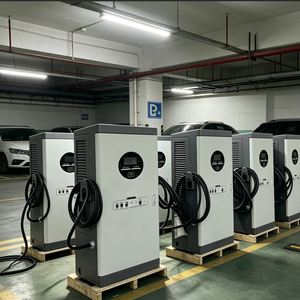
High Power DC EV Charger 30kW-240kW Fast Charging Station
- Power Output: 30kW to 240kW Modular
- Voltage Range: 200V - 1000V DC
- Protection Level: IP54 Outdoor Heavy-Duty

High-efficiency, broad input-voltage power conversion equipment designed for heavy-duty commercial fleets, passenger EVs, AGVs, and industrial production lines.
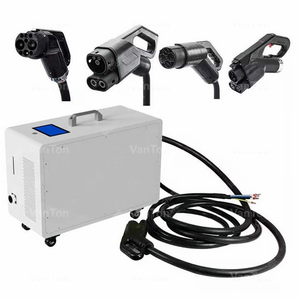
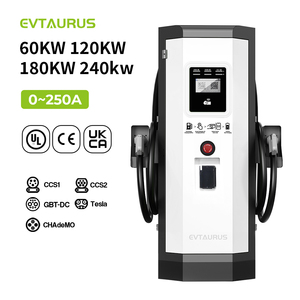
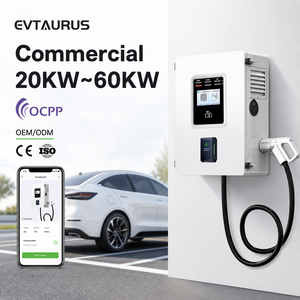
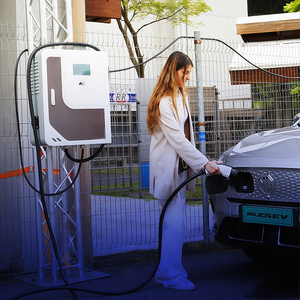
As global transport electrification accelerates toward 800V powertrain architectures, procurement teams and vehicle engineers require onboard charging equipment and DC conversion modules capable of withstanding extreme electrical, thermal, and mechanical stress. Onboard Chargers (OBC) serve as the primary link between the alternating current (AC) grid and the high-voltage traction battery pack. Modern B2B automotive procurement demands not merely off-the-shelf conversion devices, but deeply integrated power systems incorporating wide-bandgap (WBG) semiconductors, bidirectional grid connectivity (V2G), and full CANbus/J1939 telematics capabilities.
Our engineering architecture combines decades of German power-electronics mastery with modern automated mass production. By uniting planar transformer topologies with liquid and contact cooling solutions, our onboard conversion systems deliver industry-leading power density exceeding 3.8 kW/L while maintaining strict compliance with automotive functional safety standards (ISO 26262 ASIL-B/D) and industrial EMI limits (CISPR 25 Class 5).
Silicon Carbide (SiC) MOSFET switches enable switching frequencies above 150 kHz, dramatically shrinking passive inductor volumes and elevating thermal conversion efficiency up to 97.5%.
Reinforced insulation barriers rating over 3.75 kVAC prevent high-voltage traction bus noise from polluting sensitive low-voltage 12V/24V ECU control circuitry.
Fully potted polyurethane and silicone encapsulations guarantee IP67/IP69K ingress protection, rendering electronics immune to continuous vibration, chemical spray, and dust.

In vehicle manufacturing facilities, battery chargers are subjected to uninterrupted 24/7 duty cycles. Our specialized charging computers safeguard lithium-ion and lead-based battery chemistry across every phase of manufacture: from initial module flashing, through end-of-line (EOL) vehicle testing, to showroom preservation.
Featuring proprietary DC-Connect network integration, manufacturing leads can track real-time charging curves, voltage drop profiles, and serial-number-linked quality data across the entire plant layout.
Converting high battery pack voltages down to stable 12V, 24V, or 48V auxiliary rails requires exceptional switching stability. The DVCx3 series manages conventional lower DC input ranges, while the DVCHx3 series seamlessly operates on input platforms reaching up to 900V DC.
Utilizing cold-plate contact cooling, these systems bypass the weight and mechanical complexity of dedicated liquid lines, making them the preferred power transformation module for mining rigs, e-buses, and rail locomotives (EN 50155 compliant).


Square-wave motor drive signals introduce significant acoustic noise, torque ripple, and thermal losses. The D-Sinus controller family regulates motor excitation currents to a pure sine wave format. This approach minimizes electromagnetic interference (EMI) while delivering smooth low-speed torque control for electric power steering pumps, hydraulic actuators, and cooling fans in noise-sensitive cabin environments.
Strategic sourcing directors and system engineers evaluating power electronics vendors must anticipate key technological transitions occurring over the next decade. When procuring onboard chargers and associated DC power systems, market leaders prioritize four critical development vectors:
Automotive platforms are rapidly migrating from 400V to 800V battery architectures to enable 15-minute ultra-fast DC charging. Onboard chargers must feature wide output voltage windows (200V–1000V) to support both legacy and next-generation battery packs dynamically.
Vehicle-to-Grid (V2G) and Vehicle-to-Load (V2L) capabilities are changing from optional features to mandatory OEM standards. Modern OBC designs incorporate bidirectional active front-end (AFE) rectifiers, enabling electric fleets to act as distributed energy storage assets.
To save space and cabling weight, tier-1 suppliers are consolidating the Onboard Charger (OBC), High-Voltage DC/DC Converter, and Power Distribution Unit (PDU) into a single cast aluminum housing sharing a common liquid-cooling jacket.
Compare specifications across our core power conversion, charging, and test automation product groups to match your fleet or assembly requirements:
| System Category | Primary Voltage Range | Typical Power Rating | Cooling Topology | Control Protocol | Key Standard Compliance |
|---|---|---|---|---|---|
| Onboard Chargers (OBC) | 85V – 265V AC In / 200-900V DC Out | 3.3 kW – 22 kW Bidirectional | Liquid Cooled Plate / Air Forced | CAN 2.0B / ISO 15118 / UDS | ISO 26262 ASIL-B/D, IATF 16949 |
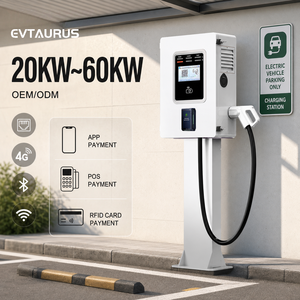
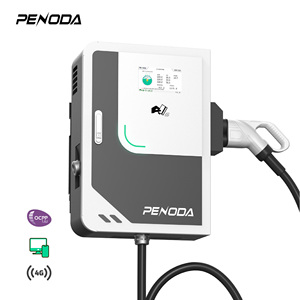
| DC Wallbox Chargers | 380V – 480V AC 3-Phase In | 20 kW – 60 kW DC Out | Internal Forced Air / Heat Pipe | OCPP 1.6J / 2.0.1 / Ethernet | IEC 61851-23, CE Certified |
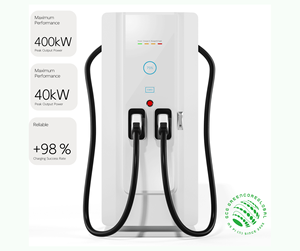
| Heavy DC Fast Stations | 400V AC Grid / 200-1000V DC Out | 60 kW – 240 kW Scalable | Thermally Managed Ducting | OCPP 2.0.1 / POS / RFID / App | CCS2, CHAdeMO, GB/T 20234 |
| DVCHx3 DC/DC Converters | Up to 900V DC Input | 500W – 3.5 kW Auxiliary | Contact Cooled / Cold Plate | CANbus / SAE J1939 Parameterized | EN 50155 Railway, IP67/IP69K |
| DTS Automated Test Benches | Custom Instrumentation Grid | Multi-Channel Scalable | Ambient Cabinet Air | DTS Test Software / LabVIEW API | CE, Automotive EOL Audit Compliant |

Through our DEUTRONICsystems division, we act as a complete system supplier for international automotive OEMs, industrial vehicle builders, and aerospace customers. We take products seamlessly from initial schematic drafting through surface-mount device (SMD) and through-hole technology (THT) PCB assembly, selective potting, final enclosure integration, and end-of-line automated testing.
Direct engineering responses to common technical inquiries raised during procurement audits and hardware specification reviews:
Consult with our application engineers to determine the ideal Onboard Charger, DC/DC Converter, or Fast Charging Architecture for your electrification program.