
In the rapidly evolving landscape of commercial e-mobility, industrial intralogistics, and high-power DC distribution, verification and burn-in testing of power supplies and chargers are critical. As a global Load Tester Factory & Supplier, our engineering division delivers hardware, firmware, and test automation software designed for rigorous end-of-line (EOL) production, quality assurance laboratories, and field validation.
Modern high-power charging platforms (ranging from 15kW portable units to 240kW ultra-fast DC stations) demand robust testing environments capable of dynamic load stepping, thermal stress evaluation, phase imbalance simulation, and multi-protocol communication verification (CCS1, CCS2, GB/T, CHAdeMO, and OCPP 2.0.1). By uniting precision planar magnetics, contact-cooling thermal topologies, and CAN-bus parameterization, our test systems deliver verifiable information gain and high thermal stability under maximum duty cycles.
Explore our industrial-grade power conversion and validation equipment, engineered for high power density, harsh operational environments, and automated testing compliance.
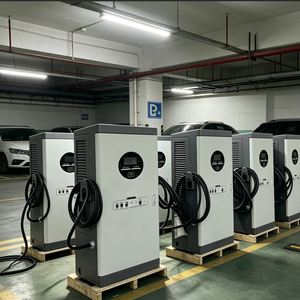
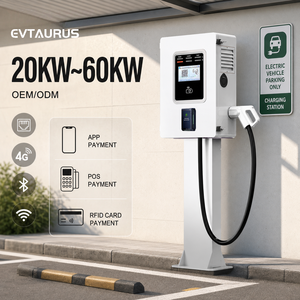
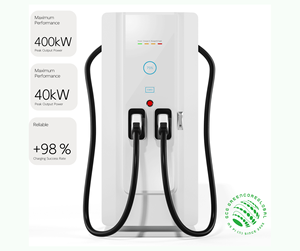
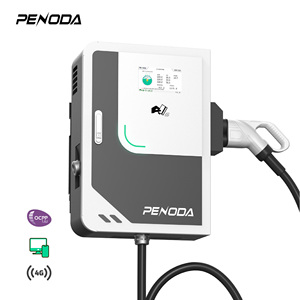
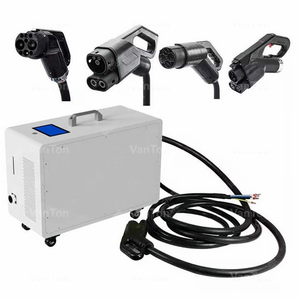
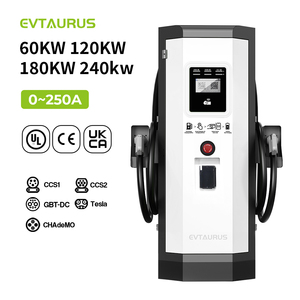
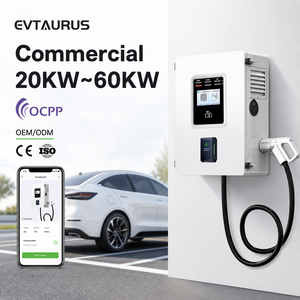
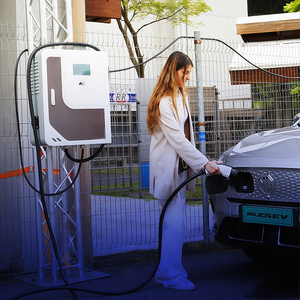
Traditional passive resistive load banks are increasingly inadequate for modern electric vehicle power electronic testing. Passive systems suffer from resistance drift due to thermal expansion, lack real-time dynamic transient response, and cannot mimic non-linear battery charging profiles across varying state-of-charge (SoC) curves.
Our advanced electronic load testing architecture utilizes active Silicon Carbide (SiC) power switching modules combined with planar transformer magnetics. This design allows real-time current profile programming, bidirectional active energy feedback (regenerative testing), precise harmonic distortion analysis, and CAN/OCPP diagnostic integration.
Understanding the operational capabilities of modern test equipment is vital for factory procurement and quality control directors.
| Specification / Feature | Passive Resistive Load Banks | Active Electronic Load Testers (Factory Grade) | Deutronic-Standard Test Systems |
|---|---|---|---|
| Dynamic Step Response | Slow (>500ms), limited by mechanical contactors | Ultra-Fast (<100µs) active semiconductor switching | <50µs programmable step transients Best-in-Class |
| Energy Regeneration | 0% (100% heat dissipation losses) | Up to 92% power back-feeding to grid | Up to 95.5% active grid regeneration |
| Thermal Drift Control | High (Resistance changes with heat output) | Active closed-loop current feedback compensation | Contact cooling & potted magnetics (<0.05% drift) |
| Protocol Validation | None (Pure electrical draw) | Optional external sniffer boxes | Native ISO 15118, DIN 70121, OCPP 2.0.1, CAN bus |
| Voltage Range Flexibility | Fixed resistance steps (Narrow V-range) | Wide dynamic operating envelope (150V - 1000V DC) | Full 10V - 900V/1000V DC seamless auto-ranging |
| Factory Automation Integration | Manual or simple relay trigger | Modbus TCP / Ethernet IP | Integrated DTS Software with API & automated EOL logging |
In automotive assembly plants, electric vehicle power electronics (including on-board chargers, DC/DC converters, and main traction battery packs) must undergo rigorous end-of-line (EOL) electrical verification before vehicle delivery.
Our factory-grade load testing and charger simulation stations operate continuous burn-in routines under electrically noisy manufacturing conditions. Equipped with DC-Connect network integration, test parameters and output power metrics are synchronized across plant networks in real time, guaranteeing 100% traceable quality audit trails for automotive OEMs globally.


Energy density and thermal management are the two major hurdles in high-power load testing and converter manufacturing. Traditional wire-wound transformers suffer from localized hot spots, high leakage inductance, and excessive mechanical volume.
By utilizing multi-layer PCB planar magnetics combined with liquid or direct contact cooling, our power supplies and load test converters achieve high volumetric efficiency. The DVCHx3 series platform handles input voltages up to 900V DC without liquid coolant, eliminating pump maintenance while sustaining full rated load under harsh industrial temperature swings (-40°C to +85°C ambient).
Procurement directors and chief system engineers must align facility capabilities with next-generation power electronics standards. Over the next decade, four key technological shifts will dictate power equipment sourcing:
Commercial EVs and passenger cars are rapidly shifting from 400V bus architectures to 800V and 1000V systems to facilitate ultra-fast charging under 15 minutes. Sourcing electronic load testers capable of continuous operation up to 1000V DC with wide constant-power dynamic ranges is now mandatory to avoid equipment obsolescence.
With sustainability mandates (ISO 14001) and rising industrial energy costs, traditional energy-wasting heat dissipation resistive load banks are being phased out. Modern factories require active load emulators that convert consumed DC power back into clean AC electricity fed into the facility power grid at high conversion efficiencies (>95%).
Manual multimeter testing is completely non-viable for scalable OEM production lines. Procurement specifications increasingly require open API architectures, CAN bus telemetry, and automated diagnostic software (such as Deutronic DTS) capable of executing automated test sequences and pushing serial-number logged data straight to Enterprise ERPs.
As an established German-engineered technology partner with over 35 years of industrial leadership, our facilities deliver complete vertically integrated development—from initial PCB circuit design to potted electronics, metal enclosure fabrication, and automated final testing.
Hardware engineering, firmware development, SMD/THT PCB surface mounting, high-vacuum potting, and final automated calibration all take place under one roof. This internal synergy eliminates multi-vendor supply chain delays and guarantees consistent build quality.
Our potted power modules and sealed load testing components are explicitly engineered for harsh industrial duty cycles—protecting delicate power electronics from conductive dust, moisture ingress, salt mist, and extreme mechanical vibration.
Standard off-the-shelf equipment frequently fails to meet niche mechanical or protocol requirements. Our engineering team specializes in rapid modification loops, delivering customer-specific voltage ranges, housing form factors, and communication interfaces for low-to-medium volume series.
Get immediate insights into common technical questions asked by quality control managers and power electronics procurement teams.
Discuss your electrical parameters, voltage ranges, production volumes, or custom test system requirements with our senior power application engineering team today.