
Explore our OEM-grade, ultra-efficient EV power modules and commercial fast-charging systems designed for global grid infrastructure and heavy industrial fleets.
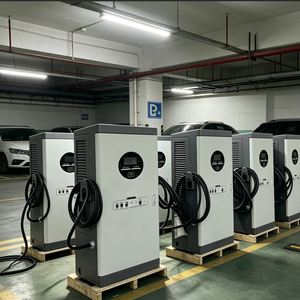
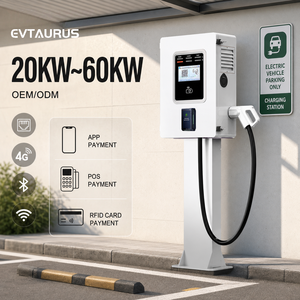
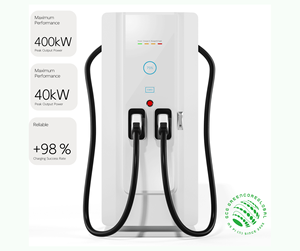
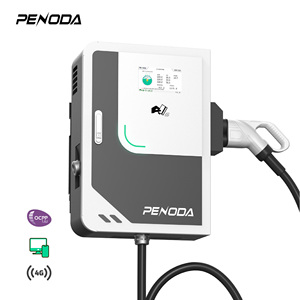
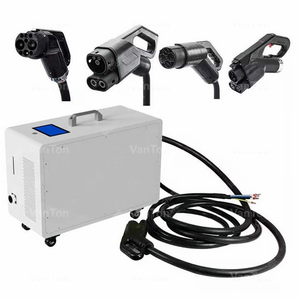
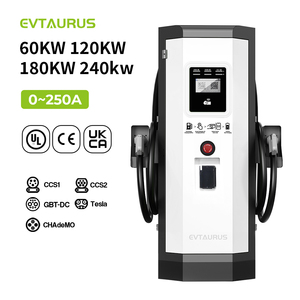
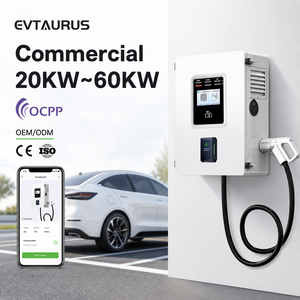
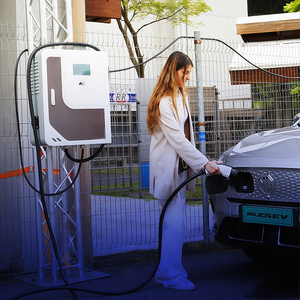
Modern industrial energy storage, V2G microgrids, and heavy EV mobility demand bidirectional power conversion solutions capable of maintaining ultra-high thermal stability and instantaneous current control.
Utilizes galvanic isolation combined with soft-switching Zero Voltage Switching (ZVS) to achieve high dynamic performance between high-voltage DC buses and low-voltage storage batteries.
Replaces legacy Silicon IGBT switches with Wide-Bandgap (WBG) SiC MOSFETs, cutting switching losses by over 65% and enabling operation frequencies above 100 kHz.
Seamlessly integrates into automotive assembly lines, off-highway commercial machinery, and intelligent smart-grid telemetry architectures via deterministic CANbus.
As global electrification accelerates across public mobility, commercial transportation, industrial intralogistics, and distributed energy storage networks (BESS), the technological baseline for high-power conversion hardware has evolved rapidly. Unidirectional battery chargers—historically reliant on standard diode bridge rectifiers and Silicon (Si) Insulated Gate Bipolar Transistors (IGBTs)—are increasingly viewed as capital-inefficient. Global OEMs and utility-scale energy developers now prioritize bidirectional DC/DC and AC/DC power converters capable of facilitating seamless bidirectional power transfer between the three-phase AC grid, high-voltage vehicle traction batteries (up to 900V/1000V DC), and local microgrid systems.
Selecting an OEM/ODM manufacturing partner for bidirectional converters requires a granular engineering assessment of power density metrics, thermal management methodologies, electromagnetic compatibility (EMC), firmware parameterization flexibility, and long-term supply chain resilience. High-quality factories must demonstrate complete control over the fabrication cycle—from Surface Mount Technology (SMT) and Through-Hole Technology (THT) printed circuit board assembly (PCBA) to vacuum potting, planar transformer winding, and automated End-of-Line (EOL) electrical safety testing.
At the electrical core of next-generation bidirectional converters lies the switch from hard-switched, non-isolated topologies to isolated resonant and phase-shifted isolated DC/DC designs. The modern standard for bidirectional power flow is defined by the Dual Active Bridge (DAB) topology and the bidirectional CLLC resonant converter circuit.
The DAB topology utilizes two full-bridge active converter circuits linked via a high-frequency isolation transformer. Power flow direction and magnitude are dynamically regulated by modulating the phase shift angle between the primary and secondary bridge pulse-width modulation (PWM) signals. This phase-shift control enables Zero Voltage Switching (ZVS) across a broad load curve, virtually eliminating turn-on switching losses and minimizing switching-induced electromagnetic interference (EMI). Consequently, system efficiencies routinely exceed 97.5% during both the charging (Grid-to-Vehicle / G2V) and discharging (Vehicle-to-Grid / V2G or Vehicle-to-Building / V2B) cycles.
For applications demanding even higher switching speeds and compact physical envelopes—such as mobile charging stations and fleet wallboxes—the bidirectional CLLC resonant converter topology is implemented. By incorporating symmetric resonant tanks on both primary and secondary windings, the CLLC architecture achieves ZVS for primary active switches and Zero Current Switching (ZCS) for secondary rectifying switches across fluctuating DC bus voltages (ranging from 200V DC to 900V DC). This wide voltage window is essential for interfacing with diverse battery chemistries, including 400V Lithium Iron Phosphate (LFP) and 800V Nickel Manganese Cobalt (NMC) architectures.
| Performance Metric | Legacy Unidirectional IGBT | Modern SiC DAB Topology | Next-Gen SiC CLLC Resonant |
|---|---|---|---|
| Peak Power Efficiency | 92.0% - 94.5% | 96.5% - 97.8% | 97.5% - 98.6% |
| Switching Frequency Range | 10 kHz - 20 kHz | 50 kHz - 100 kHz | 100 kHz - 300 kHz |
| Power Density (kW/L) | 0.8 - 1.5 kW/L | 3.0 - 4.5 kW/L | 5.5 - 8.0 kW/L |
| Bi-directional Dynamic Response | N/A (Unidirectional Only) | < 15 milliseconds | < 5 milliseconds |
| Cooling Requirement | Forced Air / Heavy Liquid | Contact / Plate Cooling | Advanced Contact / Planar Heat Pipe |
| Galvanic Isolation Voltage | 1.5 kV DC | 3.75 kV AC / 5 kV DC | 3.75 kV AC / 5 kV DC |
In high-power industrial environments—such as automotive final assembly plants, mining operations, logistics terminals, and seaport automated guided vehicle (AGV) charging bays—ambient conditions present severe operational challenges. Airborne particulate matter, conductive dust, high humidity, and aggressive ambient atmospheres will rapidly degrade air-cooled power converters that rely on internal cooling fans.
Leading tier-1 manufacturing facilities solve this vulnerability by engineering contact-cooled (cold-plate) bidirectional power modules. In a contact-cooled architecture, high-heat-generating semiconductor switches (SiC MOSFET modules), planar transformers, and resonant inductors are direct-mounted onto an optimized aluminum baseplate, which is subsequently potted using thermally conductive epoxy compounds. Heat dissipation occurs purely via conduction to the equipment frame or external chassis heat sink. This fanless, fully sealed IP65/IP67 enclosure concept delivers several critical manufacturing benefits:
High-reliability bidirectional power electronics require rigorous quality control frameworks across all stages of fabrication, software implementation, and EOL testing.
From initial circuit simulation and PCB layout to high-density SMT mounting, vacuum potting, mechatronic housing assembly, and final burn-in validation, controlling 100% of the manufacturing chain prevents quality variance and shortens engineering iteration loops.
Every manufactured unit undergoes fully automated End-of-Line testing using proprietary DTS (Deutronic Test Software) platforms. Tests include 5kV insulation resistance, high-voltage dielectric withstand, full-load dynamic bidirectional step response, and CAN bus frame verification.
Integrated networking via DC-Connect protocols allows automotive assembly lines and commercial charge point operators (CPOs) to record real-time charging curves, device diagnostics, thermal parameters, and battery health data directly to central MES/ERP software.
Manufactured products comply fully with international standards including ISO 15118 (Plug & Charge / V2G), IEC 61851-23/24, UL 2202, CE marking, and DIN 43530 for automotive battery management and station safety.
As enterprise procurement teams evaluate vendor qualified-supplier lists (QSL) for upcoming multi-year infrastructure contracts, three macro technological trends are shaping the procurement landscape for bidirectional converters:
The international standard ISO 15118-20 establishes the communication framework for bidirectional charging (Vehicle-to-Grid / V2G, Vehicle-to-Building / V2B, and Vehicle-to-Home / V2H). Future-proof converter modules must feature hardware-level support for HomePlug Green PHY Power Line Communication (PLC) and native integration with ISO 15118-20 software stacks. This allows chargers to execute automated energy trading, smart dynamic load balancing, and dynamic grid frequency regulation without external gateway hardware.
Next-generation passenger EVs, commercial haulers, and electric buses are rapidly transitioning from 400V architecture to 800V/1000V nominal DC battery packs to minimize current draw, reduce copper wire weight, and accelerate charging speeds. Converter factories must supply DC power supplies and bidirectional chargers capable of operating seamlessly across a ultra-wide DC output range (200V DC up to 1000V DC) while maintaining high efficiency at both light and maximum load conditions.
Commercial charging stations are increasingly paired with stationary battery energy storage systems (BESS) to buffer grid connections and avoid peak demand tariffs. Bidirectional converters serve as the master interface between the stationary BESS, solar PV arrays, and mobile EV packs. Procurement specifications now mandate dual-port bidirectional converters capable of managing direct DC-to-DC energy transfers between stationary storage and EV batteries, cutting AC double-conversion energy losses by 4% to 6%.
Direct answers to critical technical questions raised by system integrators, fleet engineers, and procurement directors.
Our low-voltage DVCx3 series covers standard industrial DC bus voltages (12V, 24V, 48V, 110V DC), while our high-voltage DVCHx3 and commercial EV charger converter platforms operate across input voltages up to 900V DC (with transient tolerance up to 1000V DC). Both series feature contact cooling, customizable galvanic isolation, and parameterizable CAN/SAE J1939 communication interfaces.
Through high-frequency digitally controlled gate drivers and dual-phase shift algorithms operating on Wide-Bandgap (SiC) MOSFET switches, our bidirectional converters execute power flow reversal in under 10 milliseconds. This ultra-fast response ensures unbroken power stabilization during unexpected grid outages or microgrid peak-shaving events.
Yes. Designed specifically for end-of-line (EOL) testing, vehicle flash-programming, and factory assembly line operations, our units include tailored charging profiles for Lithium (NMC, LFP) and Lead-based batteries. Complete DC-Connect network integration allows continuous trace data collection, automated vehicle identification, and central MES factory control.
All converter modules are manufactured in ISO 9001 and ISO 14001 certified facilities. They incorporate reinforced galvanic isolation tested up to 3.75 kV AC / 5 kV DC HI-POT levels, meeting safety standards IEC 61851-23, UL 2202, EN 61000-6-2/4 for industrial EMC, and IP55 to IP67 environmental protection ratings.
Because R&D engineering, SMT PCB assembly, magnetic winding, potting, and final assembly are located under one roof, we fully support custom voltage scaling, modified physical form factors, specialized contact-cooling baseplates, and custom firmware CAN communication stacks even for small-to-medium OEM series volumes.
We maintain an established service and distribution network spanning over 40 countries. We offer long-term spare parts availability guarantees, factory repair services, remote firmware updates, and on-site engineering commissioning support for large infrastructure deployments.
Consult with our engineering team to request detailed technical datasheets, CAD models, or custom OEM project evaluations for your EV charging, transportation, or BESS platform.
Get Catalog