
Engineered for high-voltage accuracy, industrial stability, and seamless automated integration across global OEM production facilities.
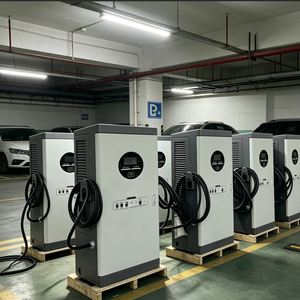
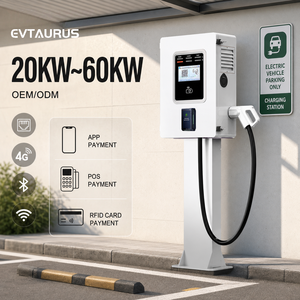
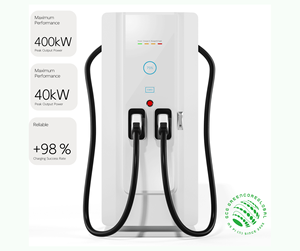
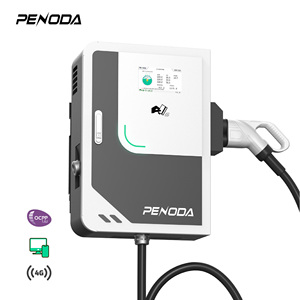
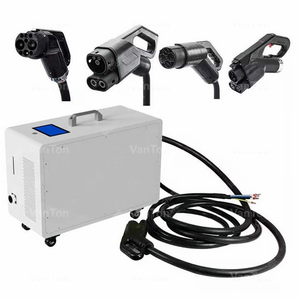
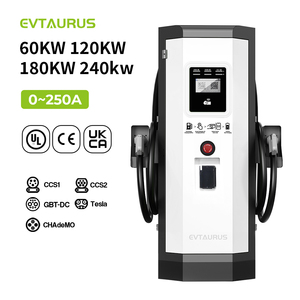
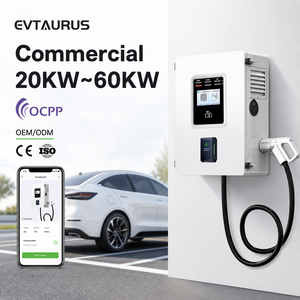
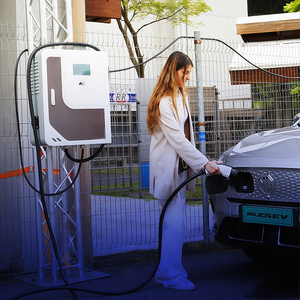
An engineering benchmark for international buyers sourcing automated electrical end-of-line (EOL) test systems, high-voltage battery test beds, and DC charging simulation platforms.
The global transition toward high-voltage electromobility platforms (800V to 1000V architectures) has restructured the industrial requirements for test automation and power electronics validation. When evaluating a China test system factory, international automotive OEMs, Tier-1 system integrators, and industrial machinery manufacturers no longer assess suppliers purely on unit cost. Modern procurement protocols require verified engineering depth, traceable quality systems, hardware-in-the-loop (HIL) simulation capabilities, and strict adherence to international electrical safety frameworks.
China's manufacturing ecosystem for automated test equipment (ATE) has rapidly matured. By combining localized high-capacity electronic component supply chains with advanced German power-electronics R&D principles, leading facilities deliver enterprise-class automated test benches. These solutions support multi-variant product lines, complex dynamic load profiles, dynamic thermal modeling, and real-time CAN/CAN-FD communication logging.
"Information Gain Insight: Superior test system manufacturing hinges on the seamless convergence of potted, contact-cooled hardware topologies with proprietary test software platforms (such as DTS). True factory reliability is proven when a single bench can dynamically reconfigure test limits across 15+ product variants without human recalibration."
Industrial end-of-line test systems serve as the final quality gate before components leave the assembly floor. High-reliability factories implement modular instrumentation suites integrated with custom programmable DC power supplies, active load banks, and automated pin-matrix switching modules. Key structural components of advanced Chinese test systems include:
A. High-Voltage Galvanic Isolation & Safety Circuits: Modern test benches for EV fast-charging units (ranging from 15kW wallboxes up to 240kW high-power stations) integrate safety interlocks, insulation monitoring devices (IMDs), and active discharge units capable of safely collapsing 900V internal bus capacitors within milliseconds under emergency shutdown scenarios.
B. Sinusoidal Signal Generation & Precision Acquisition: For electric drive motor controllers and power conversion modules, automated test systems utilize high-bandwidth analog-to-digital converters (ADCs) to capture total harmonic distortion (THD), phase ripple, and switching efficiency under full dynamic load conditions.
Direct factory audits focus heavily on internal engineering workflows and vertical integration. Leading facilities differentiate themselves through in-house manufacturing capabilities:
Advanced test systems leverage Silicon Carbide (SiC) and Gallium Nitride (GaN) switching circuits to achieve conversion efficiencies exceeding 975%. By replacing traditional liquid-cooling loops with planar magnetics and contact-cooled aluminum heat sinks, equipment footprint is reduced by up to 40%, delivering exceptional thermal headroom during continuous maximum-power testing.
Anticipating technical evolution and supply chain requirements for next-generation automated test rigs and EV infrastructure.
Procurement mandates are rapidly pivoting toward bi-directional Vehicle-to-Grid (V2G) and Vehicle-to-Home (V2H) testing systems. Future test benches must act as both precise power sources and regenerative electronic loads, recycling up to 96% of testing energy back into the plant grid to reduce operational costs.
Hardware rigidity is being replaced by modular software control interfaces. Test bench platforms driven by central software suits (such as DTS) allow remote update of test parameters, automated limit adjustments via cloud database connectivity, and full charge-data traceability across worldwide production networks.
With global EV charging infrastructure split across CCS1, CCS2, GB/T, CHAdeMO, and emerging NACS standards, future factory test systems are engineered with multi-standard physical interface matrix cards and auto-switching PLC/ISO 15118 protocol analyzers.
Merging over three decades of German power electronics precision with scalable Chinese manufacturing velocity.
From initial circuit layout, firmware coding, and mechanical housing design to high-pot testing, potting, and global logistics, every step is executed within audited facilities. This unified chain prevents multi-vendor friction and guarantees strict component traceability.
Our power systems and automated test systems adhere strictly to ISO 9001, CE, IEC 61851, and OCPP 1.6/2.0.1 standards. Equipment is engineered for stable operation in electrically noisy industrial environments, backed by comprehensive risk assessment documentation.
We combine manufacturing scale in China with an established international distribution and service network. Remote diagnostics via DC-Connect combined with on-site technical support ensures your assembly lines experience zero unbudgeted downtime.
Technical and commercial answers tailored for quality engineers, plant managers, and procurement leads.
When conducting a supplier audit, focus on four key dimensions: 1) Internal Vertical Integration: Verify if SMT assembly, cable harnessing, and mechanical fabrication take place in-house. 2) Software Flexibility: Ensure the facility provides proprietary software (e.g., DTS system) with open API access for plant MES integration. 3) Thermal Management Capabilities: Check if high-voltage test units utilize contact cooling or planar magnetics for long-term thermal stability. 4) Traceability & Calibration: Review ISO 17025 laboratory accreditations and verifiable calibration history for all measurement instrumentation.
Yes. Because initial hardware development, firmware parameterization, and mechanical assembly are fully controlled within our facilities, we routinely deliver customized DC voltage ranges (up to 900V/1000V DC) and dynamic current capabilities. Systems can be configured with specific CAN/CAN-FD profiles, custom connector guns (CCS1, CCS2, GB/T, CHAdeMO), and tailored cabinet footprints even for small-to-medium batch sizes.
Contact cooling removes the need for liquid pumps, coolant reservoirs, radiators, and potential leak-hazard zones within sensitive electrical test cabinets. By transferring heat through a precision-machined aluminum baseplate directly to an external heat sink or cold plate, contact-cooled units offer higher power density, immune protection against vibration and dust, and extended maintenance-free operational life.
Our automated test systems natively support CAN 2.0A/B, CAN-FD, SAE J1939, Ethernet/IP, Modbus TCP, and RS485 interfaces. For EV charging equipment, full compliance with ISO 15118, DIN 70121, and OCPP 1.6/2.0.1 JSON protocols is embedded to guarantee complete interoperability testing between chargers and vehicle emulators.
Standard modular test stations and DC chargers (20kW to 240kW) feature a manufacturing lead time of 3 to 5 weeks. Fully customized multi-variant automated end-of-line test benches are delivered within 6 to 8 weeks depending on engineering complexity. All equipment is covered by a standard multi-year industrial warranty backed by spare parts stocking and global field service engineers located across 40+ countries.
Share your target testing requirements, DC power specs, communication protocols, and annual volume target with our senior application engineers.