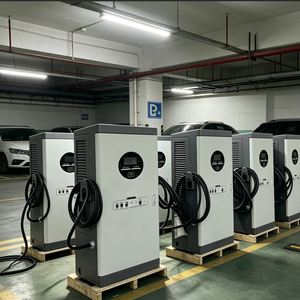

Explore high-efficiency EV fast chargers, high-voltage DC/DC converters, and precision motor control units manufactured under strict ISO9001/IATF16949 quality standards.
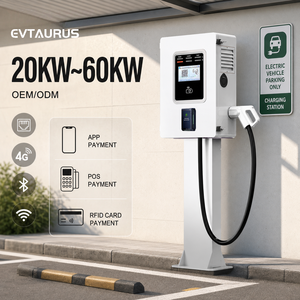
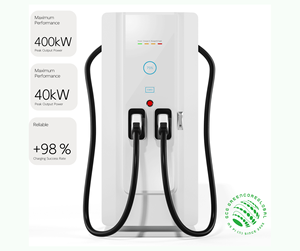
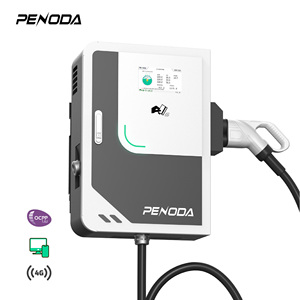
In the evolving landscape of global industrial automation, electric vehicle infrastructure, and smart robotics, selecting a tier-1 China Servo Drive Manufacturer & Factory Partner requires evaluating core architectural engineering capabilities rather than surface-level technical specifications. Modern industrial drive systems must reconcile high dynamic performance, strict electromagnetic compatibility (EMC), and robust operational thermal margins in harsh operating environments.
Whether deploying high-speed servo drive amplifiers in multiaxis CNC machinery or integrating ultra-high-efficiency DC conversion topology in commercial electric vehicle fast-charging networks, engineering teams demand uncompromised reliability, sub-millisecond control latency, and seamless deterministic fieldbus synchronization.
At the heart of high-performance servo motion control lies Field-Oriented Control (FOC) executed on high-frequency Digital Signal Processors (DSPs) paired with FPGA hardware acceleration. By decoupling stator current vector components into torque-producing (Iq) and flux-producing (Id) vectors, modern digital servo drives achieve decoupled, precise torque production across wide speed ranges up to field weakening zones.
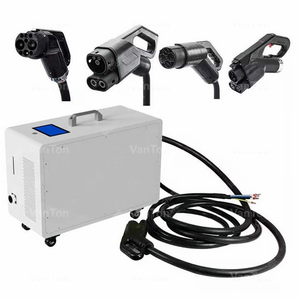
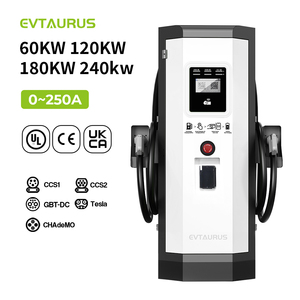
The global transition toward high-voltage DC fast charging systems (spanning 200V up to 900V DC operational windows) mirrors the technological advances in industrial servo amplifiers. The integration of Wide Bandgap (WBG) semiconductors, specifically Silicon Carbide (SiC) MOSFETs, has enabled switching frequencies beyond 100 kHz while slashing switching losses by over 60% compared to traditional Silicon IGBT modules.
Utilizing high-density planar transformers and coupled inductors minimizes parasitic leakage inductance, maximizing soft-switching efficiency in resonant LLC converters.
Direct thermal-conduction cold-plate design eliminates vulnerable liquid cooling loops in rugged off-highway industrial machinery and high-power DC charging modules.
Reinforced dielectric insulation (>3000V AC/1 min) ensures complete isolation between primary high-voltage DC buses and low-voltage control telematics.
| Engineering Metric | AC Servo Drive Amplifiers | High-Power DC EV Fast Chargers | Industrial DC/DC Converters |
|---|---|---|---|
| Primary Switching Topology | 3-Phase Sinusoidal PWM / SVPWM | Active Front End (AFE) + Interleaved LLC | Phase-Shifted Full-Bridge (PSFB) / Buck-Boost |
| Semiconductor Technology | Fast IGBTs / SiC MOSFETs | Wide Bandgap SiC MOSFETs | High-Efficiency Silicon / GaN HEMT |
| Operational Input Range | 220V / 380V / 480V AC (±15%) | 3-Phase 380V/400V/480V AC | 24V, 48V, up to 900V DC High Input |
| Control Loop Latency | < 62.5 µs (Current Control) | < 1 ms (Voltage/Current Transition) | < 500 µs (Transient Recovery) |
| Target Thermal Strategy | Heat Sink Air / Cold Plate | Forced Air / Liquid Cooled Modules | Full Potting Conduction / Contact Cooled |
| Industrial Certification | CE, UL 61800-5-1, STO ISO13849-1 | CE, IEC 61851-1/23, OCPP 1.6/2.0.1 | EN 50155 (Railway), CE, IP67 Protection |
Procurement directors and system integration engineers must evaluate long-term technology roadmaps when qualifying China manufacturing partners. Over the next decade, industrial motion drive systems and power conversion equipment are undergoing four critical architectural shifts:
Modern logistics automation (AGVs and AMRs) requires unified drive-charging ecosystems. High-efficiency sinusoidal motor controllers (such as the D-Sinus architecture) combined with ultra-compact potted DC power converters enable continuous operation under intensive shock and vibration profiles.
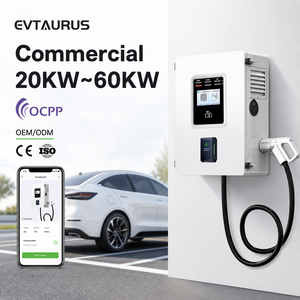
Future-proof DC charging infrastructures require hardware-level support for ISO 15118 vehicle-to-grid (V2G) bidirectional power flow alongside encrypted OCPP 2.0.1 communication stacks for seamless billing, dynamic load balancing, and fleet telemetry.
Manufacturing plants are moving away from traditional AC bus architectures toward centralized DC microgrids. Decentralized potted power supplies and contact-cooled DC/DC converters reduce copper cable overhead while providing up to 97.5% conversion efficiency across plant floors.
Leveraging 35+ years of specialized power electronics heritage, our manufacturing facilities integrate complete vertically-integrated supply capabilities under one roof. From PCB layout engineering, SMD/THT contract assembly, full potting for harsh environments, to customized End-of-Line (EOL) functional automated testing powered by dedicated DTS software—we guarantee zero-defect delivery for mission-critical industrial applications.