
Engineered for zero-voltage switching (ZVS) operation, our commercial DC fast-charging systems and resonant converters deliver high power density, thermal reliability, and full CAN/OCPP diagnostic integration.
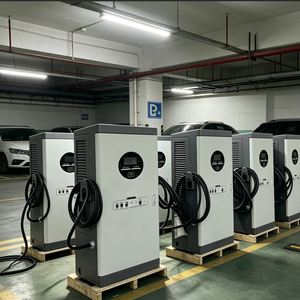
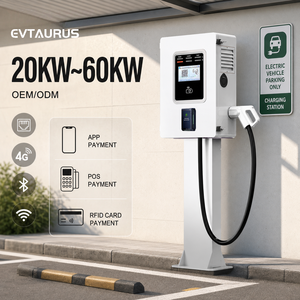
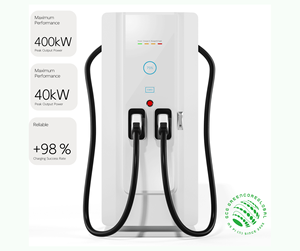
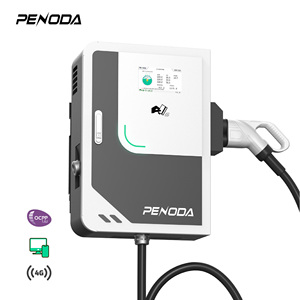
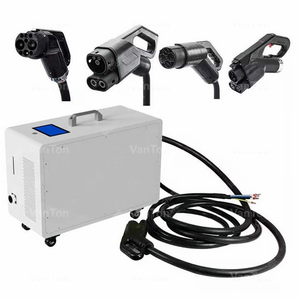
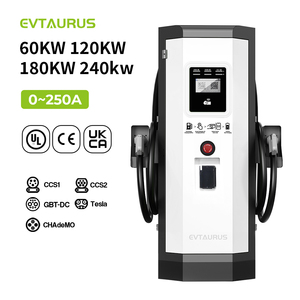
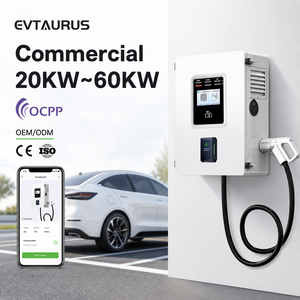
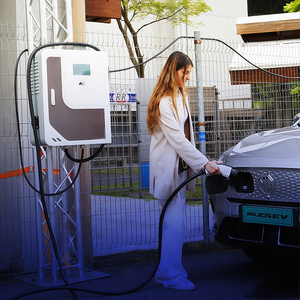
In modern industrial electrification, heavy-duty logistics, and high-power e-mobility infrastructure, traditional hard-switched pulse-width modulation (PWM) topologies hit physical boundaries regarding switching losses, electromagnetic interference (EMI), and volumetric power density. As a leading China resonant converter manufacturer and direct factory integration partner, our technical architecture pivots on soft-switching resonant tank configurations—specifically the Inductor-Inductor-Capacitor (LLC) and Inductor-Capacitor-Capacitor (LCC) topologies.
Unlike conventional buck or phase-shifted full-bridge (PSFB) circuits that force semiconductor switches to interrupt high currents under full voltage stress (generating significant $E_{off}$ and $E_{on}$ switching dissipation), resonant converters utilize reactive elements to shape voltage and current waveforms sinusoidally. This enables Zero Voltage Switching (ZVS) across the primary-side power MOSFETs and Zero Current Switching (ZCS) across secondary rectifier diodes or synchronous rectifiers across the entire operational spectrum.
By integrating a series resonant inductor ($L_r$), resonant capacitor ($C_r$), and parallel magnetizing inductor ($L_m$), the LLC topology allows seamless step-down/step-up frequency control. It guarantees ZVS from zero load to maximum overload, drastically lowering primary turn-on losses and allowing operating frequencies exceeding 250 kHz with Silicon Carbide (SiC) devices.
Optimized for ultra-wide DC input spectrums (ranging from 200V to 900V DC), our parallel-series LCC resonant converters prevent narrow frequency sweep constraints. They maintain constant voltage regulation and soft-switching conditions even under extreme battery discharge or variable overhead catenary rail supplies.
We eliminate wire-wound high-frequency transformers in favor of custom multilayer planar magnetics integrated into the PCB stack. This reduces leakage inductance variability to under 1.5%, improves thermal dissipation through direct contact conduction cooling, and scales power density to >4.5 kW/liter.
The following comparative parameterization demonstrates the operational boundaries achieved by our factory-engineered resonant power conversion modules vs. legacy industrial power units:
| Engineering Parameter | Standard Hard-Switched Bridge | Advanced LLC Resonant Platform | SiC-Based Modular Resonant (Factory Spec) |
|---|---|---|---|
| Peak Conversion Efficiency | 91.5% - 93.8% | 96.2% - 97.4% | 97.8% - 98.6% |
| Switching Frequency ($f_s$) | 40 kHz - 70 kHz | 100 kHz - 180 kHz | 200 kHz - 450 kHz |
| Primary Semiconductor Stress | High $dV/dt$ & $dI/dt$ Hard Turn-On | ZVS Turn-On Across Load Range | Full ZVS + Near-Zero Gate Energy (SiC) |
| Cooling Methodology | Forced Air / Large Heatsinks | Liquid Cold-Plate / Contact Conduction | Potted Contact Cooling (IP67/IP69K) |
| Isolation Voltage Rating | 1.5 kV AC / 2.5 kV DC | 3.0 kV AC / 4.2 kV DC | > 5.0 kV DC Reinforced Isolation |
| Total Harmonic Distortion (THD) | < 5.0% at Full Load | < 2.5% at Full Load | < 1.2% Low-Noise Output |
Reflecting over 35 years of high-end industrial power electronics engineering inspired by world-class standards (such as Deutronic’s automotive line chargers and potted power supplies), our manufacturing facility in China merges agile enterprise production with strict quality assurance systems. We handle the full lifecycle from circuit simulation and PCB layout to automated encapsulation and End-of-Line (EOL) functional testing.

Because development, SMT/THT PCB assembly, vacuum potting, final mechanical integration, and automated testing take place within a unified production facility, we maintain absolute authority over component quality and parameterization.
Our high-voltage DC/DC converter platforms (such as the DVCx3 and 900V DVCHx3 series) feature planar magnetic structures with contact cooling. This removes high-maintenance external fans and fluid pumps, allowing reliable operations inside dust-prone logistics environments, rail cabs, and sealed EV battery enclosures.
Send an InquiryRecognized as a reliable OEM partner for global automotive assembly lines and commercial fleets, our charging systems are designed for high-stress operational duty cycles.
Integrated with proprietary network telemetry (DC-Connect), our resonant charging systems deliver real-time data tracing, charge curve logging for lead-acid and advanced LiFePO4/NMC chemistries, and automated parameter switching over standard CAN bus, SAE J1939, or Ethernet protocols.
Send an Inquiry
Procurement directors and chief power architects face changing market forces when sourcing high-power resonant converters and DC fast-charging systems from China. Based on technical research and global electrification roadmaps, five key trends will dictate component selection:
As passenger EVs and commercial transportation migrate from 400V to 800V/900V battery systems to enable 15-minute ultra-fast charging, resonant converters must support elevated insulation barrier standards (IEC 61851-23) and wide gain curves. Factory buyers are prioritizing dual-active-bridge (DAB) and matrix-connected LLC converters capable of dynamic switching between parallel and series output configurations.
Silicon MOSFETs are reaching physical saturation in high-power applications. Silicon Carbide (SiC) MOSFETs enable lower $R_{DS(on)}$ temperature coefficients and zero reverse recovery charge ($Q_{rr}$). Sourcing strategies are shifting toward manufacturers with established supply chains for third-generation SiC power modules, yielding compact converters operating safely at elevated junction temperatures ($T_j = 175^\circ\text{C}$).
Next-generation resonant conversion is moving from unidirectional power flow to bidirectional vehicle-to-grid (V2G) and vehicle-to-everything (V2X) capability. Resonant topologies utilizing symmetrical CLLC tanks allow equal power transfer efficiency in both forward (charging) and reverse (discharging/grid support) modes, turning parked electric fleets into distributed energy storage systems.
Unprotected cabinet designs with internal forced-air fans are being phased out in severe industrial and coastal environments. The standard is shifting toward completely potted aluminum enclosures using thermally conductive polyurethane or silicone compounds. Conduction-cooled resonant converters eliminate air filters, prevent humidity condensation, and withstand continuous shock and vibration up to 10G.
Modern buyers demand dynamic control flexibility. Microchip digital signal processors (DSP) running adaptive frequency control algorithms allow remote firmware updates, dynamic load balancing, real-time insulation resistance monitoring, and predictive failure analysis via embedded CANbus telemetry—guaranteeing operational uptime.
Below are key technical answers addressing critical questions asked by power system engineers, procurement specialists, and system integrators:
Partner directly with China's leading resonant converter engineering factory. Contact our application engineering team today to request technical datasheets, CAD models, custom topology evaluations, or competitive OEM quotes.
Send an Inquiry