
Industrial-Grade DC EV Chargers, Wallbox Stations, and Contact-Cooled Power Conversion Solutions
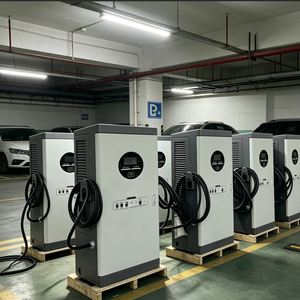
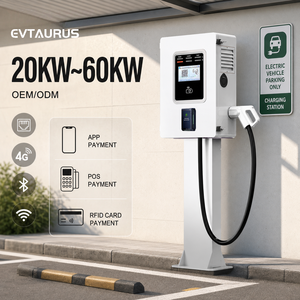
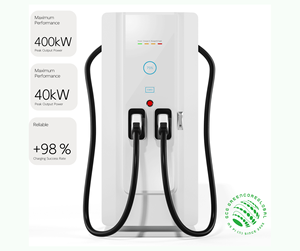
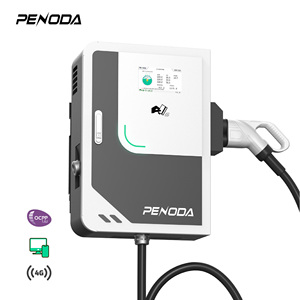
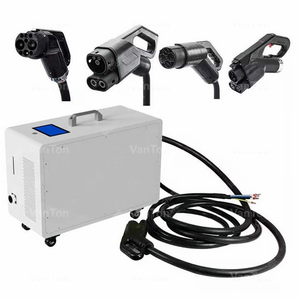
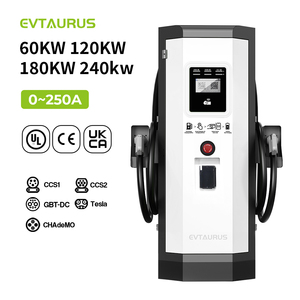
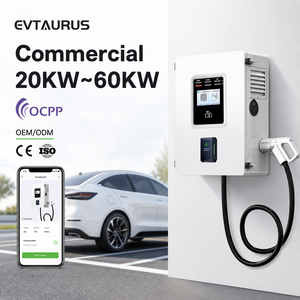
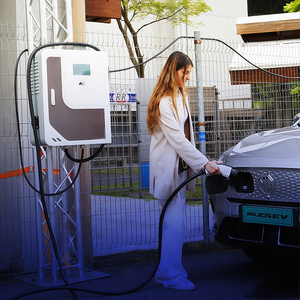
In the contemporary landscape of global industrial electrification, selecting a qualified regulated supply manufacturer and factory in China is no longer merely a commercial procurement choice—it is a critical engineering decision. Regulated power supplies, DC/DC converters, dynamic battery chargers, and high-power EV fast-charging stations serve as the foundational backbone for automotive production lines, intralogistics automated guided vehicles (AGVs), rail transit systems, and commercial fleet infrastructure.
Whether deploying 30kW-240kW ultra-fast DC charging stations featuring CCS1, CCS2, CHAdeMO, and GB/T compliance or integrating contact-cooled 900V DC/DC converters directly into high-voltage vehicle chassis, top-tier factories utilize vertically integrated production environments. In-house Surface Mount Technology (SMT) and Through-Hole Technology (THT) assembly lines, combined with fully automated vacuum potting encapsulation, guarantee long-term operational stability in IP65 to IP68 rated harsh industrial settings.
Building upon over 35 years of specialized power electronics heritage, our manufacturing framework unifies hardware development, custom firmware parameterization, mechanical enclosure design, and automated end-of-line (EOL) test software into a single cohesive ecosystem. Procurement teams working with top-tier Chinese manufacturing operations gain distinct structural advantages across the complete product lifecycle:
Advanced DVCHx3 architecture supporting high-voltage DC input up to 900 V. Engineered specifically for heavy commercial vehicles, e-mobility platforms, and fuel-cell systems with CAN Bus and SAE J1939 communication.
Specialized charging computers built for automotive assembly lines and end-of-line testing. Features dedicated charging profiles for 12V lead-acid, AGM, and Lithium-ion chemistry with full DC-Connect network data traceability.
State-of-the-art sinusoidal commutated speed controllers. Regulating motor phase current to a pure sine wave delivers maximum energy efficiency, ultra-low torque ripple, and exceptionally quiet operation for pumps and industrial drives.
Fully potted, vibration-resistant power supplies engineered for logistics, AGVs, and decentralized cabinet installations. Resists moisture, conductive dust, aggressive atmospheres, and severe mechanical shock.
In-house contract manufacturing (DEUTRONICsystems) delivering high-density multi-layer printed circuit board assemblies, mechatronic sub-units, and ready-to-ship boxed devices built under strict IATF 16949 audit quality standards.
Modular Automated Test Equipment (ATE) systems managed by proprietary DTS software. Enables comprehensive end-of-line functional validation, safety testing, and automated compliance logging for complex multi-variant electronics.
When evaluating Chinese power supply factories and regulated DC charger manufacturers, technical buyers must examine the underlying thermal management, switching topologies, and control loops. The table below illustrates structural differences across industry standard power designs:
| Architecture Parameter | Standard Commercial Supply | High-Spec Industrial Regulated Unit | Next-Gen SiC/GaN Contact-Cooled |
|---|---|---|---|
| Switching Semiconductor | Silicon (Si) MOSFET / IGBT | Superjunction Silicon / Early SiC | Wide Bandgap SiC MOSFET & GaN HEMT |
| Thermal Dissipation | Forced Air (Speed-Controlled Fans) | Heavy Extruded Heatsink + Fans | Direct Contact Cooling / Liquid Cold Plate |
| Peak Efficiency | 88.0% - 92.5% | 94.0% - 96.2% | 97.8% - 98.6% |
| Input Voltage Range | 380V - 415V AC Nominal | 320V - 480V AC / 100V-750V DC | Wide DC Input: 200V - 900V DC Dynamic |
| Environmental Protection | IP20 - Open Frame / Cabinet | IP54 Gasketed Enclosure | IP67 / IP68 Vacuum Epoxy Potting |
| Control Protocol Integration | Analog 0-10V / RS485 Modbus | CAN Bus 2.0B / Ethernet IP | CANopen, SAE J1939, OCPP 2.0.1, ISO 15118 |
The global regulated power and EV charging market is undergoing a massive transformation driven by carbon neutrality mandates, higher battery pack voltages, and decentralized smart grid architectures. Leading China regulated supply manufacturers are pioneering four critical technological shifts:
Passenger and heavy-duty electric vehicles are rapidly shifting from 400V powertrain architectures to 800V and 1000V nominal platforms. This transition drastically reduces charging current requirements, mitigating cable thermal losses and enabling 15-minute ultra-fast charging. Consequently, Chinese power factories are re-engineering DC/DC converters and DC fast chargers (30kW to 240kW+) to supply continuous regulated output across wide voltage curves (150V DC to 1000V DC continuous), preventing derating at lower battery state-of-charge (SoC) levels.
Silicon Carbide (SiC) MOSFETs and Gallium Nitride (GaN) high-electron-mobility transistors are replacing legacy silicon components in high-frequency switching stages. SiC enables switching frequencies exceeding 100 kHz with minimal switching losses, drastically shrinking passive planar magnetics and reducing overall unit weight by up to 40%. This technological leap enables compact, wall-mounted 20kW-60kW DC chargers and lightweight vehicle-mounted DC/DC converters that operate reliably at higher junction temperatures (> 150°C).
Modern fast-charging hubs require intelligent power allocation algorithms to prevent localized grid overload. Advanced China factories are integrating solid-state matrix switching inside 120kW-240kW charging cabinets. This allows dynamically shared power modules to shift output in 20kW or 30kW increments across dual connectors based on real-time vehicle Battery Management System (BMS) requests. Furthermore, bidirectional V2G protocols based on ISO 15118-20 enable EV fleets to feed stored energy back into microgrids during peak demand hours, turning regulated chargers into active grid-stabilization assets.
Industrial deployment in intralogistics (AGVs, forklifts), mining vehicles, and coastal environments demands complete isolation from environmental contaminants. The industry trend is moving away from internal cooling fans—which draw in airborne conductive dust, moisture, and chemical vapors—toward contact cooling. Contact-cooled converters mount directly onto an equipment chassis or liquid cooling plate, maintaining thermal equilibrium even under 100% continuous duty cycles.
Sourcing regulated power electronics and custom charging hardware from Chinese manufacturers requires a rigorous, data-driven evaluation process. International procurement directors and OEM system integrators should structure their sourcing audits around five key operational pillars:
Verify that the factory operates validated quality pipelines beyond basic ISO 9001 certification. For automotive, transportation, and heavy equipment applications, the manufacturing facility must hold IATF 16949 certification. This ensures full Advanced Product Quality Planning (APQP), Production Part Approval Process (PPAP) documentation, and Failure Mode and Effects Analysis (FMEA) for all power assemblies.
Always demand empirical thermal test report data rather than standardized ideal datasheets. Evaluate the power supply's thermal derating curve at ambient operating temperatures of 40°C, 50°C, and 60°C. Top manufacturers provide verified Mean Time Between Failures (MTBF) calculations conducted per MIL-HDBK-217F or Telcordia SR-332 standards, proving component longevity under real-world thermal stress.
Hardware excellence must be backed by flexible firmware engineering. Ensure the manufacturer’s software team can deliver customized CAN Bus protocols (CANopen, SAE J1939, custom DBC files) and remote management stacks (OCPP 1.6J / OCPP 2.0.1 for EV chargers). Verify cybersecurity readiness, including encrypted Over-The-Air (OTA) firmware update capability and secure memory enclaves.
A resilient supply chain requires transparent Bill of Materials (BOM) management. Leading Chinese factories maintain pre-qualified second-source suppliers for critical semiconductor ICs, magnetics, and electrolytic or film capacitors. This dual-sourcing strategy prevents production bottlenecks during global semiconductor supply chain disruptions.
Inspect the factory's End-of-Line (EOL) testing setup. Premium manufacturers utilize customized Automated Test Equipment (such as DTS-driven test stations) that subject 100% of manufactured units to full electrical load testing, high-voltage dielectric withstand (Hi-Pot) checks, thermal imaging, and automated burn-in cycles prior to packaging.
Expert Engineering Clarifications for OEM Buyers & System Integrators
Standard low-voltage converter families (such as the DVCx3 series) cover conventional 12V, 24V, and 48V DC input systems. For high-voltage e-mobility, rail, and fuel-cell platforms, the specialized DVCHx3 converter series operates across a continuous input range of up to 900V DC. All units feature contact cooling, galvanic isolation (or non-isolated options upon request), and real-time parameter configuration via standard CAN bus or SAE J1939 protocols.
Yes. Our production-line charging systems are engineered explicitly for automotive manufacturing plants and end-of-line vehicle testing. They support multi-chemistry charging curves (including AGM, EFB, and Lithium-ion), feature robust noise immunity against factory EMI, and interface seamlessly with plant SCADA systems via DC-Connect software for complete, traceable charge-data logging across every produced VIN.
Because full-stack development—including PCB layout, SMT/THT assembly, software parameterization, potting, mechanical fabrication, and final testing—is handled fully in-house, customized hardware and firmware modifications are highly cost-effective even for low to medium production volumes. This agility allows OEMs to request tailored connector pinouts, custom voltage outputs, and specific communication DBC files without massive NRE fees.
Contact-cooled power supplies replace fragile internal cooling fans with direct conduction heat transfer through a precision-machined aluminum baseplate connected to the vehicle chassis or cold plate. Internal electronics are encapsulated using thermally conductive epoxy resin potting, achieving IP67/IP68 ingress protection and outstanding mechanical resistance against severe shock, vibration, humidity, and corrosive environments.
Our complete range of regulated DC power supplies, wallbox chargers, and commercial fast-charging stations are engineered to meet global compliance standards. Systems carry CE, TUV, UL, RoHS, and REACH certifications, adhering strictly to IEC 61851-1/23/24 for EV charging safety, IEC 60950/62368 for power supplies, and EN 50155 for rail transit electronics.
Whether you require standard 30kW-240kW fast EV chargers, custom 900V contact-cooled DC/DC converters, or full contract electronics manufacturing (SMT/THT), our engineering team is ready to evaluate your specification.
Contact Us