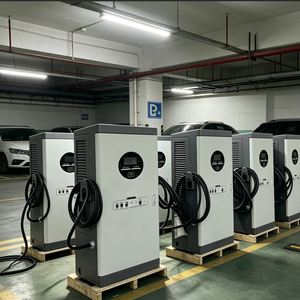
Direct OEM hardware engineered for heavy-duty electric vehicles, commercial fleets, and automated industrial power stations.
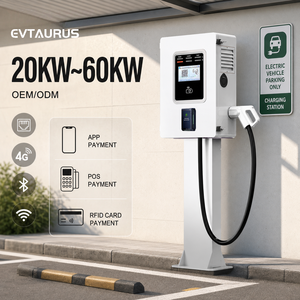
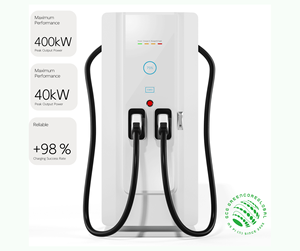
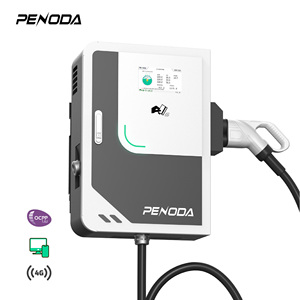

An authoritative technical evaluation for procurement directors, system integrators, and OEM engineers.
The global transition toward commercial fleet electrification, heavy-duty machinery automation, and microgrid integration has placed motor control unit (MCU) technology at the center of modern industrial procurement. Sourcing motor controllers from top-tier Chinese manufacturers is no longer merely a cost-minimization strategy; it has evolved into a strategic partnership for accessing ultra-high power density, advanced Silicon Carbide (SiC) semiconductor topologies, and rapid prototype customization.
Leading Chinese manufacturing ecosystems have consolidated the entire value chain—from raw substrate wafer handling and surface-mount technology (SMT) assembly to automated end-of-line (EOL) testing systems. This vertical consolidation enables Tier-1 and Tier-2 suppliers to deliver custom sinusoidal motor controllers, high-voltage DC/DC converters, and multi-protocol fast charging systems at unprecedented lead times.

Understanding the hardware and firmware parameters that dictate efficiency, acoustic signature, and thermal dissipation.
Field-Oriented Control (FOC) converts complex three-phase AC stator currents into decoupled d-q axis vector components. By maintaining true sinusoidal current waveforms, our motor controllers eliminate torque ripple, reduce acoustic noise by up to 18 dB, and maximize motor efficiency under varying payload conditions.
Integrating ultra-flat planar transformers with direct contact cooling eliminates bulky liquid cooling loops in medium-power applications. Heat is conducted directly through potted aluminum chassis plates, enabling reliable continuous operation up to 900 V DC inputs under ambient conditions from -40°C to +85°C.
Equipped with modern firmware stacks, our controller platforms feature real-time health monitoring, phase-to-phase short protection, overvoltage clamping, and predictive thermal throttling. Fully integrated with automated DTS software suite for traceability throughout production and field servicing.
A side-by-side evaluation framework for selecting high-power controllers based on key operational parameters.
| Architecture Class | Input Voltage Range | Efficiency Rating | Thermal Dissipation Method | Communication Bus | Primary Industrial Application |
|---|---|---|---|---|---|
| Low-Voltage Sinusoidal MCU | 24 V – 96 V DC | 97.8% | Contact Cooled / Aluminum Heatsink | CANopen / RS485 | AGVs, Intralogistics, Golf Carts, Electric Forklifts |
| Commercial EV Drive Inverter | 300 V – 750 V DC | 98.9% | Liquid Cooled (Glycol/Water loop) | CAN 2.0B / SAE J1939 | Electric Buses, Logistics Trucks, Municipal Fleets |
| High-Voltage DC/DC Converter (DVCHx3) | 400 V – 900 V DC | 96.5% | Potted Contact Cooling Plate | Isolated CAN Bus / DTS Software | Fuel-Cell Platforms, Heavy Mining Machinery, Rail Systems |
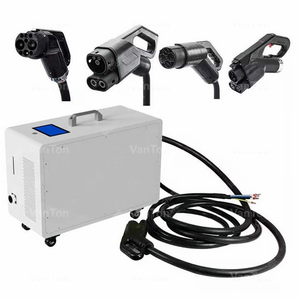
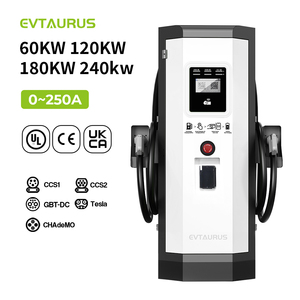
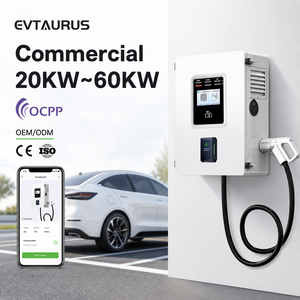
| Integrated Fast Charging Station | 380 V – 480 V AC (Input) | 96.0% | Forced Air Cooling / Ducted Fans | OCPP 1.6J / Ethernet / 4G Modem | Commercial EV Charging Infrastructure, Depot Hubs |
Combining 35+ years of rigorous power electronics design with scalable, high-volume production capabilities.

Unlike contract vendors who outsource critical manufacturing processes, our facilities house end-to-end capabilities under one roof. From surface-mount technology (SMT) and through-hole technology (THT) PCB assembly to specialized vacuum potting and automated end-of-line functional testing, every step is rigorously audited.
This integrated framework guarantees that every motor controller and high-power converter delivers stable performance in extreme operating environments subject to continuous vibration, high humidity, and aggressive thermal cycling.
Key innovations driving the procurement strategies of global Tier-1 electric vehicle and industrial equipment buyers.
Driven by the demand for ultrafast charging and higher power transmission efficiency, the industry is transitioning rapidly from 400V to 800V/900V architectures. Next-generation motor controllers leverage wide-bandgap SiC semiconductors to reduce conduction losses by up to 60%, enabling smaller battery packs and extended operating ranges.
Procurement teams increasingly favor integrated electric drive systems combining the Motor Controller (MCU), On-Board Charger (OBC), and DC/DC converter into a single compact housing. This spatial integration reduces interconnect cabling weight, eliminates high-voltage wiring harnesses, and cuts overall system costs.
Motor controllers and charger stations are moving toward full bi-directionality (Vehicle-to-Grid V2G and Vehicle-to-Load V2L). Advanced active front-end topologies allow commercial fleets to serve as distributed energy storage assets, feeding power back into facility microgrids during peak tariff hours.
Direct technical answers addressing OEM customization, compliance certifications, and order lead times.
Our power conversion and motor control portfolio covers a wide input spectrum. The low-voltage series (DVCx3) typically operates across 12 V to 96 V DC for logistics equipment, AGVs, and light electric vehicles. The high-voltage series (DVCHx3) accommodates input voltages up to 900 V DC, making it ideal for heavy commercial electric vehicles, railway traction systems, and fuel-cell auxiliary drives.
Yes. Firmware adaptability is one of our core engineering competencies. While standard units ship with baseline CANopen or SAE J1939 communication matrices, our internal software development team can implement custom CAN IDs, baud rates, cyclic transmission rates, and specific fault diagnostic messages tailored to your vehicle control unit (VCU) or industrial master controller.
Depending on the mechanical configuration selected, our units feature IP65, IP67, or IP69K protection ratings. Heavy-duty modules utilize full polyurethane or epoxy vacuum potting, ensuring complete resistance to dust ingress, high-pressure washdowns, salt spray, and extreme shock/vibration per ISO 16750-3 standards.
Absolutely. Because PCB engineering, mechanical housing prototyping, SMT assembly, and end-of-line software parameterization take place within our own facilities, we readily support pilot prototyping and small-to-medium series production runs before ramping to high-volume commercial manufacturing.
Our products utilize advanced planar magnetics coupled with contact-cooling baseplates or liquid-cooled cold plates. By transferring thermal energy directly from internal MOSFET/IGBT junction gates to external cooling substrates, our hardware operates continuously at high ambient temperatures without thermal derating.
Partner with a verified manufacturing leader. Connect with our senior application engineering team to evaluate your motor voltage, peak torque requirement, cooling method, and volume delivery schedules.
Send an Inquiry