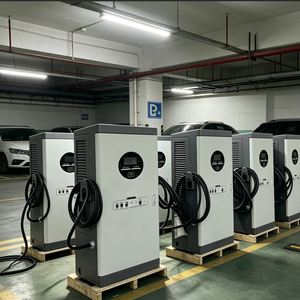

Engineered for commercial fleets, automotive end-of-line integration, and severe outdoor infrastructure applications.
The global shift toward zero-emission transportation, high-density industrial automation, and decentralized energy grids has completely redefined the criteria for selecting a China electronic assembly supplier. Modern OEM buyers, procurement directors, and systems integrators no longer evaluate turnkey electronics manufacturing vendors purely on surface-level unit economics. Instead, technical procurement decisions are governed by verified engineering depth, first-pass yield reliability, advanced thermal design capabilities, and seamless international regulatory compliance.
Key Engineering Insight: Industrial power conversion modules operating at elevated DC bus voltages (up to 900V DC) require contract manufacturing partners capable of integrating Surface Mount Technology (SMT), Through-Hole Technology (THT), vacuum potting, dynamic planar magnetics, and automated end-of-line (EOL) functional safety testing under a unified Quality Management System (QMS).
As power electronics transition from legacy Silicon (Si) Insulated Gate Bipolar Transistors (IGBTs) toward Wide-Bandgap (WBG) Silicon Carbide (SiC) and Gallium Nitride (GaN) power switches, electronic assembly suppliers must possess specialized cleanroom assembly lines, automated optical inspection (AOI), 3D X-ray inspection (AXI) for voidless solder joint verification, and deep expertise in severe-environment conformal coating. This technical whitepaper analyzes the essential technological paradigms, procurement strategies, manufacturing capabilities, and future engineering trends governing global power electronics production.
Combining Western engineering precision with high-capacity Chinese SMT/THT contract assembly lines to deliver uncompromised quality.

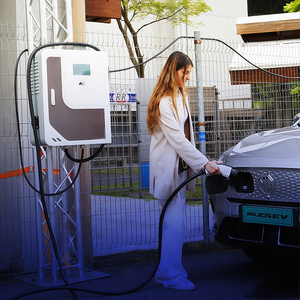
Industrial charging systems demand uncompromising operational stability. Engineered to withstand high electromagnetic interference (EMI) environments typical of automated vehicle assembly plants, our battery charger platforms cover the entire vehicle life cycle—from main assembly lines and end-of-line diagnostic stations to showroom maintenance and heavy-duty logistics fleets.
Featuring intelligent charging curves optimized for standard Lead-Acid, AGM, and advanced Lithium-ion chemistries (LFP/NMC), our systems integrate proprietary DC-Connect network interfaces. This enables full data traceability across manufacturing execution systems (MES), giving plant managers real-time telemetry, automated voltage calibration, and remote diagnostic control over thousands of operational charge cycles.

Modern electric architecture in commercial commercial vehicles, e-buses, off-highway machinery, and rail systems requires compact power conversion from high-voltage traction batteries down to 12V/24V auxiliary safety grids. Our DVCx3 and high-voltage DVCHx3 series support continuous DC input voltages reaching 900V DC.
By replacing bulky liquid-cooling jackets with precision-machined contact-cooling baseplates and planar transformer topologies, these converters achieve elite power density within IP67/IP69K sealed aluminum enclosures. Fully integrated SAE J1939 and CAN 2.0B / CAN-FD communication protocols ensure precise parameter control, fault logging, and dynamic current limiting directly from the vehicle control unit (VCU).

Intralogistics facilities, Automated Guided Vehicles (AGVs), Autonomous Mobile Robots (AMRs), and severe industrial control environments subject electronics to constant shock, vibration, thermal cycling, and particulate exposure. Our centralized and decentralized power supplies are engineered with full polyurethane/epoxy potting compounds.
This hermetic encapsulation eliminates moisture intrusion, accelerates heat dissipation away from critical power MOSFETs, and enhances structural mechanical dampening. Available in top-hat DIN-rail, 19-inch subrack, and direct machine-mount form factors, our power systems mitigate long cable voltage drops by placing decentralized power nodes directly at the actuator location.

Torque ripple and acoustic motor noise are critical failure points in high-efficiency fluid pumps, HVAC blowers, and sensitive medical/industrial actuation drives. The D-Sinus controller platform applies pulse-width modulation (PWM) algorithms that recreate true sinusoidal current waveform output to electric motor windings.
Unlike basic trapezoidal drive schemes, sinusoidal commutation smooths magnetic pole transitions, resulting in up to 15% higher drive efficiency, lower thermal stress on motor insulation, and near-silent mechanical operation. Firmware parameters can be custom-tuned during PCBA contract assembly to match specific inductance, resistance, and back-EMF profiles of custom brushless DC (BLDC) and permanent magnet synchronous motors (PMSM).

Zero-defect electronic assembly requires more than automated component placement. Through our dedicated DEUTRONICsystems division, we deliver complete OEM/ODM contract manufacturing, combining Surface Mount Technology (SMT) and Through-Hole Technology (THT) with proprietary DTS Automated Test Software.
Every PCBA or assembled power cabinet undergoes rigorous End-of-Line (EOL) testing. Our customized test benches integrate multi-channel programmable electronic loads, high-potential (Hi-Pot) insulation testers, frequency analyzers, and CAN bus simulators into fully automated test nests. Test results are recorded digitally against unique serial numbers, guaranteeing full product traceability before dispatch.
How emerging semiconductor topologies, smart charging protocols, and digital manufacturing workflows are revolutionizing supplier evaluation.
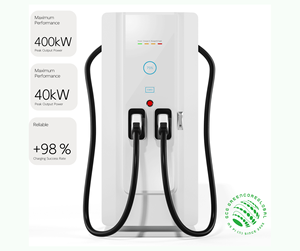
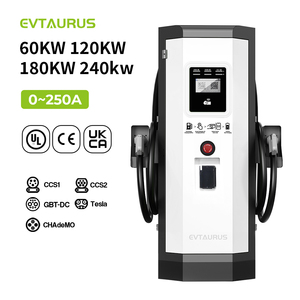
The transition from legacy Silicon MOSFETs to Silicon Carbide (SiC) and Gallium Nitride (GaN) devices allows switching frequencies exceeding 100 kHz. This dramatically reduces the physical footprint of magnetic components (inductors, transformers) by 40%, enabling ultra-compact 240kW DC fast charging modules with power conversion efficiencies exceeding 97.5%.
Commercial EV fleets and passenger electric vehicles are migrating from standard 400V battery architectures to 800V/900V ultra-fast charging platforms. China electronic assembly suppliers must upgrade creepage and clearance design parameters, select specialized high-voltage dielectric encapsulation materials, and deploy automated 3D X-ray solder voiding inspection.
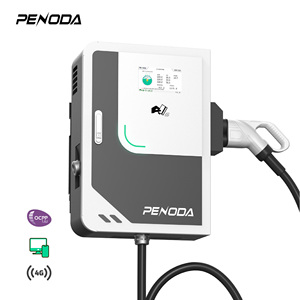
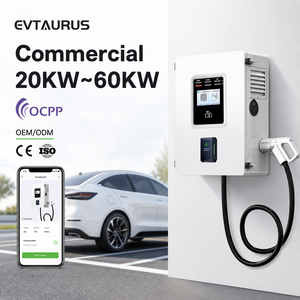
Next-generation commercial chargers are evolving from passive energy dispensers into dynamic grid stabilization assets. Integration of Open Charge Point Protocol (OCPP 2.0.1), ISO 15118 Plug & Charge hardware security modules (HSM), and bi-directional Vehicle-to-Grid (V2G) power flow capabilities represent key mandatory firmware/hardware assembly benchmarks.
Strategic framework for technical procurement teams sourcing custom electronic assemblies and EV charging infrastructure from China.

Leading global OEMs are moving away from traditional transactional component purchasing. Instead, procurement directors are establishing co-engineering partnerships with specialized assembly suppliers during early product development stages. Implementing Design for Manufacturability (DFMA) reviews prior to SMT tooling guarantees high first-pass yield, eliminates expensive printed circuit board redesigns, and reduces BOM cost structures by 15% to 25%.
Clear, authoritative answers addressing compliance, manufacturing customization, thermal engineering, and global delivery logistics.
A top-tier supplier must demonstrate IATF 16949 (automotive QMS) and ISO 9001 certifications, automated 3D Solder Paste Inspection (SPI), 3D Automated Optical Inspection (AOI), and 3D X-Ray Inspection (AXI) to check for BGA/QFN and power component solder voiding (target <10-15%). Furthermore, they should possess full in-house capabilities for selective soldering, conformal coating, thermal interface material (TIM) application, vacuum potting, and automated functional testing (FCT).
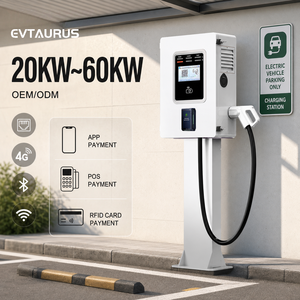
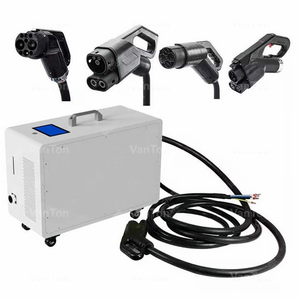
Our EV fast chargers support universal global charging standards, including CCS Combo 1 (North America), CCS Combo 2 (Europe/International), GB/T 20154 (China), and CHAdeMO. Systems can be configured with single or dual-connector outlets with dynamic power balancing. Communication protocols comply fully with OCPP 1.6J and OCPP 2.0.1 for back-end software management, mobile APP control, RFID authentication, and credit card POS integration.
Contact-cooled converters (such as our 900V input DVCx3 and DVCHx3 series) transfer operational thermal energy directly via a precision-machined aluminum baseplate to the vehicle chassis or existing cold plate. This eliminates the need for dedicated liquid coolant loops, pumps, hoses, and potential fluid leak risks—significantly lowering mechanical system complexity, weight, maintenance requirements, and total manufacturing costs.
Yes. Through our integrated engineering and manufacturing workflow (DEUTRONICsystems model), we support complete NPI (New Product Introduction) cycles. We accommodate rapid prototyping, pilot production runs for qualification and field testing, and seamless scaling into high-volume automated SMT/THT mass production with strict change control and component traceability.
Sinusoidal commutated controllers (such as the D-Sinus family) continuously regulate phase currents into smooth sine waves matching the back-EMF profile of the motor. This eliminates high-frequency torque ripple, reduces mechanical bearing vibration, decreases motor core losses, improves power efficiency across variable speed loads, and dramatically lowers acoustic noise levels in workplace blowers, industrial pumps, and electric vehicle drive units.
Our potted power supplies undergo specialized automated vacuum potting processes using high-thermal-conductivity silicone or polyurethane compounds. This vacuum degassing procedure eliminates internal air bubbles, forming an IP67/IP68 sealed barrier against humidity, dust ingress, chemical atmospheric contaminants, and severe physical shocks/vibrations common in industrial intralogistics and AGVs.
We utilize custom modular automated test stations driven by proprietary DTS (Deutronic Test Software). The test sequence automatically verifies insulation resistance, high-voltage dielectric withstand (Hi-Pot), full-load thermal stability, CAN/J1939 communication integrity, efficiency curves under step loads, and dynamic protection features (over-voltage, over-current, over-temperature) prior to packaging.
Whether you require custom SMT/THT contract assembly, white-label EV fast chargers, high-voltage DC/DC converters, or complete automated test benches—our application engineers are ready to evaluate your specification package.