
Certified fast-charging stations designed for ultra-high conversion efficiency, ISO 15118 compliance, and rugged outdoor reliability.
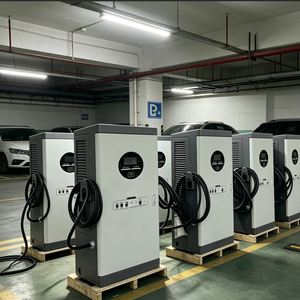
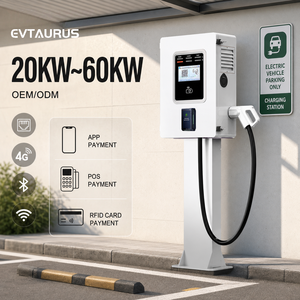
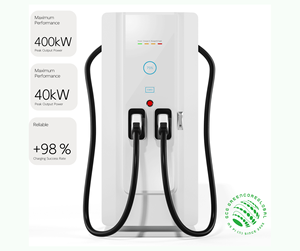
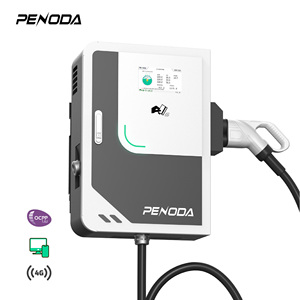
Bridging cutting-edge Asian manufacturing scale with rigorous European power-electronics engineering standards.
We integrate high-frequency 3rd generation SiC power modules, achieving peak electrical efficiency exceeding 96.5% while drastically reducing thermal footprints.
Every single charger undergoes automated electrical safety, full-load burn-in, and CAN/OCPP protocol simulation powered by our custom DTS test software suite.
From THT/SMD board assembly to fully potted, vibration-proof industrial power enclosures, we maintain 100% control over component longevity and supply chain integrity.
Deploying remote telemetry via DC-Connect paired with regional field engineer nodes in 40+ countries to ensure 99.9% uptime compliance for charge point operators.
The global transition to zero-emission mobility has placed unprecedented demands on public and commercial electric vehicle supply equipment (EVSE). As battery architecture shifts rapidly from legacy 400V configurations to high-voltage 800V and 1000V platforms (driven by passenger cars, heavy-duty commercial fleets, and electric buses), procurement officers, Charge Point Operators (CPOs), and fleet engineers face a complex technical landscape. Selecting a premier China DC charger supplier is no longer merely a transactional unit-cost decision; it is a long-term strategic investment in power electronics reliability, protocol interoperability, grid management capability, and total cost of ownership (TCO) optimization.
Core Procurement Insight: Modern DC fast-charging deployment requires evaluating peak module conversion efficiency, dynamic load allocation algorithms, standard compliance (ISO 15118-20 Plug & Charge), thermal protection topologies, and lifecycle firmware support.
The heart of any modern DC EV charging station lies in its power conversion stack. Historically, 15kW and 20kW power modules relied on conventional Silicon (Si) MOSFETs or IGBT switches operating at lower switching frequencies (20 kHz to 50 kHz). These legacy systems suffered from higher switching losses, larger planar transformer dimensions, elevated heat dissipation, and peak operational efficiencies hovering around 93% to 94%.
Leading Chinese exporters have pioneered the commercialization of 30kW, 40kW, and 60kW power conversion modules utilizing Silicon Carbide (SiC) wide-bandgap semiconductors. Operating at switching frequencies exceeding 100 kHz, SiC-based DC chargers deliver transformative operational advantages:
Early-generation dual-connector DC fast chargers operated on static power distribution logic. A dual 120kW dispenser, for instance, permanently allocated 60kW to Plug A and 60kW to Plug B regardless of the connected vehicle's State of Charge (SoC) or maximum Battery Management System (BMS) acceptance rate. If an EV accepting only 20kW plugged into Plug A, 40kW of continuous capacity sat completely idle, wasting valuable grid connection bandwidth.
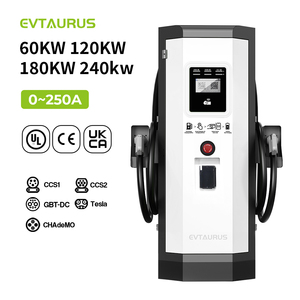
Modern high-capacity stations (such as our 120kW to 240kW systems) implement Dynamic Matrix Power Dispatch. Controlled by real-time microprocessors communicating over internal CAN bus networks, power modules are dynamically matrixed in 20kW or 30kW increments:
| Feature Architecture | Legacy Static Power Distribution | Advanced Dynamic Matrix Allocation |
|---|---|---|
| Power Utilization Rate | 55% - 65% Fleet Efficiency | 88% - 95% Fleet Efficiency |
| BMS Matching Flexibility | Fixed output steps (e.g., 60kW / 60kW) | Granular module dynamic allocation (e.g., 20kW steps) |
| Module Redundancy | Single channel failure drops output by 50% | Automatic failover re-routes remaining active modules |
| Asset ROI & Turnaround | Longer vehicle queuing, lower throughput | Maximized charging speed, fast bay rotation |
Sourcing teams must ensure that current capital expenditures do not become prematurely obsolete as electric vehicle technology accelerates. Four key engineering vectors define the future of DC fast charging equipment:
Conventional air-cooled charging cables are physically restricted to approximately 200A to 250A continuous current to prevent cable weight and handle thermal limit violations. Pushing charging power to 360kW, 480kW, or 600kW at 800V requires current flows up to 500A-600A. To maintain ergonomic cable weights and slender cable diameters, liquid-cooled charging technology circulates a synthetic coolant or glycol solution directly through the internal copper conductor harness. This active thermal management prevents contact pin overheating and allows ultra-fast charging stops lasting under 10 to 15 minutes.
The days of relying solely on physical RFID cards or manual smartphone app activation are coming to an end. The integration of ISO 15118-20 software stacks enables seamless, encrypted communication between the vehicle's onboard unit and the charger. Automatic authentication, cryptographic TLS handshake, billing authorization, and charging initiation occur within seconds of inserting the connector cable. Furthermore, ISO 15118-20 sets the foundation for bi-directional power flow (Vehicle-to-Grid / V2G), transforming stationary EV fleets into distributed battery energy storage buffers.
In many commercial sites, utility grid capacity constraints prohibit the installation of multi-hundred-kilowatt direct AC grid draws. China's leading DC exporter engineering groups are rapidly integrating localized Battery Energy Storage Systems (BESS) directly into the DC bus of the charging station. During peak electricity pricing or low vehicle demand periods, the internal stationary battery charges slowly from the grid. When an EV arrives, power is drawn simultaneously from the grid and the BESS, preventing massive peak-demand utility surcharges and avoiding expensive transformer upgrades.
Deployments in coastal saline regions, high-humidity tropical zones, or dust-heavy industrial logistics yards expose power electronics to severe environmental stress. Utilizing potted power modules—where sensitive microelectronics are encapsulated in thermo-conductive resin—guarantees complete isolation from moisture, salt mist, conductive dust, and vibration. Borrowed from high-reliability railway power conversion standards, potted modules significantly decrease operational maintenance overhead.
Direct technical guidance covering compliance, hardware selection, customization, and deployment logic.
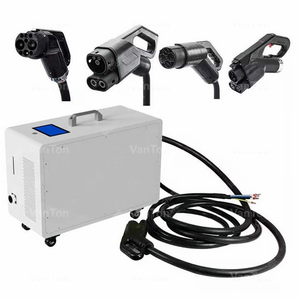
Choice depends on your target geographic deployment zone and fleet vehicle specifications. North America predominantly uses CCS1 and NACS (SAE J3400); Europe, South America, Southeast Asia, and Australia utilize CCS2; China uses the national GB/T standard (and upcoming ChaoJi protocol); Japan relies on CHAdeMO. Our commercial chargers offer dual-connector multi-standard output configurations to serve diverse EV fleets on a single site.
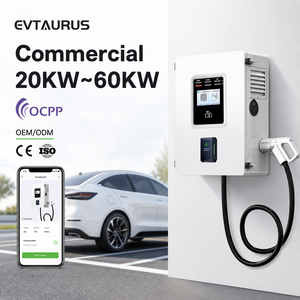
Open Charge Point Protocol (OCPP) is the universal open communication standard between the physical EV charger (hardware) and the Charge Point Management System (software backend). OCPP 1.6J provides robust core functionalities including smart charging, remote diagnostics, and session billing. OCPP 2.0.1 adds advanced security encryption, ISO 15118 Plug & Charge support, dynamic display message control, and expanded status reporting.
Yes. Our DC fast charging systems are built for industrial-grade operation ranging from -30°C to +55°C. Features include intelligent variable-speed cooling fans, internal condensation heaters, thermo-conductive potted electronics, and automatic thermal derating protection that safely adjusts output power if ambient operating temperatures cross critical thresholds.
We provide comprehensive OEM/ODM solutions. This includes customized metal enclosure sheet-metal manufacturing, custom powder-coat color painting, corporate silk-screen branding logos, custom UI/UX touch-screen software skins, bespoke cable lengths, custom PCB board development (THT/SMD), and integration of local payment POS hardware terminals.
Our centralized management controllers monitor real-time total building or station power draw. When grid load increases, the charger network dynamically scales back individual dispenser power allocation to stay below utility breaker limits. Once grid capacity frees up, charging speeds automatically ramp back up to peak output levels without interrupting vehicle sessions.
Every manufacturing run adheres to strict ISO 9001 and IATF 16949 automotive standards. Prior to dispatch, chargers undergo automated End-of-Line (EOL) testing using integrated DTS diagnostic hardware. This includes dielectric high-voltage insulation tests, ground continuity validation, simulated CAN protocol handshakes under full load burn-in, and CE / UL compliance verifications.
Partner with China's top DC charger exporter for custom engineering solutions, wholesale pricing, and reliable long-term technical support.
Get a Quote