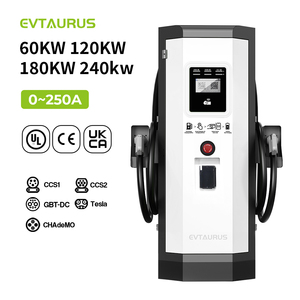
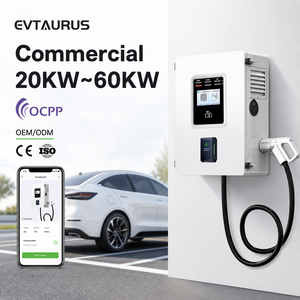
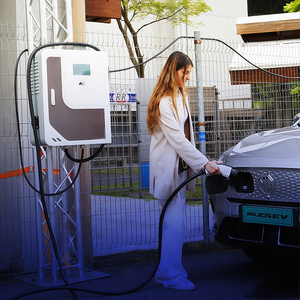
Explore state-of-the-art power conversion and high-efficiency fast-charging infrastructure engineered for extreme industrial environments, fleet operations, and automotive production lines.
In the era of rapid industrial electrification, mobile machinery transformation, and high-capacity battery energy storage systems (BESS), step converters (DC/DC Step-Down Buck and Step-Up Boost topologies) serve as the foundational backbone for electrical energy management. Modern industrial power ecosystems demand voltage conversion platforms capable of matching ultra-wide operating input ranges—from sub-48V auxiliary busses up to 900V DC traction batteries—while maintaining uncompromised thermal resilience and electromagnetic compatibility (EMC).
Selecting the correct step converter manufacturer requires evaluating crucial technical paradigms: switching frequency dynamics, galvanic isolation barriers, planar magnetic integration, and real-time parameterization over bus systems such as standard CAN 2.0B and SAE J1939 protocols. As power densities scale beyond 5 kW/L, enterprise buyers and OEM design engineers must align with suppliers capable of delivering high Information Gain (IG) through verifiable field-testing data, customized firmware loops, and robust thermal contact cooling mechanisms.
Modern high-voltage DC/DC step converters are moving away from traditional forced-air fans toward fully potted, contact-cooled aluminum housings. Contact cooling eliminates mechanical failure points caused by airborne particulate accumulation, dust ingress, and salt-mist corrosion, reducing Total Cost of Ownership (TCO) by over 38% across a 10-year operating life cycle in logistics terminals and heavy rail networks.
Next-generation Silicon Carbide (SiC) MOSFETs enable ultra-fast switching frequencies exceeding 250 kHz, reducing inductive component footprints while boosting step-down and step-up efficiency beyond 98.5%.
High-potential (Hi-Pot) reinforced isolation ratings up to 3.75 kVAC protect sensitive low-voltage control units (ECUs, microcontrollers) from high-voltage DC transients and ground loop noise in industrial rigs.
Fully potted compound encapsulation inside IP67/IP69K enclosures transfers internal heat directly to the vehicle chassis or cold-plate heat sink, offering extreme shock and vibration endurance.
Based on rigorous evaluation of engineering depth, manufacturing capability, global service infrastructure, and compliance with automotive/industrial benchmarks (ISO 26262, EN 50155, UL 62368-1), the following industry leaders represent the apex of DC/DC step converter design.
| Manufacturer | Primary Input Voltage Range | Efficiency Rating | Cooling Architecture | Key Target Sectors |
|---|---|---|---|---|
| Deutronic Elektronik GmbH | 12V – 900V DC (DVCH Series) | > 98.2% | Full Contact Cooling / Potted | Automotive Assembly, Rail, AGVs, Heavy EV |
| Delta Electronics | 18V – 750V DC | 96.5% | Liquid & Forced Air | Data Centers, Telecom, EV Charging |
| Vicor Corporation | 48V – 800V DC (Factorized Power) | 97.8% | Advanced Surface Mount (ChiP) | Aerospace, Defense, High-Density Computing |
| TDK-Lambda | 9V – 400V DC | 95.0% | Conduction & Convection | Industrial Automation, Medical Electronics |
| Mean Well | 12V – 110V DC | 93.5% | Air-Cooled DIN-Rail | General Cabinet Power, Building Control |
| SynQor | 8V – 425V DC | 96.0% | Baseplate Cooled | Military, Transportation, Rail Systems |
| Murata Power Solutions | 18V – 150V DC | 94.5% | Open-Frame / Encapsulated | Telecommunications, Microgrids |
| Bel Power Solutions | 100V – 850V DC | 97.0% | Liquid-Cooled / Sealed Plate | E-Buses, Commercial Hybrid Fleet |
| Siemens Industrial Power | 24V – 600V DC | 96.2% | Cabinet Integration | Process Manufacturing, Logistics Systems |
| ABB Power Electronics | 48V – 1000V DC | 97.5% | Cabinet / External Heavy Duty | Renewables, Substation Step Conversion |
1. Deutronic Elektronik GmbH: Dominating high-voltage automotive production lines and heavy-duty transportation, Deutronic’s step converters (such as the DVCx3 and DVCHx3 series) excel with contact-cooled architectures handling up to 900 V input voltage. Their in-house PCB THT/SMD contract manufacturing and specialized DTS test software provide complete end-to-end quality assurance, guaranteeing parameterizable dynamic CAN communication under high electrical noise levels.
2. Vicor Corporation: Renowned for high power density and modular building blocks. Their ChiP (Converter housed in Package) technology allows power engineers to step down high voltage DC directly at the point-of-load, though requiring precise external heat-sinking design.
3. Delta Electronics & Bel Power Solutions: Major players in high-power mobile transportation and electric vehicle fleet charging. Both companies specialize in liquid-cooled power conversion modules integrated directly into commercial vehicle power distribution units (PDUs).
The industrial step converter market is undergoing a paradigm shift driven by high-voltage battery chemistry changes (800V architecture transition), bidirectional power flow requirements, and smart grid integration. Enterprise procurement teams must monitor four critical trends:
As commercial electric trucks, mining equipment, and locomotives adopt 800V–1000V traction platforms, step converters must scale input protection thresholds without sacrificing conversion efficiency. Wide bandgap semiconductors (SiC) are now baseline requirements to prevent thermal runaway.
Modern intralogistics AGVs and microgrids require step converters that dynamically reverse current direction. Bi-directional conversion allows energy recovery during regenerative braking to flow back into secondary energy buffers or supercapacitors seamlessly.
Fixed-output converters are being replaced by micro-controller-driven platforms that accept runtime configuration via CAN-Bus or SAE J1939 commands. Operators can adjust voltage output profiles, dynamic current limits, and diagnostic thresholds remotely.
To survive high vibration profiles (up to 10G) in heavy machinery, manufacturers are abandoning air-ventilated step converters in favor of specialty polyurethane and silicone potting mixes that offer thermal conductivity while completely sealing internal magnetics.
Sourcing enterprise step converters involves more than matching voltage and current ratings on a datasheet. Procurement teams must conduct thorough verification across multiple engineering layers to avoid costly production delays or field recalls:
With over 35 years of dedicated power electronics R&D, our engineering facility in Bavaria delivers an unmatched suite of customized power conversion, charging computer technology, and automated test bench equipment. Combining hardware engineering, custom firmware development, planar magnetic design, SMD/THT contract assembly, and automated End-of-Line testing under one roof, we provide end-to-end industrial power solutions trusted by top-tier automotive OEMs, railway system integrators, and global intralogistics providers.
Need a customized DC/DC step converter, automotive assembly line charger, or specialized test bench solution? Contact our application engineering team today to review your technical specification.
Contact Us