Engineered & manufactured in Germany — Adlkofen / Bavaria Global service network in 40+ countries

OEM/ODM Test Fixture Factory & Suppliers

Engineered Industrial Test Systems, Automated End-of-Line (EOL) Fixtures, and High-Power DC Electronics Testing Solutions

35+
Years R&D Depth
German-engineered precision power testing
900V
Max Voltage Capacity
High-voltage isolation & DC conversion
100k+
Insertion Reliability
High-durability pogo pin test matrices
ISO 9001
Fully Certified
Traceable contract electronics manufacturing

High-Performance Test & Charging Equipment Recommendations

Precision-engineered hardware platforms designed for industrial integration, heavy-duty vehicle production lines, and high-power DC test benches.
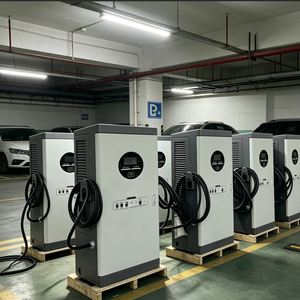
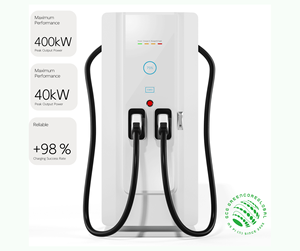
High Power DC EV Charger 30kW-240kW Fast Charging Station

High Power DC EV Charger 30kW-240kW Fast Charging Station

  • Dynamic power scaling up to 240kW
  • Industrial-grade EOL test compatible
  • OCPP 1.6J / 2.0.1 compliant interface
Inquire Now
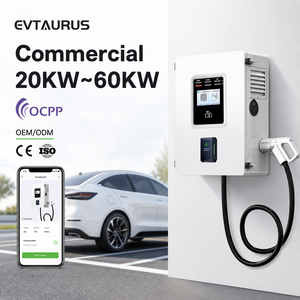
CCS2 GBT Chademo DC EV Charger 15kw 20kw 40kw 60kw Commercial Station

CCS2 GBT Chademo Commercial DC Fast Charging Station 15kW-60kW

  • Multi-standard protocol matching
  • Integrated RFID & POS billing systems
  • Customizable OEM/ODM outer chassis
Inquire Now
GCG 80kW GB/T DC EV Charger Dual Connectors Ground-Mounted

GCG 80kW GB/T Dual-Connector Ground-Mounted DC Charger

  • Dual simultaneous charging output
  • CE & ISO fully certified architecture
  • CAN bus telemetry & fault logging
Inquire Now
New Smart DC EV Charger 20Kw 30Kw 40Kw Wallbox Fast Charging Station

Smart Wallbox DC Fast Charger 20kW-40kW CCS1 CCS2 GB/T

  • Compact space-saving wallbox form
  • Smart load balance & energy management
  • IP54 industrial protection rating
Inquire Now
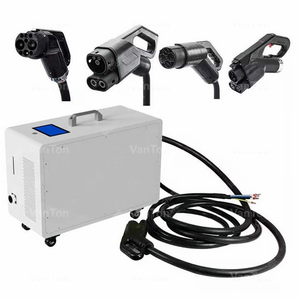
VanTon Mobile CCS2 EV Fast Charger 20kW Single Gun Movable Station

VanTon Mobile 20kW DC Fast Charger with 5m Cable Assembly

  • Mobile wheel-mounted diagnostic unit
  • Contact-cooled power electronic design
  • Ideal for fleet testing & workshops
Inquire Now
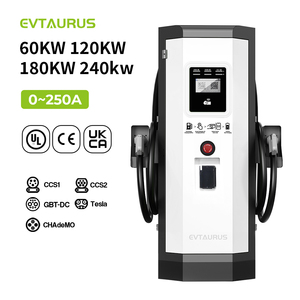
60kW to 240kW Commercial DC Fast Charging Station

Commercial DC Fast Charging Station 60kW-240kW GB/T CCS2

  • Modular power stack architecture
  • High efficiency thermal dissipation
  • Remote diagnostic & firmware update
Inquire Now
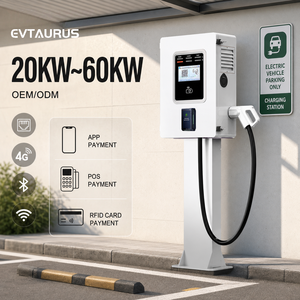
Wall Mounted Single Gun 20KW-60KW CCS1 CCS2 DC Charger Station

Single Gun Wall-Mounted DC Charger Station 20kW-60kW

  • Heavy-duty commercial housing
  • Galvanically isolated internal stages
  • Flexible input voltage tolerance
Inquire Now
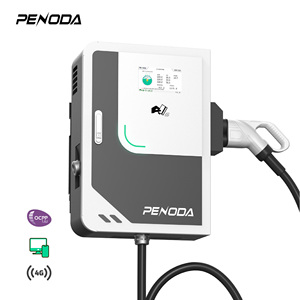
Penoda DC Wallbox Car Charger 20kw 30kw 40KW IP55 Fast Charger

Penoda 400V IP55 Fast DC Wallbox Charging Unit 20kW-40kW

  • Weatherproof IP55 enclosure rating
  • Multi-protocol standard auto-detect
  • Integrated automated self-test diagnostics
Inquire Now

Why Tier-1 Automotive & Industrial Buyers Choose Our Engineering Platform

Combining German-rooted power electronics expertise with vertically integrated turnkey contract manufacturing.

Turnkey OEM/ODM Engineering

From initial circuit layout and firmware design to mechanical enclosure potting and final validation, we manage the entire manufacturing lifecycle under a unified quality system.

SMD & THT Contract Assembly

State-of-the-art SMT pick-and-place lines combined with manual and automated Through-Hole Technology (THT) assembly ensure military-grade solder joints and precise board layouts.

Proprietary DTS Test Software

Our custom DTS software orchestrates complex End-of-Line (EOL) testing sequences, managing multi-variant test beds, parametric data capture, and plant-wide traceability seamless through DC-Connect.

High-Voltage Thermal Management

Patented contact-cooling technologies eliminate noisy, failure-prone fans in high-power converters (up to 900V DC), providing vibration-resistant performance in extreme operating environments.

Rigorous Compliance & Standards

All test fixtures and industrial power modules adhere strictly to CE, UL, ISO 9001, and IATF 16949 standards, engineered specifically to withstand heavy industrial duty cycles.

Global Field Support Network

With localized technical centers across Europe, North America, and Asia, our field service engineers provide rapid commissioning, calibration, and ongoing spare-parts availability.

The Architecture of Modern OEM/ODM Test Fixtures in Automated Manufacturing

In modern industrial electronics and electromobility manufacturing, the End-of-Line (EOL) test fixture is no longer merely a mechanical clamp holding a Printed Circuit Board (PCB). It represents the critical intersection between physical signal integrity, thermal management, high-voltage isolation, and real-time data communication. As electric vehicles (EVs) shift toward 800V/900V powertrain architectures and industrial automation demands 99.999% uptime, the engineering requirements for functional test (FCT) and in-circuit test (ICT) fixtures have evolved exponentially.

A high-performance test fixture designed for power electronics—such as DC/DC converters, EV fast charging modules, and motor controllers—must maintain sub-milliohm contact resistance across hundreds of thousands of actuation cycles. Furthermore, it must prevent electrical arcing during high-potential (Hi-Pot) insulation resistance tests while maintaining signal purity for CAN bus, LIN, and Automotive Ethernet telemetry evaluation.

Key Engineering Insight: Conventional off-the-shelf test beds suffer from parasitic inductance and rapid pogo pin degradation when subjected to high-current pulse testing. Advanced OEM/ODM test fixture suppliers must incorporate custom-machined polyoxymethylene (POM) or ESD-safe G10 FR4 carrier plates, micro-aligned spring probes, and integrated liquid or contact cooling blocks within the fixture interface.

Critical Design Considerations for Custom Test Fixtures

When engineering bespoke test fixtures for commercial and automotive electronics, factory teams must account for four major physical and electrical vectors:

  • 1. Micro-Alignment and Strain Relief: As SMD component densities increase, probe target pads (test points) have shrunk below 0.5mm. Fixture mechanics must utilize guide pins with tolerances tighter than ±0.01mm to prevent mechanical shear stress on BGA packages and ceramic capacitors during pneumatic or vacuum clamping.
  • 2. High-Current Signal Routing: Testing DC chargers up to 240kW requires contact fixture architectures capable of carrying 350A continuous load without excessive thermal rise. This demands direct copper busbar mating interfaces rather than standard spring-loaded pogo pins.
  • 3. High-Voltage Galvanic Isolation: Fixtures evaluating 900V DC/DC converters must maintain strict creepage and clearance distances in accordance with IEC 60664-1 to prevent surface tracking and breakdown during 3kV AC dielectric withstand tests.
  • 4. Automated Software Integration: Modern production environments require test fixtures to act as intelligent nodes. By coupling fixture hardware with custom DTS software, test routines automatically execute parameterization over CAN / SAE J1939 protocols while logging every waveform to a centralized database.

Engineering Specification Matrix: Standard vs. Advanced OEM/ODM Test Fixtures

To assist procurement managers and lead quality engineers in evaluating supplier capabilities, the matrix below outlines the key benchmark parameters that distinguish standard manual test frames from enterprise-grade automated OEM/ODM test fixtures.

Technical Parameter Standard Manual Test Fixture Advanced OEM/ODM Automated Fixture
Mechanical Actuation Life 20,000 – 50,000 Cycles 100,000 – 500,000+ Cycles (Replaceable Probe Cartridge)
Max Operating Voltage Up to 600V DC Up to 1,500V DC / High-Isolation Shielding
Current Carrying Capacity Max 15A per probe pin Up to 350A Continuous (Integrated Busbar Interface)
Signal Interface Protocol Basic Analog / Digital I/O CAN 2.0B, CAN-FD, SAE J1939, Ethernet, LIN, FlexRay
Thermal Management Passive Convection / Ambient Air Contact Cooling Plates / Integrated Air Jets
Software Integration Stand-alone Manual Logger Native DTS Software Suite / Factory MES Traceability
Fixture Changeover Time 15 – 30 Minutes (Manual Screws) < 60 Seconds (Zero-Point Fast Locking System)

Future Procurement Trends in Industrial Electronics & Test Automation (2025–2030)

The global shift toward electrification across transport, logistics, and renewable infrastructure has fundamentally altered how industrial enterprises procure test equipment and OEM power modules. Procurement teams are moving away from fragmented vendor sourcing—where fixtures are bought from one shop, software from another, and power electronics from a third—toward a unified System Supplier Paradigm.

1. Transition to Multi-Variant Modular Test Benches

Dedicated single-product test fixtures are rapidly becoming economically obsolete. Modern manufacturing lines produce multiple model variants—such as 20kW, 30kW, and 40kW EV Wallboxes—on the same assembly line. Leading OEM/ODM suppliers now engineer modular test bases where interchangeable adapter cassettes (fixture beds) can be swapped in under one minute. This drastically reduces capital expenditure (CapEx) and minimizes downtime during product line retooling.

2. Integration of Real-Time Telemetry and Predictive Maintenance

In high-throughput EV charger production, a single failed probe pin can cause false-negative test results, halting an entire production shift. Next-generation test fixtures embed wear-counting sensors, contact-resistance monitoring circuits, and pneumatics pressure transducers directly into the fixture assembly. These sensors feed real-time diagnostic telemetry into the plant’s DTS software, alerting maintenance technicians to replace specific pogo pin cartridges before probe degradation impacts yield.

3. Direct Sourcing of Complete OEM/ODM Mechatronic Assemblies

To reduce supply chain fragility, global enterprise buyers are increasingly demanding vertically integrated ODM partners who provide comprehensive electronic contract manufacturing. Partnering with a manufacturer that controls PCB assembly (SMD and THT), potting, mechanical metal fabrication, and automated test system creation under one roof guarantees seamless compatibility between the unit under test (UUT) and the test equipment itself.

Frequently Asked Questions by Industrial Sourcing Teams

Technical answers to common questions regarding OEM/ODM test fixture development, customization timelines, and high-power test system integration.

Q: What parameters are required to generate a custom OEM/ODM test fixture quotation?
To provide an exact engineering proposal and thermal/mechanical analysis, we require the Gerber files of the target PCB, 3D CAD models (STEP/IGES format) of the product housing, a detailed schematic of all required test points (ICT/FCT), maximum current/voltage specifications, and your preferred automation level (manual latch, pneumatic push, or fully automated inline integration).
Q: How do your test fixtures handle high-voltage isolation for 900V DC converters?
Our high-voltage test fixtures utilize specialized high-dielectric substrates (such as custom G10 FR4 and specialized PEEK polymers) with precise isolation barriers between adjacent probe channels. All high-voltage contact paths are shielded, and safety interlocks are integrated to prevent actuation unless the fixture shield is fully sealed, satisfying strict OSHA and CE safety guidelines.
Q: Can Deutronic's DTS test software integrate with our existing factory MES database?
Yes. Our proprietary DTS test software is designed specifically for enterprise network integration. It supports standard industrial protocols including OPC UA, REST APIs, TCP/IP, and SQL database linking via our DC-Connect framework. Test results, serial numbers, parametric voltage measurements, and pass/fail logs are transmitted instantaneously to your plant's MES for 100% component traceability.
Q: What is the typical lifecycle of the spring probe pins in your high-power test beds?
Standard signal-level spring probes in our fixtures are rated for 100,000 to 500,000 mechanical insertions under clean operating conditions. High-current probes (used for 20kW–240kW DC charger functional testing) feature specialized beryllium copper alloy coatings and internal heavy-duty springs, typically maintaining optimal contact resistance across 50,000+ high-power charge cycles before requiring routine cartridge servicing.
Q: Do you support low-volume prototyping as well as high-volume OEM serial manufacturing?
Yes. Because our engineering development, PCB assembly, mechanical machining, and potting take place in-house, we offer full flexibility. We readily fabricate single custom prototype test benches or small series modifications, while maintaining the production infrastructure necessary to scale to thousands of production-line power conversion modules and standardized test beds.
Q: How is thermal dissipation managed during high-power fast charger testing?
Our fixtures incorporate active contact-cooling thermal blocks engineered with copper heat sinks or fluid channels that directly mate against the heat-generating components of the device under test (UUT). This prevents thermal throttling or premature component shutdown during extended full-load burn-in testing.

Partner with a Global OEM/ODM Test Systems Leader

Submit your electrical schematics, mechanical drawings, or project requirements today. Our team of senior power electronics and test fixture engineers will deliver a comprehensive technical proposal tailored to your plant's requirements.

Inquire Now