
Built to withstand extreme thermal, mechanical, and electrical environments across commercial vehicles, intralogistics, automotive assembly lines, and public charging infrastructure.
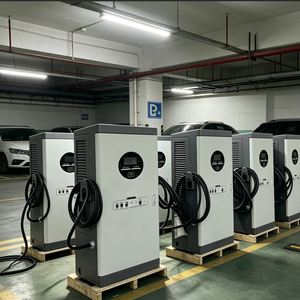
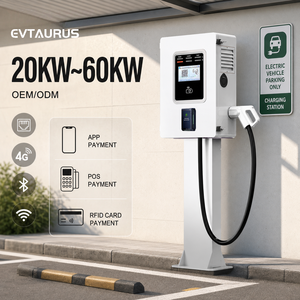
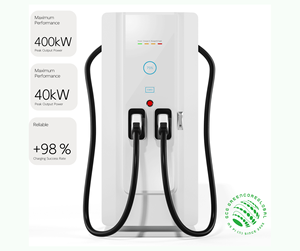
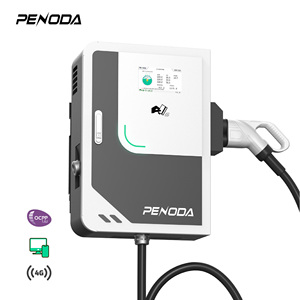
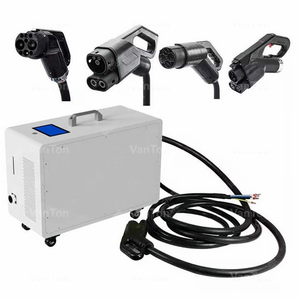
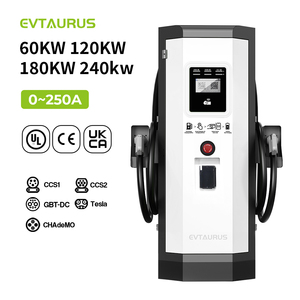
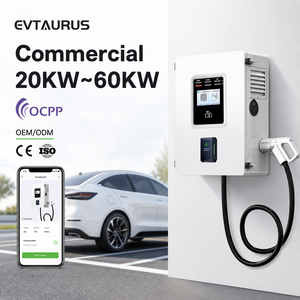

Combining German power-conversion engineering standards with advanced high-volume manufacturing capabilities to deliver zero-defect speed controllers, DC/DC converters, and automated test systems.
Complete control over printed circuit board assembly (PCBA). Automated optical inspection (AOI), X-ray component verification, and full-spectrum potting against moisture, dust, and severe mechanical vibration.
Eliminate complex external liquid loops. Our planar magnetic power components and direct-contact baseplate designs enable thermal stability across ambient operating ranges from -40°C to +85°C.
Customizable firmware supporting CAN bus (CANopen, SAE J1939), Modbus TCP, and OCPP 1.6/2.0.1 protocols. Seamlessly integrate motor drive parameterization into your OEM master controller.

Traditional trapezoidal or standard Pulse-Width Modulation (PWM) motor controllers introduce high current ripple, acoustic harmonics, and premature bearing wear due to abrupt phase switching. Our OEM/ODM Sinusoidal Speed Controllers utilize advanced Field-Oriented Control (FOC) to deliver a pristine sine wave profile to motor windings.

Modern commercial EVs, fuel-cell stacks, and high-capacity intralogistics vehicles demand isolated power conversion capable of stepping down battery pack voltages (up to 900V DC) to stable low-voltage 12V/24V/48V auxiliary networks. Our DVCx3 and DVCHx3 OEM converter platforms are built for continuous industrial duty cycles.

Every speed controller and power module manufactured in our facilities undergoes 100% automated electrical end-of-line verification. Powered by our proprietary DTS Test Suite, we log thermal profiles, dielectric strength, efficiency points, and CAN payload telemetry for every unit produced.
An executive briefing for strategic sourcing directors, industrial product managers, and lead engineering teams navigating the next decade of electrification.
Silicon Carbide (SiC) and Gallium Nitride (GaN) field-effect transistors are rapidly replacing traditional IGBTs in speed controllers and DC charging systems. Sourcing teams must align with factories capable of high-frequency SMT placement, as SiC/GaN topologies enable 3x higher switching frequencies, drastically reducing inductor footprint and pushing power density past 3.5 kW/kg.
Modern speed controllers are no longer isolated drive units; they act as primary sensor nodes. Procurement requirements now emphasize multi-protocol hardware supporting real-time CAN bus telemetry, predictive maintenance alerts via edge processing, and cloud platform integration via IoT protocols (MQTT, Modbus TCP, OCPP 2.0.1).
To reduce time-to-market from 24 months down to 6 months, tier-1 OEMs are shifting away from 100% custom ground-up designs. The leading procurement strategy utilizes pre-certified modular base hardware platforms that permit targeted PCB layer modifications, bespoke wire harness terminations, and soft parameter tweaking.
Global regulations (such as EU Ecodesign Standards) increasingly require power electronics manufacturers to supply modular units with replaceable power stages, documented repair schemas, and fully traceable component bill of materials (BOM), eliminating single-use potted throwaway modules in commercial fleets.
Direct technical answers regarding custom OEM/ODM modifications, quality certifications, production capacities, and integration workflows.
Our OEM/ODM sinusoidal speed controllers support Brushless DC (BLDC), Permanent Magnet Synchronous Motors (PMSM), and AC Induction Motors across DC bus operating voltages from 12V up to 800V DC. Continuous current handling spans 10A to over 450A, tailored to your mechanical envelope and cooling system.
For parameterization and mechanical adaptation of existing base platforms, prototype units are delivered in 4 to 6 weeks. Complete custom ground-up hardware and firmware developments typically require 12 to 18 weeks, encompassing schematic design, SMT tooling, initial prototypes, and pre-compliance EMC testing.
All production units undergo automated selective coating or full vacuum potting with thermal-conductive polyurethane resins. Enclosures achieve IP65 to IP69K ingress protection ratings, validated through ISO 16750 shock, vibration, and salt-mist environmental chamber testing.
Yes. Our engineering team provides fully customizable communication matrices. Controllers support CAN 2.0B, CANopen, and SAE J1939 with customizable data frames. For EV charging units, our embedded controllers support OCPP 1.6-JSON and OCPP 2.0.1 over cellular, Ethernet, or Wi-Fi for direct API mapping into your fleet management platform.
Products are manufactured under IATF 16949 and ISO 9001 quality management systems. Individual product series are compliant with CE, UL 2202, UL 1998, IEC 61851, EN 50155 (Railway Applications), and FCC Part 15 Class A/B. Complete test reports and declarations of conformity are provided with sample shipments.
Standard white-label modifications (custom color enclosures, laser-etched branding, and customized wiring harnesses) carry a low MOQ of 50 to 100 units. Fully customized PCB circuit redesigns typically require a minimum annual commitment of 500 units to amortize tooling and compliance testing costs.
Send our engineering team your technical specifications—including operating voltage range, continuous/peak power requirements, target envelope dimensions, and communication protocols—for a complimentary engineering review and factory quotation.