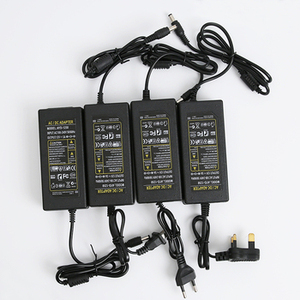
12V 3A Industrial AC/DC Power Adapter & Converter
- Input: 100-240VAC Universal
- Ripple Noise: <50mV p-p
- Short Circuit & OVP Protection

Engineered for harsh industrial environments, high galvanic isolation, and strict OEM custom specifications.
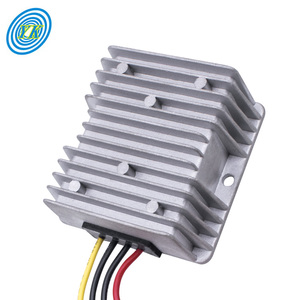
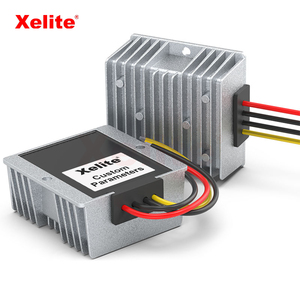
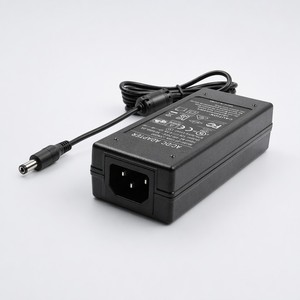
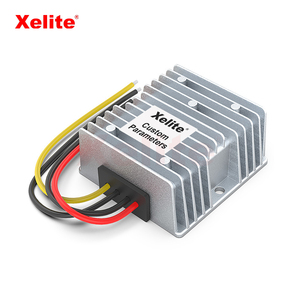
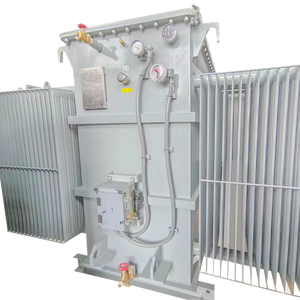
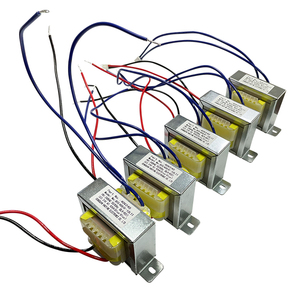
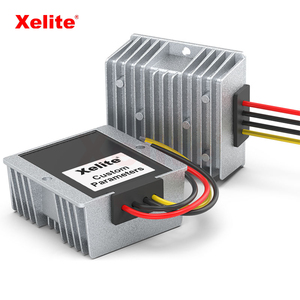
In an era dominated by rapid electrification across transport networks, autonomous intralogistics (AGVs), renewable solar farms, and intelligent vehicle manufacturing, the demand for high-reliability OEM/ODM power converter solutions has evolved from standardized commodity purchasing into a deep strategic technical collaboration. Modern power electronics are no longer mere voltage translation bricks; they represent the operational core of energy efficiency, thermal stability, electromagnetic compatibility (EMC), and network diagnostic intelligence.
Choosing a qualified power converter manufacturer requires evaluating engineering capabilities across broad voltage spectrums—from low-voltage auxiliary power adapters (5V to 24V) to high-voltage traction and battery conversion units handling input buses up to 900V DC. System procurement leaders must look beyond basic wattage ratings to analyze topologies, thermal management mechanisms (such as planar magnetics with contact cooling), and automated end-of-line (EOL) test software integration.
Integration of Silicon Carbide (SiC) MOSFETs and Gallium Nitride (GaN) switches enables ultra-high switching frequencies, drastically reducing planar magnetic component volume while driving thermal conversion efficiencies past 96%.
Eliminating failure-prone cooling fans through direct baseplate contact cooling and full polyurethane/silicone encapsulation guarantees robust operational performance under harsh vibration, dust, and outdoor moisture.
Modern OEM converters feature digital control loops supporting real-time CAN bus parameterization, output voltage throttling, thermal warning signals, and predictive maintenance logging directly to plant SCADA systems.
As global supply chains navigate technological transitions toward green energy and autonomous automation, global engineering procurement managers are changing how they evaluate power supply OEM/ODM partners. Over the next decade, market trends indicate three major shifts in B2B power electronics sourcing:
Standard off-the-shelf power supplies often force mechanical and electrical trade-offs—requiring extra filtering stages, bulky heatsinks, or custom mounting brackets. Leading procurement teams are adopting modular OEM customization platforms, where proven base circuits (such as the DVCx3 lower-voltage or DVCHx3 high-voltage topologies) are tailored specifically to the host system’s pinouts, communication protocols, and spatial envelope.
Initial purchase price represents less than 30% of a power module’s total lifecycle cost when factoring in operational energy loss, downtime risks, field failure logistics, and end-of-life recycling. High-efficiency planar converter architectures reduce operating heat, extending internal electrolytic capacitor lifespan and delivering long MTBF (Mean Time Between Failures) metrics exceeding 500,000 hours.
Contract manufacturing risks increase significantly when engineering, PCB assembly, vacuum potting, and final automated testing are fragmented across multiple subcontractors. Tier-1 buyers require fully integrated manufacturing partners who maintain full control over SMD surface mounting, THT insertion, transformer winding, and automated testing under a single certified quality management system (ISO 9001, IATF 16949).
Drawing upon over 35 years of specialized German power electronics development and manufacturing excellence, our enterprise group provides end-to-end solutions ranging from single-component power adapters to 900V electric vehicle converters and fully automated factory end-of-line test systems.
In-house electrical engineering teams design advanced topology hardware, planar transformer structures, and custom digital control algorithms for microcontrollers and DSPs to meet exact client requirements.
State-of-the-art automated surface-mount (SMD) lines combined with selective through-hole (THT) insertion, 3D optical inspection (AOI), and precise vacuum potting for ruggedized environments.
Custom-built automated test stations utilizing our proprietary DTS test software. Every single manufactured module undergoes rigorous functional, high-voltage isolation, and burn-in testing prior to shipment.
With technical service hubs and distribution networks spanning over 40 countries, clients receive fast commissioning support, spare part logistics, and technical assistance worldwide.
Technical insights to help engineering and sourcing teams make informed power electronics decisions.
Our modular DC/DC topologies cover input voltages ranging from low-voltage industrial buses (5V, 12V, 24V, 48V) up to high-voltage electric powertrain systems up to 900V DC (DVCHx3 series). Custom input window scaling is available for specialized rail, fuel cell, and heavy equipment applications.
Contact-cooled converters transfer dissipation heat directly through an integrated metal baseplate into the vehicle frame or a cold plate. This eliminates vulnerable mechanical fans, completely seals the internal electronics against airborne contaminants, and minimizes overall module height.
Yes. Through hardware tuning and digital control software adjustments, we customize output voltages (e.g., 13.8V float charging, 24V system power, 48V auxiliary rails) and implement tailored current limiting, soft-start ramping, and dynamic response characteristics to suit your exact system specs.
Because development, PCB tooling, transformer winding, encapsulation, and testing are managed internally under unified operations, we efficiently accommodate small, medium, and high-volume series production while maintaining full change control and quality documentation.
Our power conversion architectures comply with major global standards including IEC/EN 62368-1 for IT/industrial safety, EN 50155 for railway rolling stock, automotive E-Mark certifications, and relevant CISPR/EN 55032 Class B electromagnetic compatibility standards.
Modules can be equipped with CAN 2.0B or SAE J1939 interface controllers, enabling real-time telemetry streaming of output current, input voltage, internal thermal sensor readings, fault codes, and remote enable/disable control logic.
Contact our senior application engineers today to discuss your technical specifications, request technical datasheets, or initiate a custom prototype build tailored to your exact application requirements.