
Explore our flagship OEM/ODM power architecture modules, DC fast-charging stations, and heavy-duty industrial converters designed for vehicle assembly lines, commercial fleets, and intralogistics.
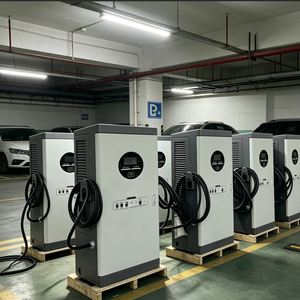
Modular industrial fast-charging architecture equipped with active liquid or dynamic forced-air thermal management. Scalable from 30kW to 240kW for heavy-duty electric fleets and production-line testing environments.
Get a Quote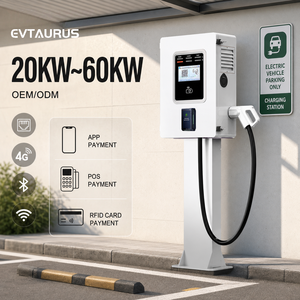
Multi-standard protocol converter featuring integrated App, POS terminal, and RFID telemetry. Built for global commercial deployment with full OCPP 1.6/2.0.1 compliance and ruggedized IP54 enclosures.
Get a Quote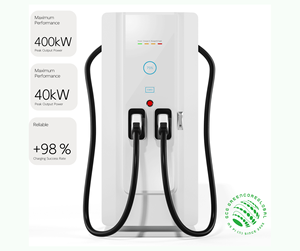
CE-certified dual-connector ground station featuring dynamic load balancing, ultra-low standby power dissipation, and high power factor (>0.99) for municipal and commercial fleet infrastructure.
Get a Quote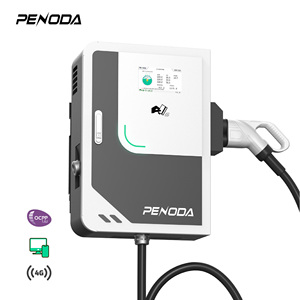
Compact wallbox design engineered for commercial parking garages, home depots, and factory EOL testing. Cross-compatible with CCS1, CCS2, and GB/T standards with smart energy control.
Get a Quote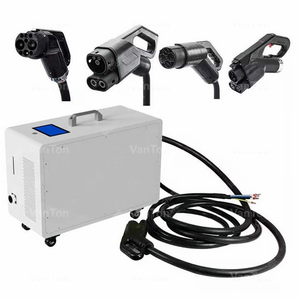
Portable fast-charging system designed for mobile roadside assistance, workshop diagnostics, and temporary fleet operations. Includes a 5m heavy-duty shielded umbilical cable.
Get a Quote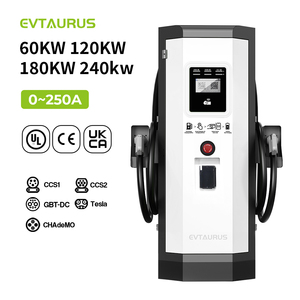
Industrial-grade high-current charging hub designed for urban transport buses, logistics hubs, and OEM vehicle test tracks. Features dual CCS2/GBT outputs with intelligent power splitting.
Get a Quote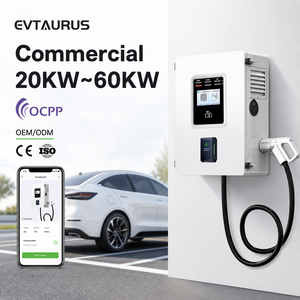
Space-saving, high-power density wall-mounted DC module optimized for auto repair facilities, dealership service bays, and industrial machinery maintenance docks.
Get a Quote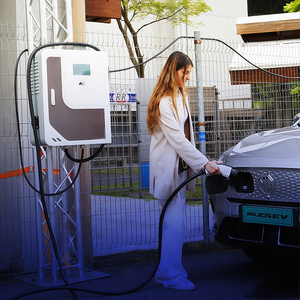
IP55 weather-sealed fast DC wallbox converter configured for 400V vehicle architectures. Engineered for reliable performance across extreme operating ambient temperatures (-30°C to +55°C).
Get a QuoteThe global transition toward high-voltage electrification—spanning commercial transportation, automated intralogistics (AGVs/AMRs), mobile working machinery, and automotive manufacturing lines—has dramatically altered procurement paradigms for power conversion and motor drive controllers. Tier-1 integrators and OEM purchasing executives no longer evaluate suppliers solely on unit cost or catalog specifications; procurement strategies now prioritize multi-tier supply chain resilience, total cost of ownership (TCO), functional safety certification (ISO 26262), and modular architecture flexibility.
Information Gain Insight: Advanced OEMs are shifting from discrete power converters to integrated multi-axis drive platforms that combine contact-cooled DC/DC conversion, sinusoidal motor commutation, and onboard CAN bus telematics into a single potted, IP67 enclosure—reducing overall harness weight by up to 35%.
Legacy industrial motor drives and power converters primarily relied on standard Silicon IGBT switches operating at low switching frequencies (4 kHz to 12 kHz), which necessitated large, heavy magnetic components and liquid cooling loops. Modern OEM procurement mandates specify Silicon Carbide (SiC) and Gallium Nitride (GaN) MOSFET topologies capable of switching at upwards of 100 kHz. This technological leap enables:
Recent global disruptions highlighted severe vulnerabilities in multi-tiered electronic manufacturing services (EMS). Industry leaders are mitigating risk by sourcing from OEM/ODM factories that control the complete lifecycle internally—ranging from surface-mount technology (SMT) and through-hole technology (THT) PCB assembly, custom transformer winding, automated silicone potting, to proprietary End-of-Line (EOL) automated test benches.
Procurement specifications now routinely demand native support for vehicle bus communication standards, predominantly CAN 2.0B, CANopen, and SAE J1939. Furthermore, chargers and stationary power units must comply with OCPP 1.6 / OCPP 2.0.1 for seamless grid integration, localized load balancing, and real-time remote telemetry. Modern drive controllers are expected to transmit operational diagnostics, internal junction temperature readings, phase currents, and ripple voltage parameters to centralized fleet management platforms.
To secure a competitive edge in mission-critical applications, modern drive controllers and industrial battery chargers incorporate cutting-edge electrical design principles that maximize energy efficiency while ensuring unfailing reliability under high shock, vibration, and thermal stress.
D-Sinus technology utilizes true sine-wave vector current regulation to eliminate motor torque ripple, reducing acoustic noise emission by up to 18 dB compared to trapezoidal commutation.
Eliminating internal fans eliminates the primary point of electromechanical failure. Flat aluminum cold-plate interface designs conduct heat directly to the vehicle frame or cooling chassis.
Integrated networked diagnostics record full charging curves, insulation resistance values, and operational logs for 100% quality traceability across vehicle production facilities.
The table below summarizes standard baseline platforms versus customizable OEM/ODM parameters offered for industrial vehicles, automotive plants, and off-highway machinery.
| Technical Parameter | Standard Series Platform | OEM/ODM Customization Range | Target Industrial Application |
|---|---|---|---|
| DC Input Voltage Range | 12V – 48V DC / 400V DC | Wide-range inputs up to 900V DC (DVCHx3 platform) | Commercial EVs, Rail, Mining Machinery |
| Motor Control Algorithm | Standard Field-Oriented Control | Proprietary D-Sinus sinusoidal commutation curves | AGV traction drives, Precision pumps & fans |
| Thermal Management | Convection / Forced Air Cooling | Potted aluminum housing for direct contact cooling | Logistics hubs, High-dust outdoor plants |
| Communication Protocol | Basic CAN 2.0B | SAE J1939, CANopen, Ethernet/IP, Custom UART | Autonomous Mobile Robots (AMRs), Fleet management |
| Protection Rating | IP20 / IP54 | Fully potted IP67 / IP68 dust- & waterproof encapsulation | Marine, Agricultural & Construction Equipment |
| Production Line EOL Integration | Standalone Charger operation | Automated network diagnostic control with DTS software | Automotive OEM vehicle assembly lines |
Answers to critical engineering and sourcing questions submitted by hardware designers, project engineers, and supply chain managers during OEM platform selection.
Our standard lower-voltage platforms (such as the DVCx3 series) cover 12V, 24V, and 48V nominal inputs. For high-voltage electric transport, commercial vehicles, and fuel-cell applications, our DVCHx3 series handles high-voltage inputs operating reliably up to 900 V DC. Units feature full galvanic isolation, low electromagnetic interference (EMI), and CAN bus parameterization.
Yes. Deutronic production-line chargers are explicitly designed for vehicle assembly plants and end-of-line (EOL) testing. They incorporate customizable charging profiles for lithium-ion, AGM, and lead-acid batteries, interlock hardware protection, diagnostic interfaces, and DC-Connect network integration, which delivers centralized data recording for quality audit compliance across the factory.
Sinusoidal commutation (found in our D-Sinus controller family) smoothly transitions phase currents without high dv/dt spikes. This eliminates phase-switch torque ripple, significantly reduces mechanical vibration, extends motor bearing life, and drastically lowers audible noise—making it essential for noise-sensitive operating environments such as hospital logistics and passenger transport.
Absolutely. Because engineering development, SMT/THT PCB manufacturing, polyurethane/silicone potting, final assembly, and functional safety testing are retained under one roof in our German and US manufacturing facilities, we cost-effectively engineer custom mechanical housings, special firmware control algorithms, and unique connector interfaces even for low-to-medium series volumes.
Yes. Leveraging decades of industrial test automation experience, we combine modular measurement instruments with our proprietary DTS test software to construct manual, semi-automated, or fully automated EOL test systems capable of handling multi-variant product assemblies on a single bench.
Backed by over 35 years of German power-electronics engineering, Deutronic Elektronik GmbH stands as an authoritative partner for world-leading automotive manufacturers, logistics automation providers, and industrial equipment builders.
From initial schematic topology design and PCB layout to automated component placement, conformal coating, potting, enclosure machining, and final burn-in test—all production stages occur in-house to guarantee unwavering quality control.
With primary manufacturing in Adlkofen, Bavaria, and expanded North American operational headquarters in Duncan, South Carolina—supplemented by service points in over 40 countries—we ensure rapid commissioning support, localized stocking, and quick repair response.
Every drive controller, converter, and battery charger undergoes comprehensive automated testing on DTS-driven benches. Products are hardened against harsh vibration, physical shock, moisture ingress, and ambient thermal extremes.
Contact our application engineering team today to review your electrical specifications, request customized prototype samples, or discuss high-volume OEM supply agreements.
Get a Quote