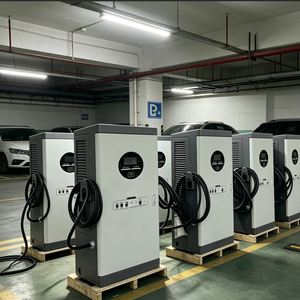
Engineered for extreme operational resilience, certified to OCPP 1.6J/2.0.1, CE, ISO 15118, and scalable from 15kW ultra-compact wallboxes to 240kW multi-gun mega-watt stations.
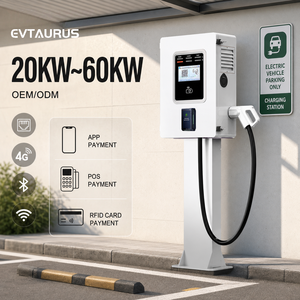
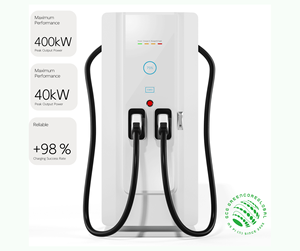
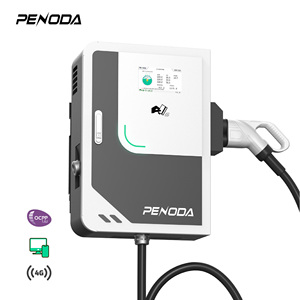
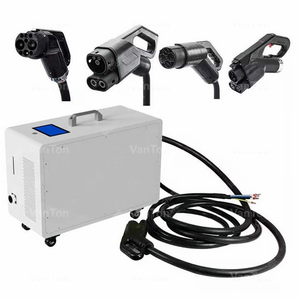
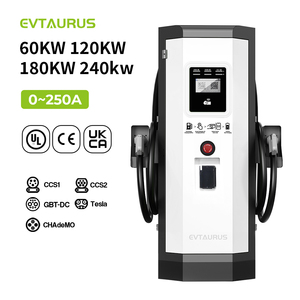
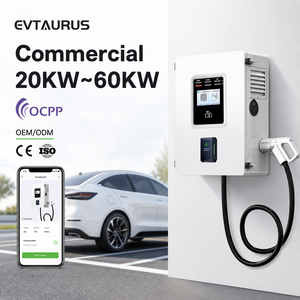

From silicon carbide (SiC) power module topology to automated end-of-line (EOL) functional testing, we unify design, SMT manufacturing, thermal potted protection, and firmware localization under one roof.
Eliminate vendor fragmentation. We manage hardware schematic engineering, PCB assembly (SMT & THT), mechanical enclosure prototyping, custom wiring harness routing, and firmware development directly within our ISO-certified facilities.
Our next-gen power modules leverage SiC MOSFETs delivering >96.5% ultra-high conversion efficiency, significantly lowering thermal stress, acoustic switching noise, and cabinet volumetric footprints compared to legacy Silicon IGBT units.
Engineered for extreme environments (IP55/IP65/IP67). Proprietary dielectric potting compounds protect sensitive control logic against vibration, salt spray, conductive dust, and high humidity while facilitating contact cooling.
Every single sub-assembly and fully packaged charger undergoes stringent stress simulation via our in-house automated DTS software test benches, guaranteeing 100% trace-ability and zero-defect delivery worldwide.
Native integration across CCS Combo 1, CCS Combo 2, CHAdeMO 2.0, GB/T 2015, and NACS (SAE J3400) protocols, paired with ISO 15118 Plug & Charge and bi-directional V2G/V2X execution.
Custom white-label cloud ecosystem and API connectors for remote diagnostic management, over-the-air (OTA) firmware updating, dynamically managed load distribution, and real-time charging telemetry.
An engineering breakdown for procurement officers, system integrators, and technical directors designing enterprise EV infrastructure and commercial power systems.
When selecting an OEM/ODM contract manufacturing partner for high-power DC fast charging equipment and conversion electronics, system architects must evaluate core parameters including power factor correction (PFC), harmonic distortion (THD), operating voltage windows, thermal management mechanisms, and modular expansion capability. Our platforms are built on high-frequency switching topologies featuring resonant LLC and active clamp circuits that minimize total cost of ownership (TCO) across 15+ year operational lifespans.
| Architecture Class | Power Output | Input Voltage Window | Efficiency Benchmark | Topological Highlights | Primary Commercial Use |
|---|---|---|---|---|---|
| Compact DC Wallbox | 15kW – 40kW | 380V – 480V AC (3-Phase) | > 95.8% | ZVS Resonant LLC / Contact Cooled | Commercial Fleet Depots, Workplace & Home Garages |
| Mid-Power Ground-Mount | 60kW – 120kW | 304V – 520V AC Wide Window | > 96.2% | Modular Matrix / Air Duct Isolation | Retail Hubs, Destination Chargers, Logistics AGVs |
| High-Power Mega Fast | 160kW – 240kW+ | 380V – 480V AC 50/60Hz | > 96.5% | SiC MOSFET Modules / Active Liquid Option | Highway Service Corridors, Heavy Duty Bus Depots |
| Movable Mobile Charger | 20kW – 40kW | 380V AC Portable Line | > 95.5% | Vibration-Proof Potted Chassis / CAN 2.0B | Vehicle Maintenance Bayside, Emergency Recovery |
Modern fast-charging systems operate under demanding grid conditions and harsh ambient environments. Delivering maximum operational uptime requires engineering rigor across four core disciplines:
Navigating technological transitions, supply chain resilience, and international regulatory shifts for high-volume contract manufacturing.
The automotive industry is rapidly transitioning from traditional 400V battery architectures to 800V and 1000V high-voltage platforms. For procurement managers, sourcing charging stations equipped with wide-voltage output modules (150V DC to 1000V DC) is critical to prevent asset obsolescence. Utilizing Wide Bandgap (WBG) semiconductors like Silicon Carbide (SiC) enables power conversion modules to operate at higher switching frequencies with reduced passive component sizes, leading to smaller, lighter cabinet enclosures and significantly lower lifetime heat dissipation losses.
Next-generation charging infrastructure mandates compliance with ISO 15118-20, enabling automated "Plug & Charge" public authentication without physical RFID cards or mobile apps. Furthermore, vehicle-to-grid (V2G) and vehicle-to-building (V2B) functionality is transforming EV fleets into distributed energy storage systems (DESS). OEM platforms must be specified with bi-directional active front end (AFE) converters capable of feeding power seamlessly back into industrial facilities or utility grids during peak pricing periods.
Global supply chain disruptions have highlighted the risk of relying on multi-tiered, fragmented component sourcing. Enterprise buyers are shifting toward OEM contract manufacturers who maintain end-to-end control—including complete PCB assembly (SMT/THT), sub-tier component testing, cabinet metal fabrication, and certified end-of-line functional verification within single quality management frameworks (IATF 16949 / ISO 9001). This reduces lead times, clarifies warranty ownership, and ensures regulatory compliance across European and North American markets.
German-inspired precision engineering paired with high-capacity, cost-efficient contract production lines.
Our organization provides complete end-to-end OEM and ODM contract manufacturing services for industrial power electronics, DC fast charging stations, DC/DC converters up to 900V, and custom test benches. Built upon over 35 years of engineering experience, our capabilities cover the complete product development lifecycle:
Fully automated surface-mount technology (SMT) pick-and-place lines, 3D Automated Optical Inspection (AOI), In-Circuit Testing (ICT), and through-hole technology (THT) soldering for high-current power boards.
Automated multi-component resin dispensing for complete environmental protection. Precision mechanical assembly of heavy copper busbars, liquid cooling plates, and internal wire harnesses.
Customized sheet metal enclosures, powder-coated colors, silk-screened client logos, tailored UI/UX touchscreens, localized packaging, and customized software parameterization.
Whether you require low-volume, specialized high-voltage converters for rail and defense applications or high-volume commercial DC charging station manufacturing, our flexible production scheduling guarantees short time-to-market while retaining stringent German-grade quality standards.
Answers to technical, regulatory, and procurement questions commonly raised by system integrators and global enterprise purchasers.
We offer complete turnkey engineering customization. This includes custom hardware topology design, branded industrial enclosures, custom connector gun configurations (CCS1, CCS2, GB/T, CHAdeMO, NACS), firmware protocol integration (OCPP 1.6J / 2.0.1, CANbus SAE J1939), mobile app user interface branding, and personalized packaging solutions.
Our chargers and power converters utilize advanced thermal modeling combined with independent internal cooling channels. Power modules are physically isolated from sensitive control electronics to prevent air contamination. For high-humidity or saline environments, PCBs undergo conformal coating or complete potting resin encapsulation.
Yes. Our charging systems are manufactured in compliance with international standards including CE, IEC 61851, IEC 62196, DIN 70121, ISO 15118, and relevant UL/CSA standards for North American deployments. All units undergo full dielectric withstand, insulation resistance, and EM-compatibility testing prior to export.
Our power modules feature an engineered MTBF exceeding 100,000 continuous operational hours under rated load conditions. By using high-grade industrial capacitors, premium SiC semiconductors, and conservative thermal derating curves, our complete systems achieve a design lifespan of 10 to 15+ years with minimal scheduled maintenance.
Absolutely. Thanks to our open-architecture OCPP implementation, our charging units connect seamlessly with third-party Charging Station Management Systems (CSMS), payment gateways, POS terminals, and enterprise Resource Planning (ERP) software platforms via Ethernet, 4G LTE, or Wi-Fi connectivity.
Standard catalogue models have flexible MOQs starting as low as single evaluation units for sampling. Custom OEM/ODM developments (requiring modified tooling or firmware) typically carry minimum initial volume commitments depending on project complexity. Standard production lead time is 4 to 6 weeks from approval of final engineering drawings.
Contact our senior application engineers today to request technical datasheets, CAD models, compliance documentation, or customized volume price quotations.