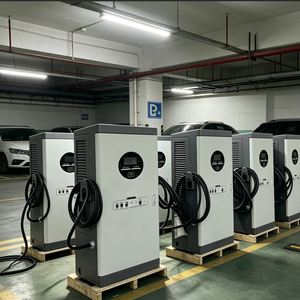
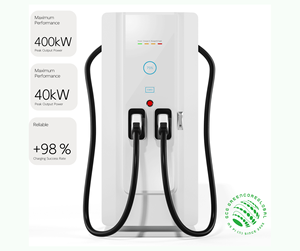
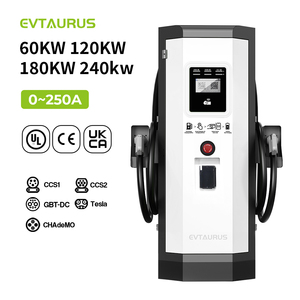
Custom-engineered modular converters, DC fast chargers, and intelligent power units designed for harsh deployment environments globally.
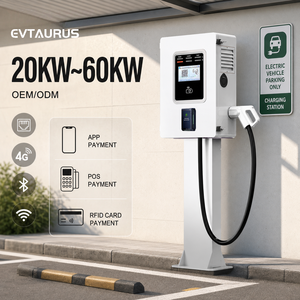
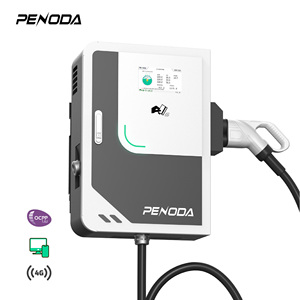
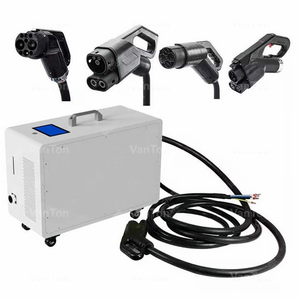
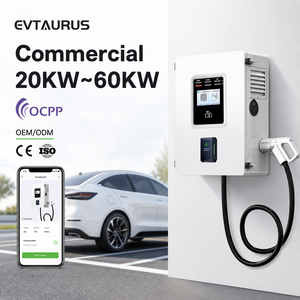
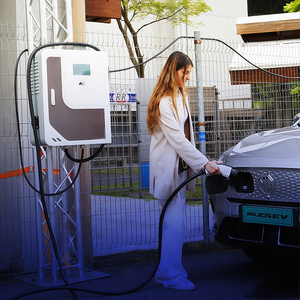
In the contemporary industrial ecosystem, electrifying high-power platforms—ranging from automotive assembly lines and commercial electric vehicles (EVs) to intralogistics Autonomous Guided Vehicles (AGVs) and heavy rail infrastructure—requires power conversion equipment that combines extraordinary power density, galvanic isolation safety, and seamless digital control. As a global custom OEM modular converter exporter, our engineering paradigm addresses the complex technical demands of modern high-voltage power distribution.
Modern electrical conversion systems are undergoing a seismic transition. Legacy industrial systems operating on fixed analog control loops are rapidly being superseded by digital, soft-switching, planar-magnetic topologies based on Silicon Carbide (SiC) and Gallium Nitride (GaN) wide-bandgap semiconductors. This industry whitepaper outlines the structural, thermal, electrical, and communication standards defining custom OEM modular converters, DC fast-charging stations, contact-cooled DC/DC converters, and automated end-of-line (EoL) electrical test systems.
Information Gain Key Insight: Transitioning from conventional liquid-cooled power stages to advanced contact-cooled, potted planar magnetic architectures eliminates single-point pump failures while increasing volumetric power density by up to 42% in heavy industrial and mobile transport platforms.
Power conversion efficiency, electromagnetic compatibility (EMC), and operational durability under dynamic thermal cycles are the primary benchmarks evaluated by system integration procurement engineers. OEM modular power systems are designed around standardized structural modules, which allow rapid customer-specific parameterization without requiring complete circuit redesigns.
Engineered for nominal 24V/48V/96V auxiliary DC buses. Features zero-voltage switching (ZVS) LLC resonant topologies, offering high energy efficiency and ultra-low noise emission for logistics and material handling.
Capable of managing direct input potentials up to 900V DC. Designed for heavy-duty electric trucks, urban transit buses, and rail power networks requiring high galvanic isolation voltage breakdown ratings (>4kV AC/1 min).
Eliminates external liquid cooling loops. Fully potted electronic assemblies protect sensitive power switches against ambient dust, high vibration, moisture ingress, and corrosive atmospheres (IP67/IP69K compliant).
| Performance Parameter | DVCx3 Modular Series | DVCHx3 High Voltage | Custom OEM DC Fast Charger |
|---|---|---|---|
| Input Voltage Window | 18V DC – 120V DC | 200V DC – 900V DC | 380V AC – 480V AC (3-Phase) |
| Output Power Rating | 500W – 3.5kW per module | 3kW – 30kW parallelable | 15kW – 240kW dynamic allocation |
| Peak Conversion Efficiency | 95.5% | 97.8% (SiC Switching Stage) | 96.5% |
| Galvanic Isolation Rating | 1.5kV DC / 3.0kV AC | 4.2kV AC / 50Hz 1 min | 3.0kV AC input-to-output |
| Communication Interface | CANopen / Modbus RTU | CAN 2.0B / SAE J1939 | OCPP 1.6J / OCPP 2.0.1 / Ethernet |
| Cooling Architecture | Contact / Cold-Plate conduction | Submersible Potting Conduction | Forced Air Intelligent Smart Fans |
As a leading exporter of custom OEM modular converters, our manufacturing capabilities serve four primary global industrial application domains. Each domain demands precise mechanical encapsulation, high transient load immunity, and continuous industrial duty cycles.
Automotive Original Equipment Manufacturers (OEMs) require fault-tolerant battery charging solutions throughout vehicle assembly. From low-voltage diagnostic conditioning to end-of-line (EoL) battery initialization, charging power supplies must operate smoothly in electrically noisy environments. Utilizing our proprietary DC-Connect network integration, plant managers can monitor real-time voltage/current charging profiles, archive serial-number trace data, and optimize line throughput across global manufacturing plants.
Commercial vehicles, electric mining trucks, agricultural tractors, and light rail equipment operate in harsh environments subject to continuous vibration, high humidity, and extreme temperatures (-40°C to +85°C). The DVCHx3 high-voltage converter series steps down 600V–900V traction battery power directly to standard 12V/24V auxiliary sub-busses, powering steering pumps, braking systems, and onboard telematics with uncompromised thermal reliability.
Automated Guided Vehicles (AGVs) and Autonomous Mobile Robots (AMRs) in logistics hubs require ultra-compact power electronics. Planar magnetic component integration drastically reduces component profile height, allowing power supplies to fit within tight chassis boundaries. Furthermore, integrated fuel-cell power management circuits convert variable output voltages from hydrogen fuel cells into stable regulated DC bus outputs.
Quality assurance mandates rigorous end-of-line electrical testing for every mechatronic assembly, industrial power supply, and vehicle component produced. By combining modular test instrumentation with our dedicated DTS software platform, custom automated test benches execute high-voltage dielectric isolation tests, functional load simulations, and communication protocol validation automatically with full database logging.
Industrial procurement executives and chief technology officers must align their long-term sourcing strategies with major technology shifts. Over the next decade, three key engineering developments will redefine custom OEM converter procurement:
Commercial fleets and energy storage systems are rapidly transitioning from legacy 400V buses to 800V+ architectures. This transition slashes cable weight and minimizes resistive I²R transmission losses, demanding converters capable of supporting 900V-1000V operational ceilings.
Silicon Carbide switches enable elevated pulse-width modulation (PWM) switching frequencies (100kHz–300kHz). Higher switching frequencies significantly reduce the volumetric size of passive inductors and capacitors, enabling ultra-compact converter designs.
Modern power supplies are active IoT nodes. Real-time logging of internal thermal stress, input ripple profiles, and component aging metrics over SAE J1939 or Ethernet allows predictive maintenance prior to physical hardware failure.
Partnering with a top-tier OEM converter exporter requires verified engineering depth, rigorous supply chain governance, and total manufacturing transparency. Our manufacturing facilities integrate the entire product life cycle under one roof:
Our modular converter platforms cover two primary operational windows: the DVCx3 series manages lower voltage inputs ranging from 18V DC up to 120V DC, while the high-voltage DVCHx3 series operates efficiently across elevated input ranges from 200V DC up to 900V DC continuous. Custom input voltage windows can be engineered upon request.
Yes. Our industrial charging computers are purpose-built for vehicle production plants, end-of-line diagnostic stations, and dealership service bays. They include automated charging algorithms for 12V lead-acid and modern lithium-ion chemistries, integrated diagnostic interfaces, and DC-Connect telemetry support for plant-wide charge data traceability.
We specialize in contact-cooled, conduction-based power hardware. By mounting planar magnetic power units directly to a customer's vehicle chassis or cold-plate heat sink, we eliminate vulnerable liquid cooling pumps and fans. Units can be fully potted in specialized thermal resins to achieve IP67/IP69K sealing against moisture and dirt.
Our converters support industry-standard digital communication buses including CAN 2.0B, CANopen, and SAE J1939 for automotive and heavy vehicle integration. For commercial EV chargers, software stacks natively support OCPP 1.6-JSON and OCPP 2.0.1 along with Ethernet and RS485 Modbus TCP options.
Because R&D, PCB assembly, potting, final mechanical assembly, and functional testing occur entirely in-house, we support both medium-volume specialized production runs and high-volume OEM manufacturing. Custom prototype samples can typically be delivered within 6 to 8 weeks following technical design freeze.
All converter lines are tested in certified electromagnetic compatibility (EMC) chambers to comply with EN 61000-6-2 (Industrial Immunity) and EN 61000-6-4 (Industrial Emissions), as well as automotive E-mark requirements. Isolation safety meets IEC/EN 62368-1 and UL 60950 standards.
Submit your electrical, mechanical, and communication specifications. Our technical engineering team will deliver a comprehensive proposal and prototype architecture tailored to your project requirements.
Send an Inquiry