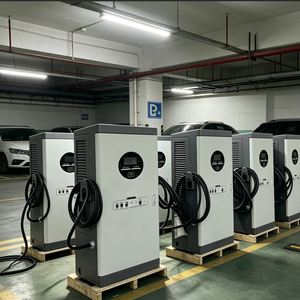

Explore our flagship series of high-power DC fast charging testers, multi-protocol wire harness analyzers, and customized automated end-of-line test systems engineered for global OEMs and industrial integrators.
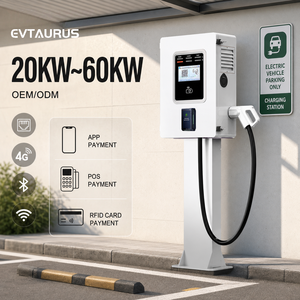
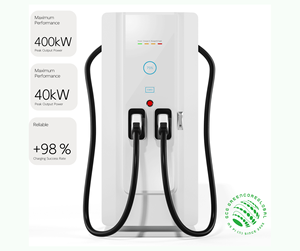
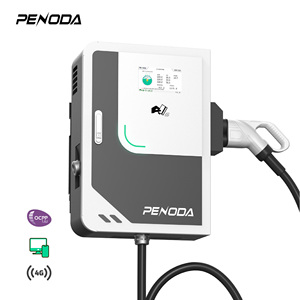
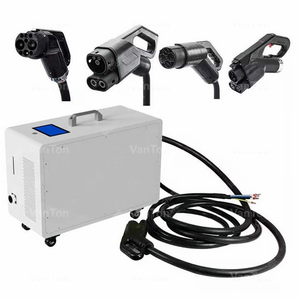
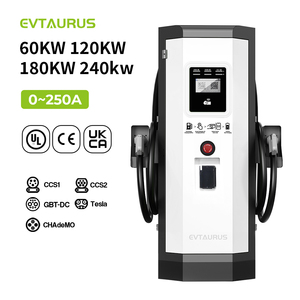
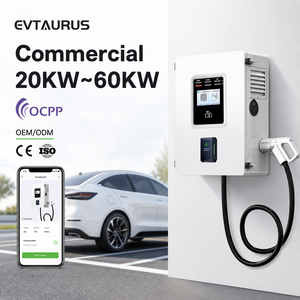
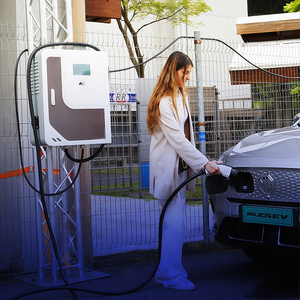
In modern industrial electrification, electric vehicle (EV) assembly lines, high-speed rail networks, and heavy automated logistics, cable harnesses represent the central dynamic nervous system of power transmission and signal integrity. As operational voltages move rapidly from legacy 400V standards toward 800V and 1000V architecture, the margin for wiring error, insulation degradation, or micro-ohm resistance variance contracts to zero. Choosing qualified Custom OEM Cable Tester Manufacturers & Exporters is no longer merely a procurement exercise; it is an essential risk-mitigation strategy for global manufacturing enterprises.
An enterprise-grade OEM cable tester must accomplish far more than simple open/short continuity checks. Modern automated test systems (ATS) engineered for high-power electric vehicle charging cables (supporting standard footprints such as CCS1, CCS2, GB/T, and CHAdeMO) incorporate complex dynamic testing protocols. These comprise high-potential dielectric withstand (Hi-Pot) testing, insulation resistance (IR) measurement up to multi-gigohm levels, 4-wire Kelvin low-resistance measurement, and real-time CAN bus data protocol validation under high current thermal stress.
Execution of high-voltage DC (up to 6000V) and AC dielectric tests to detect insulation breakdown, arc generation, and micro-fissures in heavy-duty EV charging cables before vehicle integration.
Utilizing 4-point sensing to eliminate lead-resistance interference, measuring crimp joint degradation and copper conductor integrity down to micro-ohm (μΩ) resolution under continuous load.
Integrated validation of ISO 15118, DIN 70121, and GB/T 27930 communication interfaces between the cable harness, thermal sensors, and high-power charger power electronics.
Combining internal R&D, complete PCB contract manufacturing (THT & SMD), and proprietary test software engines to deliver uncompromised manufacturing reliability.
Unlike conventional assemblers who rely on outsourced sub-assemblies, our integrated manufacturing infrastructure handles electrical engineering, firmware architecture, mechatronic design, potting, and automated end-of-line (EOL) testing under one strict quality management system.
By leveraging in-house DTS test software systems and modular hardware racks, we build bespoke automated test benches tailored precisely to complex multi-variant cable harnesses and commercial fast-charging platforms (30kW up to 240kW DC).

Modern cable test beds and industrial chargers demand extreme power density within minimal cabinet footprints. Utilizing planar magnetics paired with contact-cooling baseplates, our power modules eliminate cumbersome liquid loops or failure-prone forced-air fans in harsh factory floor atmospheres.
Qualified rigorously against vibration, thermal shock, and aggressive industrial environments, our systems are trusted worldwide across automotive assembly plants, automated logistics terminals, and rail transit networks.

Key shifts shaping how enterprise procurement directors, industrial quality managers, and OEM plant managers source cable validation technology over the coming decade.
Procurement teams are shifting away from standalone manual testers toward connected End-of-Line (EOL) stations. Modern manufacturing execution systems (MES) require instantaneous cloud/server logging of cable test parameters (resistance, leakage current, Hi-Pot threshold) tied to specific serial numbers for liability prevention.
With global markets split across CCS1 (North America), CCS2 (Europe), GB/T (China), and CHAdeMO standards, buyers prioritize scalable modular test matrix units capable of dynamic switching between different plug geometries without requiring total system line re-tooling.
Static resistance checks are insufficient for 240kW+ ultra-fast charging harnesses. Sourcing specifications now mandate real-time thermal load testing, where cables are subjected to continuous high DC currents (up to 500A) while monitoring pin temperature rise via active infrared or embedded NTC sensor lines.
How emerging power semiconductor innovations and AI-driven diagnostic software are transforming high-power cable testing equipment.
The adoption of Silicon Carbide (SiC) power stages in test load equipment enables faster transient responses, reduced acoustic noise, and extreme power efficiency, allowing high-power cable discharge tests to occur in fraction-of-a-second intervals.
Next-generation cable testers utilize high-frequency sampling algorithms to capture sub-microsecond partial discharge (PD) events and insulation micro-arcing that standard Hi-Pot meters miss, preventing latent field failures in electric vehicles.
Transitioning from manual plug insertion to fully automated robotic cell docking interfaces with pneumatic force feedback, guaranteeing zero contact pin damage during 24/7 high-volume factory production lines.
In-depth technical answers addressing critical engineering, compliance, and custom manufacturing inquiries from procurement engineers and quality executives.
Customization depends primarily on operating voltage requirements (up to 1000V DC or 6000V Hi-Pot impulse), conductor current density (ranging from signal cables to 500A liquid-cooled EV fast charging cables), fixture pin count, physical docking mechanics, and software protocol integration (CAN, LIN, Modbus, EtherCAT).
Our engineering team designs tailored test matrices, custom PCB interface boards, potted high-voltage relay switching modules, and bespoke DTS software test sequences matching your specific industrial layout.
Standard 2-wire resistance measurement includes the resistance of the test leads and contact pins within the measurement result, introducing significant error when measuring low-resistance power harness crimps (often below 1 mΩ).
4-wire Kelvin sensing separates the current-carrying leads (Force) from the voltage-measuring leads (Sense). Because virtually no current flows through the voltage sensing circuit, lead and contact resistance are virtually eliminated, permitting micro-ohm precision critical for identifying loose crimps before thermal runaway occurs.
Yes. Our modular automated test benches (supporting power capabilities from 15kW up to 240kW fast charging stations) feature quick-change adapter plates and automated protocol switches. The system validates dielectric insulation, CP/PP control pilot signaling, lock actuator function, temperature sensor calibration, and full digital handshake protocols across all major international standards.
Our proprietary DTS test software suite automatically executes test sequences compliant with international automotive and electrical safety standards, including IPC/WHMA-A-620 Class 3, IEC 61851-23, ISO 6469-3, SAE J1772, and GB/T 18487.1. All test results are digitally signed and uploaded to central SQL databases for total traceability.
Because hardware engineering, firmware design, PCB SMD/THT assembly, potting, and mechanical fabrication take place fully in-house, we readily support small to medium batch customization without forcing excessive minimum order quantities (MOQs). Modification loops for specialized mechanical housings, connector pinouts, or custom CAN bus matrices can be rapidly deployed.
All export hardware includes complete technical documentation, wiring schematics, spare parts support, and standard factory warranty. We operate a globally networked service infrastructure across more than 40 countries, offering remote software diagnostic assistance, on-site commissioning, operator training, and calibration services.
Delivering verifiable technical superiority, robust manufacturing resilience, and extended product lifecycles.
From schematic capture and circuit design to vacuum potting and final burn-in test, every step is strictly controlled in-house, ensuring short lead times and zero communication friction.
Units are engineered to withstand continuous industrial vibration, electromagnetic interference (EMI/EMC), oil mist, high humidity, and ambient temperature extremes (-40°C to +85°C).
Complete private-labeling services including customized powder-coated sheet metal enclosures, specific front-panel connector geometries, branded software GUIs, and localized user manuals.