
Precision-engineered direct current fast charging solutions designed for commercial fleets, public charging networks, and industrial automotive production environments.
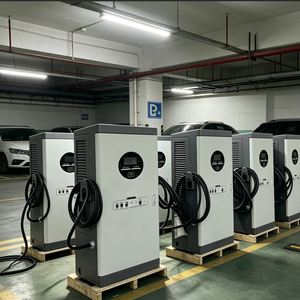
Ultra-fast floor-standing commercial charging infrastructure built with dynamic power allocation matrices and wide voltage ranges for modern electric transit and logistics fleets.
Send an Inquiry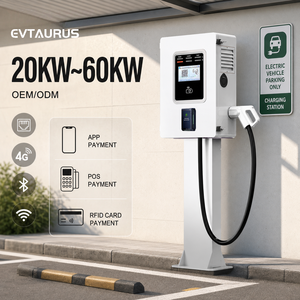
Multi-protocol commercial charger featuring integrated credit card POS terminals, RFID authorization, app control, and back-office connectivity via OCPP 1.6J/2.0.1.
Send an Inquiry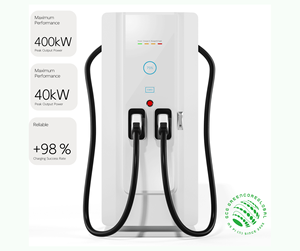
Rugged dual-gun ground station engineered with redundant power modules, smart load balancing, IP54 weather protection, and enterprise CMS cloud management compliance.
Send an Inquiry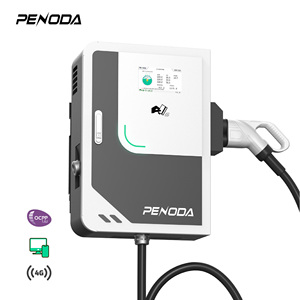
Compact wall-mounted DC charging station designed for commercial depots, parking garages, and luxury residential installations requiring rapid direct-current top-ups.
Send an Inquiry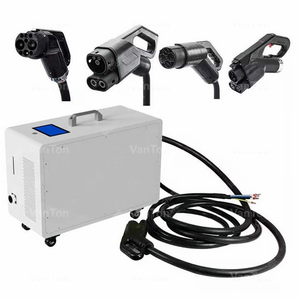
Movable high-efficiency DC charger equipped with industrial casters, shock-resistant housing, and instant plug-and-play capability for vehicle testing and breakdown service fleets.
Send an Inquiry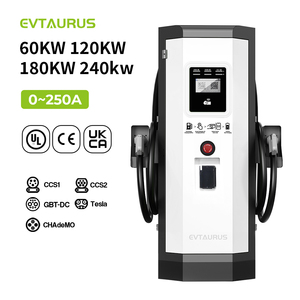
High-power modular charging hub supporting CCS2 and GB/T standard plug standards. Features liquid or forced-air cooling options and scalable power brick expansion slot designs.
Send an Inquiry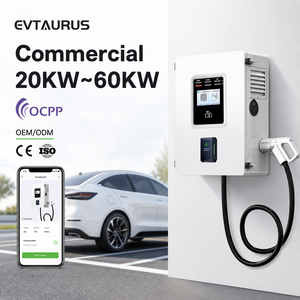
Space-saving heavy-duty DC charging cabinet optimized for tight urban parking garages, car dealerships, and fleet workshop operations demanding fast turnaround times.
Send an Inquiry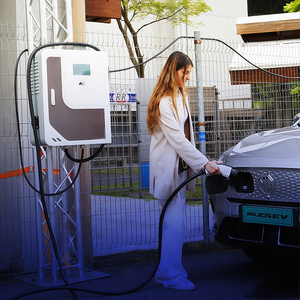
Weatherproof IP55 rated direct-current charging station engineered with active thermal isolation, multi-layer surge protection, and wide 400V AC grid compatibility.
Send an InquiryAs the global electrification transition accelerates across automotive, logistics, and industrial sectors, global procurement managers and original equipment manufacturers (OEMs) face rigorous demands for higher energy conversion efficiency, thermal resilience, and digital connectivity. Modern battery charging technology has evolved from static power conversion devices into intelligent, networked microgrid nodes capable of bidirectionally balancing power loads, executing remote diagnostic routines, and maintaining tight current regulation under extreme environmental conditions.
Our engineering architecture synthesizes over 35 years of high-reliability power electronics manufacturing experience—pioneered through rigorous industrial standards—with state-of-the-art China-based high-volume production lines. By combining Silicon Carbide (SiC) semiconductor topologies with proprietary digital signal processing (DSP) control loops, our power systems achieve peak conversion efficiencies exceeding 96.5%, dramatically reducing operational total cost of ownership (TCO) for global distributors and enterprise fleet operators.
Traditional industrial battery chargers and first-generation DC fast charging stations relied heavily on Silicon (Si) Insulated Gate Bipolar Transistors (IGBTs). While functional, Si-based architectures suffer from switching frequency constraints (typically limited to 15kHz–20kHz), elevated thermal dissipation losses, and bulky magnetic components. Our next-generation power modules leverage Silicon Carbide (SiC) MOSFET technology, unlocking transformative engineering benchmarks:
Operates at switching frequencies up to 100kHz, allowing a 40% reduction in passive magnetic component volume and overall weight.
Reduces switching losses by over 60%, maintaining high efficiency even under partial load conditions (20% to 100% capacity).
Operates reliably up to junction temperatures of 175°C, ensuring unbroken continuous duty cycle in harsh industrial ambient environments.
The integrated Active Power Factor Correction (PFC) stage achieves a power factor of >0.99 with Total Harmonic Distortion (THD) kept strictly below 3%, fully conforming to IEEE 519 and IEC 61000-3-12 grid compliance standards. This ensures zero corruption of upstream industrial power lines when operating multi-megawatt charging depots.

Thermal management is the fundamental bottleneck limiting electronic component longevity. Standard forced-air cooling methods draw conductive dust, airborne oils, and humidity directly across sensitive high-voltage printed circuit boards (PCBs), leading to premature insulation breakdown and field failures.
Our heavy-duty industrial DC/DC converters and sealed charging modules utilize planar magnetics combined with liquid-cooled or contact-cooled cold-plate structures. Heat-generating components—such as power switches, magnetic cores, and output diodes—are directly coupled to extruded aluminum chassis structures via high-conductive thermal interface materials (TIM). This eliminates internal fans, achieves IP65/IP67 ingress ratings, and dramatically increases Mean Time Between Failures (MTBF) beyond 100,000 operational hours.
For commercial fleet depots and public EV infrastructure, fixed-power charging outputs create operational inefficiencies. A 240kW charger dedicated to a single vehicle requiring only 40kW wastes 80% of available power capacity. Our intelligent charging platforms utilize a matrix switching matrix that dynamically routes power modules in 15kW or 20kW increments across dual or quad connector outputs based on real-time Battery Management System (BMS) requests.
Every system integrates universal protocol controllers capable of auto-negotiating communication with international vehicle standards:
When enterprise procurement teams evaluate wholesale battery charger manufacturers in China, decision matrices have shifted beyond baseline FOB pricing. Procurement strategies now prioritize supply chain transparent tracking, software adaptability, total life cycle energy costs, and modular maintainability. Below are the key technological trends shaping future commercial procurement contracts:
Modern passenger EVs and commercial trucks are transitioning from 400V bus voltages to 800V+ systems to achieve 15-minute ultra-fast charging. Charging hardware must support continuous output voltage ranges from 200V DC up to 1000V DC without de-rating current.
Fleet chargers are becoming grid-balancing assets. Next-gen RFQs increasingly mandate Vehicle-to-Grid (V2G) hardware capability to reverse-feed power back into industrial facility grids during peak tariff periods.
With EV infrastructure identified as critical energy grid nodes, strict cybersecurity (TLS 1.3, hardware security modules / HSM, zero-trust remote firmware updates) is now mandatory across North American and European tenders.
Understanding the internal engineering differences between low-cost commercial chargers and enterprise industrial systems is essential for avoiding catastrophic downtime in mission-critical applications:
| Engineering Vector | Standard Commercial Charger | Enterprise OEM-Grade Industrial System |
|---|---|---|
| Semiconductor Switch | Silicon (Si) IGBT Modules (15-20kHz) | Silicon Carbide (SiC) MOSFETs (80-100kHz) |
| Peak Conversion Efficiency | 92.0% - 93.5% | 96.5% - 97.5% |
| Internal Environmental Protection | Standard Conformal Coating, Open Air Flow | Fully Potted Electronics / Hermetically Sealed IP65 Air Duct |
| Thermal Management Strategy | Variable High-Speed Fans (Dust Intrusion Risk) | Contact Cooling Plate / Closed-Loop Liquid Thermal Architecture |
| System Control Architecture | Single Microcontroller (MCU) | Dual DSP + FPGA Redundant Logic Control |
| Communications & Interoperability | Basic OCPP 1.6J over Wi-Fi | OCPP 2.0.1, ISO 15118-20, Dual 4G/5G, CAN 2.0B, Ethernet, RS485 |
| Design Life & MTBF | 3 to 5 Years / 30,000 Hours | 10 to 15 Years / >100,000 Hours |

Our manufacturing complex represents the gold standard in high-reliability power supply fabrication. Incorporating German power electronics engineering methodologies with agile Chinese supply chain scale, we offer full turn-key contract manufacturing services ranging from individual SMT PCB assembly to fully integrated, custom-branded charging stations.
Our in-house production capabilities encompass every phase of high-reliability manufacturing:
Direct technical responses to common questions posed by enterprise procurement officers, electrical engineers, and system integrators during supplier evaluation:
Contact our application engineering team today to request detailed product datasheets, custom CAD models, factory compliance documentation, or a competitive wholesale quotation for your electrification project.
Send an Inquiry