
Precision-engineered, CAN Bus integrated, and compliant with global automotive EOL & industrial standards.
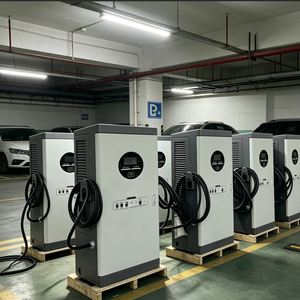
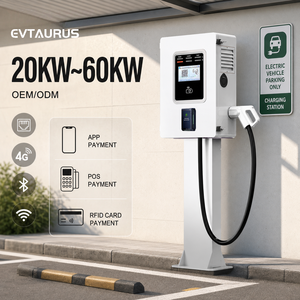
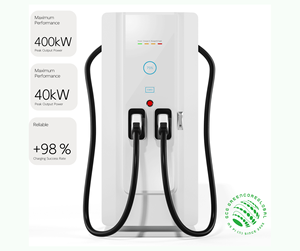
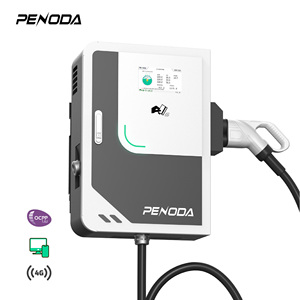
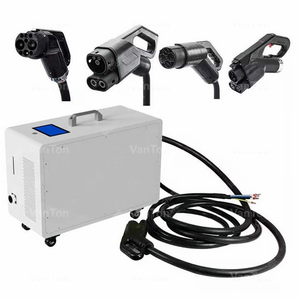
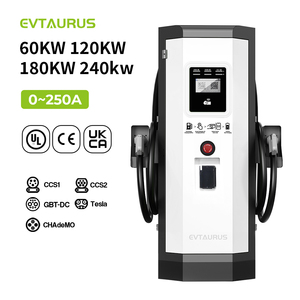
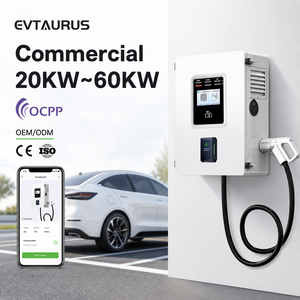
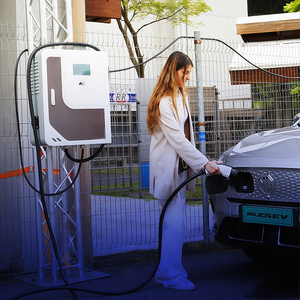
As industrial automation, electric vehicle (EV) fleets, rail transportation, and smart intralogistics undergo rapid electrification, global procurement teams demand more than standard catalog data. Sourcing reliable **programmable DC power supplies**, **high-voltage DC/DC converters**, and **automotive fast-charging equipment** requires rigorous verification of engineering depth, thermal management, software integration, and manufacturing quality control.
With an engineering legacy spanning over 35 years in power electronics development, our China manufacturing center operates under strict German-standard quality management frameworks (ISO 9001, IATF 16949). We offer an end-to-end production ecosystem—from concept formulation, topology simulation, and firmware programming to automated surface-mount technology (SMT), through-hole technology (THT) assembly, high-pressure vacuum potting, and automated end-of-line (EOL) functional testing.
Complete control over PCB assembly line technology. Precision THT soldering, high-speed SMT placement, and environmental vacuum potting safeguard power electronics against extreme vibration, moisture, dust, and corrosive industrial gases.
Driven by our proprietary DTS (Deutronic Test System) test software architecture, every manufactured power module undergoes multi-variant, automated EOL parameter validation, burn-in testing, insulation resistance testing, and safety limit verification.
Native communication capabilities across CAN Bus (CANopen, SAE J1939), Modbus RTU/TCP, Ethernet/IP, and OCPP 1.6J/2.0.1. Seamless integration with vehicle control units (VCU), industrial PLCs, and cloud management systems.
Information Gain Insight: Unlike standard power supply assemblers, our facility integrates planar magnetics design, contact cooling (conduction-cooled plate) engineering, and active power factor correction (PFC > 0.99). This guarantees stable continuous operation under electrically noisy factory environments and extreme ambient temperatures (-40°C to +85°C).
To assist power systems engineers and procurement heads in selecting optimal equipment, the technical matrix below summarizes our primary programmable supply platforms:
| Platform Category | Input Voltage Spectrum | Output Voltage & Power Range | Cooling Topology | Primary Industrial Applications |
|---|---|---|---|---|
| High-Voltage DC/DC (DVCHx3) | 400 VDC – 900 VDC Continuous | 12V / 24V / 48V (Up to 3.6kW per unit) | Contact Cooling / Cold Plate | E-Mobility, Mining Trucks, Fuel Cell AGVs |
| Programmable EV Fast Chargers | 380 VAC ± 15%, 3-Phase + PE | 200 VDC – 1000 VDC (30kW – 240kW) | Forced Air / Liquid Cooled Option | Commercial Fleets, EV Charging Depots |
| Production-Line Battery Chargers | 90 VAC – 264 VAC Universal Input | 12 VDC / 24 VDC (Up to 2.4kW) | Convection / Intelligent Fan | Automotive Assembly EOL, Workshop Trickle |
| Sinusoidal Motor Controllers | 24 VDC – 96 VDC Operating Range | Pure Sine Wave Commutated Speed Control | Direct Aluminum Heatsink | Intralogistics AGV Drives, Precision Pumps |
The global industrial landscape is undergoing a structural transition in how electrical energy is converted, managed, and controlled. Technical procurement executives must anticipate technological shifts to prevent equipment obsolescence, optimize total cost of ownership (TCO), and build resilient supply chains. Based on proprietary market data and OEM partner feedback, we highlight four dominant trends defining the next decade of power electronics sourcing.
Traditional silicon-based Insulated Gate Bipolar Transistors (IGBTs) are hitting physical limits regarding switching frequency and thermal dissipation. Global tier-1 suppliers are overwhelmingly transitioning to **Silicon Carbide (SiC) MOSFETs** and **Gallium Nitride (GaN) HEMTs**. SiC technology allows programmable power supplies and fast DC EV chargers to operate at switching frequencies exceeding 100 kHz while reducing switching losses by up to 60%.
For procurement officers, sourcing SiC-native power units translates to a 30% reduction in overall enclosure footprint, lower heatsink mass, higher power density (W/in³), and system conversion efficiencies climbing beyond 97%. This shift significantly decreases cooling operational costs in large-scale installations such as EV charging parks and automated industrial test bays.
With passenger and commercial electric vehicles migrating from standard 400V battery architectures to 800V and 1000V high-voltage platforms (enabling ultra-fast charging and reduced wiring harness weight), programmable DC power supplies and testing stations must adapt. Sourcing managers must ensure that newly procured power conversion systems possess dynamic output voltage capabilities spanning from 200 VDC up to 1000 VDC without derating power curves at higher voltage levels.
The boundary between power consumer and power generator is blurring. Next-generation programmable DC supplies feature bi-directional topologies (such as Active Front End - AFE rectifiers coupled with Dual Active Bridge - DAB DC/DC stages). These platforms operate seamlessly in both source and sink (regenerative electronic load) modes.
Hardware rigidness is being replaced by software adaptability. Modern manufacturing lines demand power supplies whose charging profiles, voltage ramp-up rates, current limit curves, and interface protocols can be modified via remote firmware updates (OTA) or system software settings. Incorporating modular power blocks allows industrial buyers to scale system capacity (e.g., expanding a 60kW DC charger to 120kW or 240kW by simply inserting hot-swappable 30kW power modules into standard sub-racks).
Beyond specific sourcing considerations, major macroeconomic and regulatory drivers are accelerating technological innovation across China's power supply manufacturing sector:
Global regulations (such as EU Ecodesign Directive, China GB standards, and US ENERGY STAR standards) are enforcing stricter standby power limits and minimum full-load conversion efficiency baselines. Manufacturers are adopting advanced LLC resonant switch topologies and active PFC stages to maintain power factors above 0.99 and total harmonic distortion (THD) below 5%.
Industrial power supplies are no longer passive boxes; they function as intelligent edge sensors. By continuously capturing internal capacitor temperature, switching ripple voltage, output ripple, and ambient thermal gradients, connected power units transmit telemetric health data over CANbus or Ethernet. Advanced predictive algorithms alert maintenance teams before a dielectric breakdown or component failure occurs, eliminating unscheduled production downtime.
Furthermore, harsh environment durability has become a mandatory prerequisite for intralogistics and heavy transport applications. Automated Guided Vehicles (AGVs), electric forklift trucks, and railway auxiliary power units encounter extreme mechanical shocks, constant vibration, high humidity, and airborne contaminants. Utilizing potted housings, sealed IP65/IP67 mechanical construction, and contact cooling through thermal baseplates ensures operational life cycles exceeding 100,000 hours MTBF (Mean Time Between Failures).
Find authoritative answers to technical, operational, and supply chain queries commonly posed by engineering teams and global sourcing directors.
Choosing a manufacturing partner in China for critical power conversion hardware requires complete confidence in supply chain reliability, intellectual property protection, and lifecycle field support. We bridge Western engineering compliance with China's manufacturing agility.
Hardware, firmware, mechanical enclosures, potting, and EOL test software developed under one roof to minimize interface friction and change control delays.
Dedicated technical support hubs and distribution partners across 40+ countries ensure rapid spare parts delivery, local commissioning assistance, and warranty service.
Fully compliant with ISO 9001 and automotive-grade testing standards. 100% full-load burn-in and high-voltage dielectric isolation testing for every unit shipped.
High topology efficiency reduces operational heat loss. Long-life automotive-grade components extend product operating service life to lower lifetime carbon impact.
Need tailored input/output parameters, specialized CAN communication protocols, or custom high-power fast charging architecture? Our engineering team is ready to analyze your specification.
Send an Inquiry