
Engineered to automotive EOL test standards, featuring wide input voltage spans, modular scalability, multi-protocol interoperability (OCPP/ISO 15118), and industrial-grade thermal resilience.
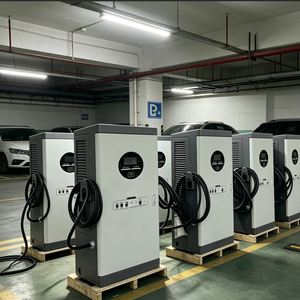
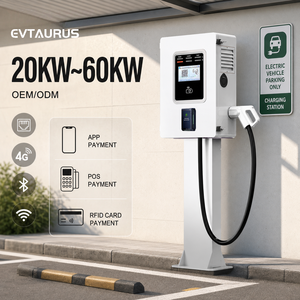
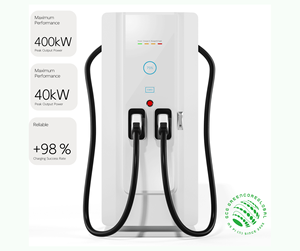
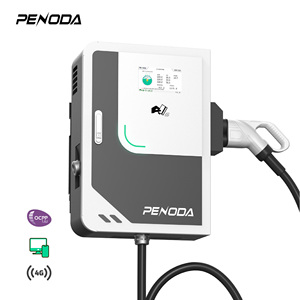
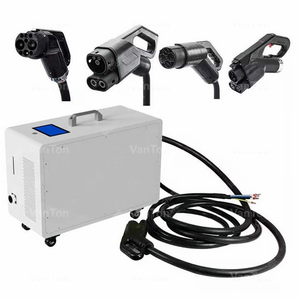
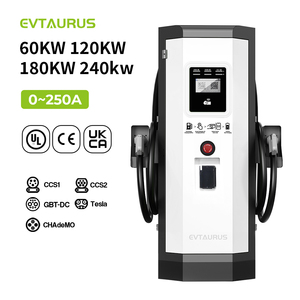
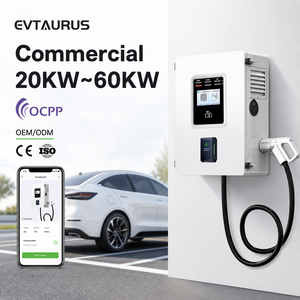
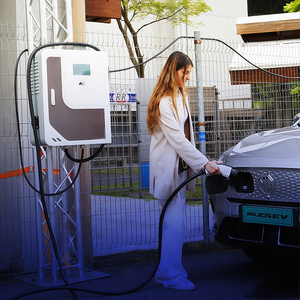
Combining 35+ years of European power electronics development expertise with premier China-based high-density SMT manufacturing, potted assembly lines, and proprietary automated end-of-line testing.
From initial topological simulation, embedded firmware architecture, and planar magnetic design to SMT/THT PCB assembly, automated potting, and final EOL test execution—all under one unified quality management protocol.
Industrial power supplies and DC/DC conversion modules utilize high-thermal-conductivity potting resins. Fully resistant to dust ingress (IP67/IP69K), severe mechanical vibration, high humidity, and aggressive automotive fluids.
Advanced DVCHx3 converter technology accepting continuous DC inputs up to 900V DC. Parameterizable CAN Bus / SAE J1939 protocols enable seamless telemetry integration for electric commercial vehicles, AGVs, and railway auxiliaries.
Every single power unit, motor controller, and fast-charging power module undergoes rigorous end-of-line electrical testing governed by proprietary DTS software—guaranteeing 100% parameter verification and zero-defect delivery.
The global transition toward high-voltage electrification across automotive assembly plants, heavy commercial transport, logistics automation, and public EV charging infrastructure has fundamentally shifted the benchmark for power controllers and industrial DC/DC converters. Modern industrial equipment can no longer rely on legacy low-frequency transformer topologies or air-cooled switching networks that suffer from thermal throttling and electromagnetic interference (EMI).
As a leading China power controller manufacturer and global exporter, our engineering architecture bridges the operational demands of high-duty-cycle industrial operations with state-of-the-art power conversion topographies. Incorporating Third-Generation Semiconductors—specifically Silicon Carbide (SiC) MOSFETs and Gallium Nitride (GaN) switches—our DC conversion networks achieve power densities exceeding 3.5 kW per liter while keeping conversion losses below 1.5% across dynamic load ranges.
Power control systems designed for commercial EV fast chargers (30kW to 240kW) and vehicle-mounted DC converters generally operate under strict power factor correction (PFC) and galvanic isolation parameters. The foundational operational stages include:
Below is an authoritative technical comparison matrix detailing electrical boundaries, thermal handling, communication stacks, and environmental resilience across top-tier power control categories engineered for international OEM export.
| Controller Series / Category | Nominal Input Voltage | Output Power / Voltage Range | Peak Efficiency | Cooling Mechanism | Protocol & Control | Protection Rating |
|---|---|---|---|---|---|---|
| DVCHx3 High-Voltage DC/DC | 400V - 900V DC | 1.5kW - 12kW / 12V, 24V, 48V | > 96.5% | Direct Contact / Baseplate | CANbus / SAE J1939 | IP67 / IP69K Potted |
| Commercial Ultra-Fast DC Charger | 380V - 485V AC (3-Phase) | 30kW - 240kW / 150V - 1000V DC | > 97.2% | Forced Air / Liquid Cooled | OCPP 1.6J / 2.0.1, Ethernet, 4G | IP55 Ground-Mounted |
| Smart DC Wallbox Controller | 230V / 400V AC | 15kW - 40kW / 200V - 750V DC | > 96.0% | Internal Thermal Duct | OCPP 1.6J, RFID, App, POS | IP54 Wall-Mounted |
| D-Sinus Motor Drive Controller | 24V - 96V DC | 500W - 8kW Output | > 98.0% | Aluminum Heat-Sink | CANopen, PWM, Analog | IP65 Industrial |
| Production-Line Charging Computer | 100V - 240V AC | 12V / 24V High Current (up to 120A) | > 95.0% | Heavy-Duty Chassis Fan | DC-Connect Automated Bus | IP31 Shopfloor Grade |
The industrial power electronic landscape is entering a transformative phase driven by rapid fleet electrification, decentralized microgrids, and automated manufacturing lines. Key evolutionary vectors defining the next 5–10 years include:
Silicon Carbide (SiC) MOSFETs are rapidly replacing traditional Insulated Gate Bipolar Transistors (IGBTs) in high-voltage DC/DC converters operating above 600V. SiC enables switching frequencies exceeding 150 kHz—a 3x to 5x jump over IGBT topologies. This drastic increase in switching frequency directly yields passive component footprint reductions, shrinking high-frequency magnetics and capacitor banks by up to 50% while operating seamlessly at junction temperatures up to 175°C.
Power controllers integrated into modern commercial charger stations are expanding from unidirectional energy delivery nodes to bidirectional Vehicle-to-Grid (V2G) and Vehicle-to-Everything (V2X) energy converters. Utilizing ISO 15118-20 protocol standards, new-generation controllers balance local battery storage, solar PV input, and grid demands in real time—converting fleet parking lots into distributed power plants.
In harsh intralogistics environments (e.g., automated guided vehicles in dusty distribution hubs or mining machinery exposed to extreme moisture), traditional fan-cooled enclosures suffer elevated failure rates due to dust accumulation and bearing seizure. Contact-cooled, resin-potted converters conduct internal power component heat directly into the vehicle’s chassis metalwork, completely isolating sensitive electronics from external environmental contaminants.
Modern vehicle assembly plants demand full traceability of battery state-of-charge (SoC) during production line commissioning. Advanced charging controllers now utilize standardized plant communication buses (such as Deutronic DC-Connect protocols) to transmit millisecond-level voltage, current, and temperature telemetry directly to enterprise MES (Manufacturing Execution Systems) for automated quality control archives.
Global procurement teams in automotive OEM, industrial machinery, and charge-point operator (CPO) sectors are fundamentally changing how they evaluate and select power controller manufacturing partners in China. The traditional reliance on unit cost (CapEx) has been superseded by a comprehensive assessment of Total Cost of Ownership (TCO), supply chain transparency, and engineering adaptability.
Field maintenance, thermal degradation, and energy loss account for over 70% of a power module’s life-cycle expenditure. Procurement directors are favoring high-efficiency (>96.5%) units fitted with automotive-grade capacitors and heavy-duty potted protection. A 1.5% efficiency boost across a fleet of 500 fast-charging stations yields tens of thousands of dollars in annual energy savings, far offsetting initial hardware premiums.
Tier-1 equipment manufacturers rarely fit off-the-shelf catalog converters into specialized vehicle chassis or automated machinery. Buyers now actively seek out manufacturers possessing in-house SMT PCB lines, custom aluminum enclosure tooling, and parameterizable firmware engines capable of executing rapid engineering change orders (ECOs) without imposing multi-thousand-unit minimum order quantities (MOQs).
Exporting power controllers to North American and European markets demands strict adherence to rigorous international standards. Top-tier Chinese manufacturers prioritize turnkey compliance engineering, providing pre-tested documentation for CE, TUV, UL, RoHS, REACH, alongside OCPP 1.6J/2.0.1 plug-and-charge interoperability certifications.
Answers to common engineering, integration, and procurement inquiries submitted during OEM design-in phases.