
As commercial electrification accelerates globally across highway transit networks, municipal fleets, automotive production lines, and heavy industrial logistics, the demand for highly reliable, scalable, and versatile DC fast chargers has pivoted from stationary infrastructure toward mobile, wall-mounted, and high-power dual-connector systems.
This comprehensive procurement guide and engineering analysis details the operational architectures, thermal management breakthroughs, multi-protocol standards (CCS1, CCS2, GB/T, CHAdeMO, and NACS), and supply chain considerations required when sourcing high-power direct current (DC) charging hardware from top tier Chinese OEMs and industrial exporters. By combining modular power electronics, advanced SiC MOSFET topology, and rigorous automated end-of-line testing, modern Chinese manufacturers provide global Charge Point Operators (CPOs), commercial fleet managers, and industrial OEMs with unprecedented total cost of ownership (TCO) optimization and operational uptime.
Explore our engineered portfolio of commercial wallboxes, mobile DC fast chargers, and ultra-high-power ground-mounted stations certified for global deployment.
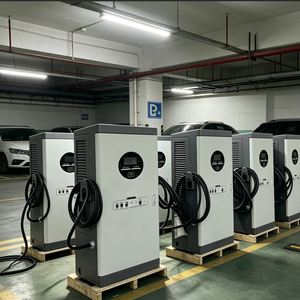
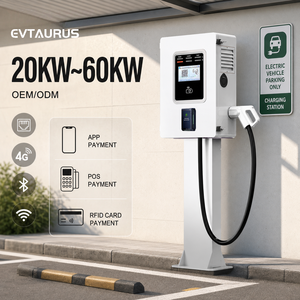
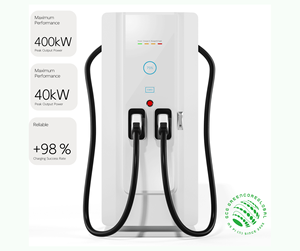
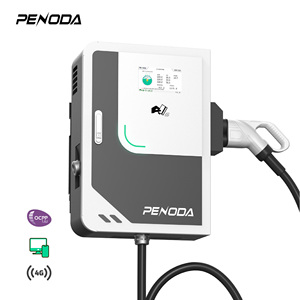
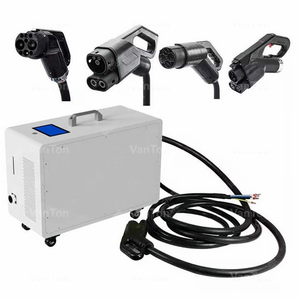
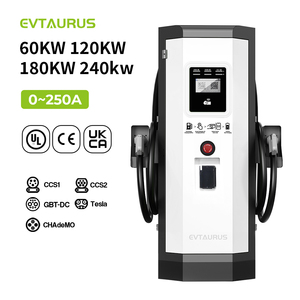
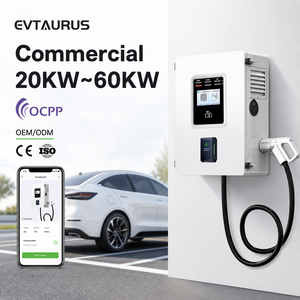
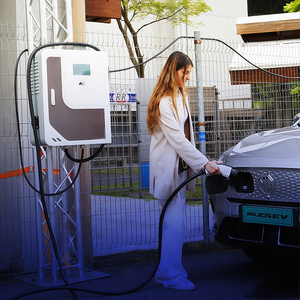
The global EV charging ecosystem is experiencing a structural migration from low-power Alternating Current (AC) level-2 chargers to direct-to-battery High-Power Direct Current (DC) systems. Historically, installing DC charging infrastructure required massive capital expenditure in grid upgrades, permanent civil works, and dedicated transformer step-downs. However, technical innovation from specialized Chinese suppliers has unlocked a new paradigm: Compact Wall-Mounted DC Chargers (15kW–60kW) and Mobile Trolley Chargers (20kW–40kW).
Commercial fleets and service workshops frequently encounter AC charging limitations imposed by the vehicle’s internal On-Board Charger (OBC)—typically restricted to 3.7kW, 7kW, or 11kW. Mobile and wall-mounted DC fast chargers bypass the OBC completely, feeding regulated direct current straight to the vehicle's High-Voltage (HV) battery pack, enabling 3x to 8x faster turnaround times.
Modern fast-charging architecture incorporates hot-swappable 15kW, 20kW, or 30kW power modules. Sourcing modular systems allows B2B importers to offer scalable infrastructure where an initial 60kW station can be field-upgraded to 120kW or 240kW simply by sliding in additional power conversion units into the rack system.
To mitigate expensive grid demand charges, next-generation commercial chargers integrate real-time power distribution algorithms. When dual vehicles are plugged in, smart controllers allocate dynamic kW output based on state-of-charge (SoC) profiles, battery chemistry parameters, and facility power ceilings.
| Parameter / Feature | Mobile / Portable DC Chargers | Wallbox Compact DC Chargers | Commercial Ground-Mounted Stations |
|---|---|---|---|
| Power Output Range | 15kW - 40kW | 20kW - 60kW | 60kW - 240kW+ (Dual Gun) |
| Target Application | Fleet Depots, Workshops, Rescue, EOL Testing | Commercial Garages, Logistics Hubs, Retail | Highway Service Stations, CPO Networks |
| Input AC Voltage | 3-Phase 380V/400V/415V ±15% | 3-Phase 380V/400V/415V ±15% | 3-Phase 380V/400V/480V ±15% |
| Output DC Voltage | 150V - 1000V DC (Wide Voltage) | 200V - 1000V DC | 200V - 1000V DC Wide Range |
| Connector Standards | CCS1, CCS2, GB/T, CHAdeMO, NACS | Single/Dual CCS1, CCS2, GB/T, CHAdeMO | Dual CCS2/GB/T or Liquid Cooled NACS |
| Protection Rating | IP54 / IP55 (Heavy Duty Casing) | IP55 Weatherproof Wallbox | IP55 / IP65 NEMA 3R/4 Enclosure |
| Communication Protocol | OCPP 1.6J / CAN Bus / Wi-Fi / 4G | OCPP 1.6J / OCPP 2.0.1 / RFID / POS | OCPP 1.6J & 2.0.1 / ISO 15118 Plug&Charge |
Selecting a high-power charger manufacturer requires anticipating technological evolution over a 10-year product lifecycle. China’s power electronics industry leads global engineering in several key areas:
Transitioning from legacy Silicon IGBT switches to Silicon Carbide (SiC) MOSFETs represents a massive leap forward in power density. SiC topologies allow power conversion modules to operate at switching frequencies up to 5x higher, dramatically shrinking magnetics (transformers and inductors). This achieves over 96.5% power conversion efficiency, drastically reducing waste heat dissipation, reducing cabinet footprints by 40%, and lowering cooling energy consumption during continuous operation.
Vehicle-to-Grid (V2G) and Vehicle-to-Everything (V2X) capabilities are rapidly moving from pilot projects to mandatory municipal tenders. Mobile and stationary DC chargers equipped with bidirectional power conversion bridges allow commercial EV fleets—such as electric buses and delivery vans—to serve as distributed energy storage resources (DERs), feeding power back into grid networks during peak demand periods or serving as mobile emergency backup power units.
As charging capacities push beyond 240kW toward 360kW and Megawatt Charging Systems (MCS), traditional air-cooled charging cables become excessively heavy and thermally constrained. Chinese manufacturing exporters are leading the integration of liquid-cooled charging cables and liquid-cooled power conversion modules. Liquid cooling maintains low cable operating temperatures while allowing light, flexible 500A+ continuous charging currents.
Modern commercial deployment requires seamless authorization and billing without manual RFID tapping or smartphone apps. Compliance with ISO 15118-2 and ISO 15118-20 enables automated cryptographic handshakes between vehicle and charger. Once plugged in, the charger securely identifies the vehicle account, initiates safety checks, and manages billing instantly while adhering to strict cybersecurity protocols.
Why leading international brands, vehicle OEMs, and tier-1 operators partner with specialized Chinese power electronics manufacturers for custom EV charging hardware.
Distinguished suppliers maintain total vertical integration. From PCB layout engineering, automated Surface Mount Technology (SMT) and Through-Hole Technology (THT) assembly, to potted electronics encapsulation—in-house manufacturing eliminates component reliance on third parties. This guarantees strict control over quality, component trace-ability, and rapid engineering modification loops.
To ensure 100% operational reliability in harsh industrial and outdoor environments, every charging system undergoes rigorous End-of-Line (EOL) functional testing via automated test software systems (DTS). Units are tested against full-load thermal burn-in, dielectric withstand, insulation resistance, high-voltage spike protection, and dynamic CAN communication protocol verification prior to export.
Export-ready chargers adhere strictly to worldwide regulatory standards. Chargers feature full compliance with CE, IEC 61851, IEC 62196, UL 2202, CSA, and RoHS standards. Built-in protective safety systems include Type-A or Type-B RCD (Residual Current Device) earth-leakage detection, over-temperature protection, emergency stop circuits, and lightning surge protection (SPD).
Operational longevity in extreme environments (ranging from -30°C arctic conditions to +55°C high-ambient desert environments) relies heavily on thermal and environmental isolation. Potted power conversion modules utilize high thermal conductivity silicone or epoxy potting compounds to encapsulate delicate SMD components. This seals internal power electronics permanently against humidity, dust ingress, chemical exposure, salt spray, and continuous high-amplitude mechanical vibration (typical in mobile transport and industrial mining applications).
Detailed engineering answers to critical inquiries raised by B2B buyers, fleet engineers, and procurement directors.
Mobile portable DC chargers (such as 15kW to 40kW trolley systems) provide unmatched operational flexibility for vehicle service centers, fleet yards, automotive manufacturing assembly plants, and roadside assistance fleets. They eliminate costly civil ground works, trenching, and permanent space allocation. Equipped with heavy-duty castors and ruggedized IP55 enclosures, mobile chargers allow technicians to bring fast DC power directly to immobilized or un-registered vehicles anywhere in a facility.
Advanced dual-connector stations (such as 80kW, 120kW, or 240kW GB/T and CCS2 chargers) utilize dynamic matrix switching modules. When a single vehicle connects, the controller channels 100% of the internal power modules (e.g., 120kW) to that single output gun. When a second vehicle connects, the smart power matrix dynamically splits the module output—allocating, for example, 60kW to each vehicle, or dynamically balancing power ratio (80kW / 40kW) according to each vehicle’s BMS request signals, state of charge (SoC), and thermal limits.
The global EV industry is bifurcated between legacy 400V battery architecture passenger cars and modern 800V high-voltage platforms (such as heavy-duty electric buses, trucks, and premium sports EVs). A charger limited to 500V output cannot charge an 800V vehicle platform. Sourcing chargers engineered with wide-range power modules (150V–1000V DC continuous voltage output) ensures full cross-compatibility across your entire operational fleet and future-proofs infrastructure investment.
Yes. All commercial smart DC chargers support the Open Charge Point Protocol (OCPP 1.6J JSON, with optional upgrade to OCPP 2.0.1). This industry-standard open communication layer allows seamless integration with any compliant third-party central management software (CMS), billing gateway, or CPO dashboard via Ethernet, Wi-Fi, or cellular 4G LTE connections.
Because development, mechanical fabrication, PCB assembly, firmware, and testing occur under one roof, extensive customization is available for medium to large procurement volumes. This includes custom vinyl branding, customized HMI touch-screen user interfaces, bespoke color schemes, specific cable lengths (up to 7.5m or 10m), custom mounting hardware, and modified firmware parameters to support specific industrial CAN bus protocols or private card payment terminals.
In harsh environments (such as dusty mining sites, coastal shipping ports with salt mist, or extreme sub-zero regions), traditional forced air cooling draws dust, moisture, and corrosive agents directly onto sensitive electronic components, causing premature failure. Potted power electronics sub-assemblies and contact cooling plates seal critical components completely. Heat is conducted directly to heavy aluminum heat-sink extrusions without exposing sensitive circuit boards to ambient air contaminants.
High-power DC charging involves rigorous multi-stage safety handshakes prior to power delivery. Hardware safety measures include emergency stop pushbuttons, isolation monitoring devices (IMD) continuously checking ground insulation resistance, over-voltage, under-voltage, over-current, phase-loss monitoring, internal cabinet over-temperature sensors, and active latching mechanisms on CCS/GB/T plugs to prevent accidental disconnection while energised.
Standard OEM manufacturing lead times range from 2 to 4 weeks depending on order volume and custom specification requirements. Standard export equipment warranties cover 24 to 36 months, with optional extended service level agreements (SLA). Manufacturers maintain stock of modular power units, main control boards (CCU), interface cards, and replacement cable assemblies for immediate worldwide dispatch, minimizing operational downtime.
Request comprehensive technical datasheets, full product catalogs, engineering drawings, and direct factory quotation pricing for our entire lineup of portable and commercial fast chargers.