Industrial Power Engineering Whitepaper
State of Industrial Inverter Modules & Power Conversion Architecture
The global transition toward high-voltage electrifications in commercial vehicles, intralogistics fleets, railway systems, and fast-charging infrastructures has fundamentally redefined requirements for inverter modules and DC/DC conversion hardware. Modern industrial buyers no longer evaluate power electronics solely on nominal power output; critical metrics now focus on volumetric power density ($kW/L$), switching frequency stability, thermal dissipation mechanisms, and full-spectrum electromagnetic compatibility (EMC).
As a leading engineering authority and manufacturer based in China with deep international integration, our design philosophy merges advanced Silicon Carbide (SiC) and Gallium Nitride (GaN) semiconductor topologies with planar magnetic integration. By transitioning from traditional Silicon IGBTs to wide-bandgap (WBG) power switches, our current generation of inverter modules achieves operational switching frequencies exceeding 100 kHz, drastically minimizing passive component footprint while suppressing switching losses by up to 65%.
Silicon Carbide (SiC) Integration
Ultra-low switching resistance ($R_{DS(on)}$) minimizes thermal degradation, allowing sustained operations at high junction temperatures ($T_j \le 175^\circ\text{C}$).
Advanced Contact Cooling
Eliminates bulky fluid pump networks through direct contact thermal dissipation plates, ensuring reliable operations under severe shock and vibration.
CAN Bus & J1939 Protocol
Real-time parameterization, automated fault logging, and seamless ECU handshake via standard CAN 2.0B, SAE J1939, or custom telemetry interface.
In demanding environments—such as automotive end-of-line assembly, automated guided vehicles (AGVs), and multi-standard DC fast chargers—voltage transients, electrical noise, and extreme thermal cycling pose substantial challenges. Our engineered power solutions feature potted enclosure housings, 3kVAC galvanic isolation barriers, and smart digital controller software (DTS) to guarantee absolute reliability across the entire device lifecycle.
Core Engineering Solutions & System Capabilities
Our complete manufacturing ecosystem encompasses five core industrial power electronics verticals. Each product architecture is developed to serve as a customizable standard platform for rapid OEM tailoring.
1. Production-Line & Workshop Battery Charging Computers
Deutronic and associated OEM manufacturing units stand as technology leaders in automotive battery charging. Designed specifically for assembly lines, showroom environments, and workshop diagnostics, these charging systems maintain stable DC bus voltages even under high dynamic load fluctuations.
- Pre-configured charging profiles for Lithium-ion (NMC/LFP) & Lead-Acid 12V/24V/48V matrices
- High immunity to noise in electrically disturbed vehicle manufacturing environments
- DC-Connect networking capability for continuous charge-data traceability across factory IT
- Modular service-friendly architecture for instant field-maintenance and calibration
Inquire About Charging Systems
2. High-Voltage DC/DC Converters (Up to 900V DC Input)
Our DVCx3 and DVCHx3 converter platforms represent the pinnacle of power conversion engineering. Utilizing planar magnetic transformers and contact cooling, these units bridge high-voltage traction batteries (up to 900V DC) down to 12V, 24V, or 48V auxiliary power networks in electric buses, commercial trucks, and railway platforms.
- DVCHx3 series optimized for 400V/800V EV architectures with input tolerance up to 900V DC
- Galvanically isolated and non-isolated topologies available for modular flexibility
- Fully parameterizable CAN Bus interfaces matching automotive OEM protocols
- IP67 / IP6K9K potted aluminum cast housings withstand harsh environmental spray
Request Converter Specifications
3. Decoupled & Potted Industrial Power Supplies
Built for harsh industrial cabinets and decentralized outdoor machinery, our power supplies deliver continuous regulated DC power under extreme shock, vibration, and dust exposure. Available in 19-inch rack enclosures, DIN-rail formats, or fully potted outdoor modules.
- Fully potted encapsulation for total protection against aggressive industrial atmospheres
- Decentralized power concepts designed to drastically reduce heavy copper cable runs
- Ultra-wide AC input range (85-264VAC) with active Power Factor Correction (PFC > 0.99)
- High MTBF values exceeding 500,000 hours under continuous industrial duty cycles
Explore Power Supply Solutions
4. Sinusoidal Commutated Motor Controllers (D-Sinus Series)
The D-Sinus controller series employs vector-controlled true sinusoidal commutation to drive brushless DC (BLDC) and permanent magnet synchronous motors (PMSM). Regulating coil current into smooth sine waves eliminates torque ripple and reduces acoustic motor noise to near-silent levels.
- True sinusoidal motor commutation guarantees smooth low-speed positioning & zero torque ripple
- Up to 98% drive efficiency across broad RPM operating spectrums
- Integrated thermal protection, stall protection, and regenerative braking management
- Ideal for hydraulic pumps, ventilation blowers, and precision AGV drive systems
Inquire Motor Controllers
5. End-of-Line (EOL) Automated Test Systems & Software
Combining customized hardware instrumentation with our proprietary DTS (Deutronic Test System) software suite, we deliver fully automated electrical test rigs for component manufacturers. Test stations range from manual benchtop testing to complex multi-variant robotic production lines.
- Custom bench layouts engineered for high-potential dielectric, functional, and communication testing
- DTS Software engine provides graphical sequence editing, automated limit verification, & database logging
- Multi-variant adapters capable of testing dozens of unique product SKUs on one physical bench
- Complete validation documentation compliant with global automotive audit standards
Consult Test Engineering Team
Technical Benchmark & Product Specification Matrix
Compare the engineering metrics of our core power module and converter platforms. Custom parametric variations are routinely designed for OEM qualification programs.
| Series Category |
Nominal Input Voltage |
Output Power / Current Range |
Cooling Topology |
Efficiency (Peak) |
Communication Protocol |
| DVCHx3 Converter |
250 VDC – 900 VDC |
1.5 kW – 6.0 kW / 12V/24V DC |
Contact / Cold Plate Thermal Interface |
96.5% |
CAN 2.0B / SAE J1939 |
| DVCx3 Converter |
18 VDC – 160 VDC |
300 W – 1.8 kW / Regulated DC |
Natural Convection / Contact Plate |
94.8% |
CANbus / Analog Telem |
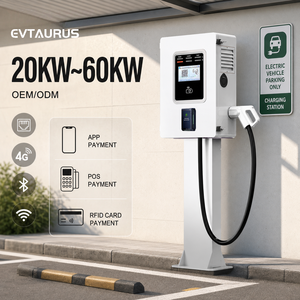
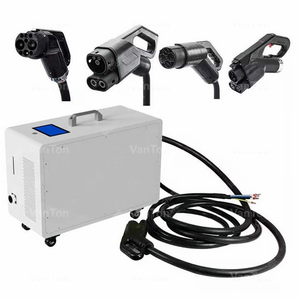
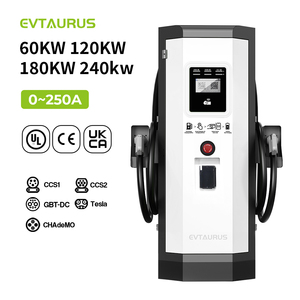
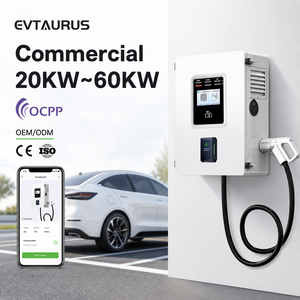
| Commercial EV Charger |
380 VAC – 480 VAC 3-Phase |
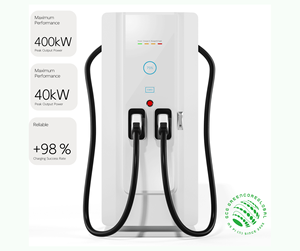
30 kW – 240 kW DC Fast Charging |
Forced Air / Liquid Cooled Duct |
96.8% |
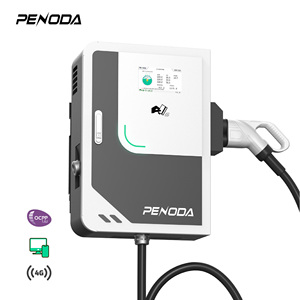
OCPP 1.6J / OCPP 2.0.1 / Ethernet |
| Potted Power Supply |
90 VAC – 264 VAC 1-Phase |
100 W – 960 W / 24VDC/48VDC |
Encapsulated Potted Aluminum |
93.5% |
Relay Dry Contact / Modbus |
| D-Sinus Controller |
12 VDC – 96 VDC |
500 W – 15 kW Continuous |
Aluminum Heatsink Baseplate |
98.0% |
CANopen / PWM / Digital Input |
Strategic Procurement Insight
Future Procurement & Technology Trends in Inverter Modules (2025–2030)
As industrial procurement directors and global supply chain managers evaluate long-term vendor partnerships, several disruptive technology trends are shifting the selection criteria for inverter modules and DC power converters:
1. Accelerated Transition to 800V and Wide Bandgap (SiC/GaN) Topologies
Commercial vehicles and fast-charging infrastructure are rapidly moving from 400V architecture to 800V nominal DC platforms. Silicon Carbide (SiC) power MOSFETs have transitioned from expensive niche components to mandatory standards for high-voltage applications. Procurement teams must partner with suppliers who maintain established supply chain access to high-grade SiC wafers and possess packaging expertise in low-inductance module layouts.
2. Bidirectional Power Flow & V2G (Vehicle-to-Grid) Compliance
Modern DC chargers and battery energy storage system (BESS) inverter modules are shifting toward bidirectional AC/DC and DC/DC operation. Enabling V2G, V2X, and grid-tied energy balancing requires complex digital control loops, bidirectional zero-voltage switching (ZVS) resonant LLC circuits, and compliance with grid code regulations such as IEEE 1547 and UL 1741 SB.
3. Modular Power Block Standardization & Hot-Swappability
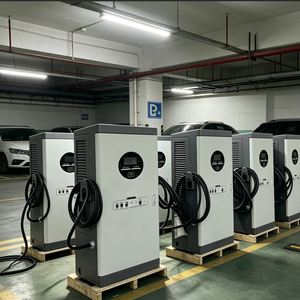
To eliminate operational downtime in commercial vehicle depots and EV charging stations, buyers are abandoning monolithic inverter designs in favor of modular 20kW, 30kW, or 40kW rack-mountable power converter modules. Modular architecture allows matrix N+1 redundancy, enabling charging stations to operate continuously even if a single power module undergoes maintenance.
4. Deep Integration of Predictive Telemetry & Digital Twin Analytics
Intelligent procurement now prioritizes power hardware equipped with microcontrollers capable of high-speed sensor sampling. Real-time monitoring of MOSFET junction temperatures, electrolytic capacitor ESR degradation, and high-frequency thermal stress metrics allows enterprise operators to deploy AI-driven predictive maintenance schedules before hardware failures occur.
Why International Procurement Leaders Partner With Us
Evaluating power electronics suppliers involves weighing technical specs against long-term operational risks. Our corporate architecture is designed around four key operational pillars:
1. Single-Source Responsibility
From initial circuit simulation and thermal modeling to PCB assembly, potting, final testing, and global logistics—every step is controlled in-house, eliminating supplier hand-off delays.
2. Rapid OEM Customization
Because software and hardware design teams sit in the same facility, adapting firmware protocols (CAN, J1939, Modbus) or mechanical heatsinks for small to medium production runs is accomplished swiftly.
3. Worldwide Service Network
With operational facilities across Europe, North America, and Asia, our field engineers provide prompt commissioning support, replacement parts, and technical assistance in 40+ countries.