
Precision-engineered high-power DC fast stations, wallbox chargers, and specialized power systems manufactured under stringent ISO/IATF quality management standards.
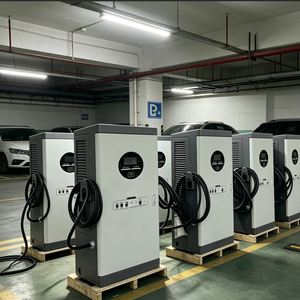
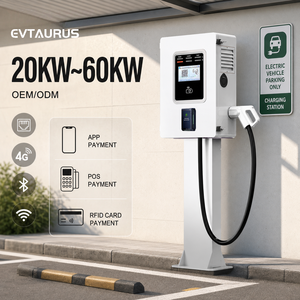
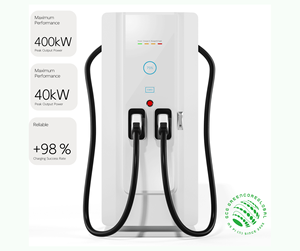
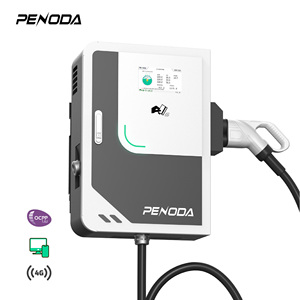
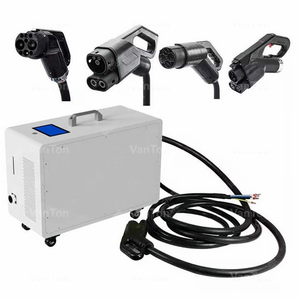
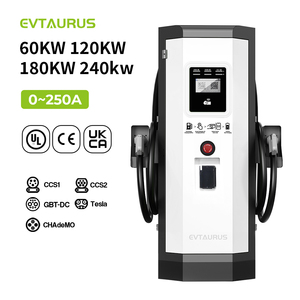
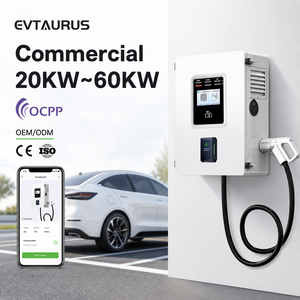
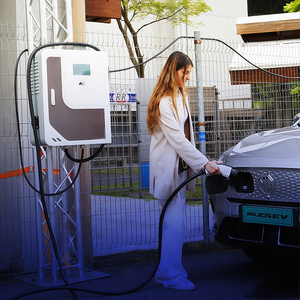
Navigating the complex global market for industrial power equipment requires choosing partners with verified engineering depth rather than simple trading operations. As a lead industrial manufacturing hub, China's top suppliers combine high-volume production efficiencies with rigorous, German-inspired engineering methodologies.
By blending advanced power electronics—ranging from high-voltage DC/DC converters operating up to 900 V DC to modular DC fast-charging stations reaching 240 kW and beyond—our integrated production infrastructure serves auto assembly lines, railway projects, automated intralogistics (AGVs/AMRs), and commercial fleet depots worldwide.
Every industrial platform is built from the ground up under one roof: from schematic layout, THT/SMD PCB population, and planar magnetic potting to automated End-of-Line (EOL) testing using internal DTS software architecture.

A complete vertically integrated development model that bridges hardware design, firmware, mechanical potting, and lifecycle support.
From initial topological concept, circuit simulation, and embedded C/C++ firmware to mechanical encapsulation and final compliance testing—all engineering processes occur under unified quality supervision. This eliminates multi-vendor misalignment and cuts custom engineering lead times by up to 40%.
Our potted power supplies and contact-cooled DC/DC converters are engineered specifically for extreme shock, vibration, dust, and humidity. Designed without failure-prone fans where possible, they deliver continuous rated output in ambient operating temperatures ranging from -40°C to +85°C.
Seamless communication integration is standard. Our industrial units feature native support for standard CAN bus (CANopen, SAE J1939), Modbus TCP, and network protocols. Charging platforms embed OCPP 1.6J and 2.0.1 compliance for immediate backend integration into global charge point operator (CPO) software.
Comparing industrial conversion topologies, thermal dissipation approaches, and systemic performance standards across commercial power supply classes.
| Technology Platform | Input Voltage Spectrum | Cooling Architecture | Communication Bus | Target Industrial Application |
|---|---|---|---|---|
| DVCx3 Series Converter | 24 VDC - 110 VDC nominal | Contact-Cooled (Planar) | CAN 2.0B / SAE J1939 | AGVs, Intralogistics, Material Handling |
| DVCHx3 High-Voltage Platform | Up to 900 VDC Peak | Direct Cold-Plate Contact | CANopen / Custom Stack | Heavy E-Mobility, Railway, Commercial EVs |
| Commercial Fast DC Wallbox | 380 VAC - 415 VAC 3-Phase | Forced Air / Isolated Duct | OCPP 1.6J / Ethernet / 4G | Depot Charging, Fleet Parking, Showrooms |
| Megawatt Ultra-Fast Charger | 800 VDC High-Voltage Grid | Active Liquid Cooled Cables | OCPP 2.0.1 / ISO 15118 | Highway Stations, Heavy Truck Corridors |
| D-Sinus Motor Controller | 12 VDC - 96 VDC Low Voltage | Aluminum Heat Sinking | Analogue / PWM / CAN | Sinusoidal Pump & Drive Actuators |

Traditional forced-air cooling systems rely heavily on external fans, introducing mechanical wear points, dust ingestion hazards, and elevated acoustic noise. In contrast, our latest generation of contact-cooled DC/DC converters utilizes planar magnetics mated directly to heavy aluminum heatsinks or cold-plate liquid loops.
This topological advance achieves exceptional power density while completely sealing sensitive power electronics against ambient contaminants (achieving up to IP67 protection). The result is zero required filter maintenance and drastically extended mean time between failures (MTBF) in harsh factory environments.
Essential insights for procurement managers, systems integrators, and technical directors evaluating next-generation power equipment suppliers.
The industrial power sector is rapidly transitioning from traditional Silicon IGBTs to Wide-Bandgap Silicon Carbide (SiC) MOSFETs. SiC enables ultra-high switching frequencies, reducing magnetic component sizes by up to 50% while pushing operational conversion efficiencies beyond 97.5%. Procurement plans must prioritize SiC-native suppliers to future-proof infrastructure energy costs.
The manual RFID authentication model is giving way to automated encrypted handshake protocols via ISO 15118. Fast DC charging hardware must incorporate hardware-level Public Key Infrastructure (PKI) security chips to enable seamless "Plug & Charge" capability, automatic billing, and bidirectional Vehicle-to-Grid (V2G) power balancing.
Fixed-power charging units are being replaced by hot-swappable, modular power matrices (e.g., 20kW/30kW power modules inside 240kW frames). This architecture eliminates single point failures: if a single module encounters an issue, the cabinet automatically redistributes load across remaining modules without taking the station offline.
Automotive and OEM buyers are mandating end-to-end telemetry for every serial unit produced. Systems linked via industrial cloud networks (like DC-Connect) capture every charging cycle, thermal excursion, and diagnostic code, establishing full digital traceability across the product's entire operational lifecycle.
Customized power conversion and automated test engineering deployed across four foundational industrial domains.
Industrial battery chargers maintaining stable voltage rails (12V/24V/HV) during vehicle firmware flashing, end-of-line diagnostic validation, showroom maintenance, and production assembly processes without ripple voltage distortion.
Ruggedized, contact-cooled DC/DC converters operating directly off high-voltage traction batteries (up to 900V) to feed low-voltage auxiliary networks in electric buses, commercial trucks, agricultural equipment, and locomotives.
Encapsulated, vibration-immune power modules engineered for automated guided vehicles (AGVs), autonomous mobile robots (AMRs), and fuel-cell intralogistics platforms operating continuous 24/7 duty cycles.
Fully integrated end-of-line test benches driven by proprietary DTS test execution software. Automated electrical parameter validation, safety hipot checks, and functional load profiling for mass component manufacturing.
Direct answers to core technical, compliance, and sourcing inquiries raised by enterprise procurement teams.
Our low-voltage converter series (DVCx3) covers nominal battery networks from 24 VDC up to 110 VDC, while our high-voltage series (DVCHx3) handles elevated traction battery systems operating continuously up to 800 VDC with peak surge tolerance to 900 VDC. Both platforms are available in galvanically isolated and non-isolated configurations.
Our commercial charging systems natively communicate using standard Ethernet or 4G modem links running the Open Charge Point Protocol (OCPP 1.6J / 2.0.1). Furthermore, for automotive production lines, chargers connect to the centralized DC-Connect network architecture, allowing plant automation servers to log real-time voltage profiling, serial number binding, and charge completion telemetry.
Yes. Because PCB layout, surface-mount technology (SMT) assembly, potted housing encapsulation, and final firmware compilation take place in our own factory facilities, we can execute hardware adaptation, customized connectors, specific enclosure dimensions, and customized CAN stack parameters even for medium-volume OEM series.
Products undergo rigorous third-party and internal laboratory qualification. Fast DC chargers comply with CE, IEC 61851, IEC 62196, DIN 70121, and ISO 15118 standards. Our industrial converters and power supplies meet automotive EMC directives (ECE R10), railway shock/vibration standards (EN 50155), and IP55 to IP67 ingress protection specifications.
Through our direct technical service branches and authorized global distributor network spanning over 40 countries, we provide commissioning assistance, on-site technician training, rapid spare parts deployment, and full repair handling to keep factory down-time to a minimum.
Connect directly with our engineering sales team to request full product catalogs, CAD schematics, or custom OEM quote proposals tailored to your application voltage and power parameters.