
Executive Summary: The Strategic Evolution of Chinese Smart Charger Manufacturing
The global transition toward electrification across automotive, logistics, public transit, and heavy transportation requires a fundamental transformation in power electronics engineering. As electric vehicle (EV) battery packs shift from standard 400V architectures to ultra-fast 800V and 900V Silicon Carbide (SiC) topologies, the global demand for reliable, intelligent, and scalable DC charging equipment has surged. China has emerged as the global powerhouse for EV charging infrastructure development, delivering unmatched production scale, supply chain integration, and rapid technological iteration. However, for B2B procurement teams, fleet operators, charge point operators (CPOs), and OEM partners, selecting the right manufacturing partner in China goes far beyond comparing simple FOB price quotes.
True operational efficiency and minimal Total Cost of Ownership (TCO) require an engineering partner capable of bridging advanced German power-electronics design standards with agile Chinese manufacturing capabilities. Combining over three decades of core power technology expertise—spanning high-voltage DC/DC conversion, contact-cooled power modules, sinusoidal motor control, and automated End-of-Line (EOL) testing—this comprehensive whitepaper outlines the critical technical parameters, technological trends, manufacturing standards, and strategic procurement methodologies required to identify and partner with China’s premier smart charger factories.
Core Procurement Insight: The true cost of an industrial DC fast charger is determined not by initial capital expenditure (CAPEX), but by its Operational Expenditure (OPEX), grid conversion efficiency, power module mean time between failures (MTBF), and seamless interoperability via open communications protocols like OCPP 2.0.1 and ISO 15118-20.
Enterprise Capability Matrix: What Defines China's Top Smart Charger Manufacturers?
When evaluating a tier-1 Chinese charger exporter, international engineering and procurement leaders must look beyond basic assembly lines. Leading manufacturing facilities distinguish themselves through internal, vertical integration across four core engineering pillars:
Topology & Magnetic R&D
In-house development of high-frequency transformers, planar magnetics, and SiC/GaN power topologies ensuring power conversion efficiency reaching up to 96.8%.
In-House SMT & Potting
Complete control over Surface Mount Technology (SMT), Through-Hole Technology (THT), and protective potting processes to withstand severe ambient environments.
Automated EOL Verification
100% automated electrical safety, thermal stress testing, and real-time CAN bus parameterization driven by specialized test software suites (e.g., DTS integration).
Tier-1 manufacturers operate under rigorous quality management frameworks including IATF 16949 (automotive quality management standard) alongside ISO 9001, ISO 14001, and ISO 45001. This level of quality control ensures that DC fast charging stations operating in extreme thermal environments—ranging from -35°C in Nordic winters to +55°C in Middle Eastern desert installations—maintain continuous nominal power output without thermal derating.
Deep Dive Technical Architecture: Power Conversion & Smart Energy Management
Modern commercial chargers are complex cyber-physical power electronic systems. To ensure long-term operational resilience, buyers must understand the critical internal engineering modules that differentiate premium charging hardware from commodity solutions:
1. High-Density Power Modules & Matrix Switching
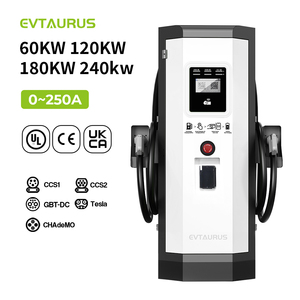
At the heart of every 30kW to 240kW+ fast charging station lies the power module configuration. Premium Chinese factories utilize modular 20kW, 30kW, or 40kW hot-swappable power conversion units operating in dynamic matrix topologies. Dynamic power allocation algorithms continuously monitor vehicle State of Charge (SoC) and battery management system (BMS) requests, routing power granularly across dual or multi-connector configurations. If a single module fails, the intelligent matrix automatically isolates the faulted unit while maintaining continuous charging service for connected vehicles, dramatically improving uptime.
2. Advanced Thermal Management (Contact Cooling vs. Liquid Cooling)
Heat is the primary cause of degradation in power semiconductors, capacitors, and magnetics. Premium charger engineering leverages advanced thermal management strategies:
- Contact-Cooling & Sealed Compartments: Critical power electronics are potted or mounted directly to aluminum heat sinks within IP65/IP55 isolated compartments. This prevents dust, metallic particles, moisture, and corrosive salt mist from coming into contact with sensitive PCB traces.
- Direct Liquid Cooling for High-Current Systems: For ultra-fast chargers delivering 360kW to 480kW (currents exceeding 400A), liquid-cooled cable and connector assemblies utilize environmentally friendly dielectric coolants to maintain comfortable handling temperatures and prevent thermal throttling.
3. Grid Impact, THD, and Power Factor Correction (PFC)
Large-scale commercial charging hub deployments place significant non-linear loads on localized distribution grids. High-quality Chinese exporters integrate active Power Factor Correction (PFC) stages using three-phase Vienna rectifier topologies. This ensures a unity power factor (>0.99) and Total Harmonic Distortion (THD) of less than 5%, fully complying with stringent grid standards set by IEEE 519 and EN 61000-3-12.
| Parameter / Feature | Standard Commercial Grade | Industrial Tier-1 Enterprise Grade |
|---|---|---|
| Power Semiconductor Technology | Standard Silicon IGBTs | Silicon Carbide (SiC) MOSFETs |
| Peak System Efficiency | 94.0% – 95.2% | 96.5% – 97.2% |
| Input Voltage Range | 380V AC ± 15% | 260V – 485V AC Wide Range / 900V DC High Voltage compatible |
| Ingress Protection Rating | IP54 Outdoor Rated | IP55 / IP65 Isolated Power Compartment |
| Communication Protocol | OCPP 1.6J Basic | OCPP 1.6J & 2.0.1 + ISO 15118-20 (Plug & Charge / V2G) |
| Mean Time Between Failures (MTBF) | < 50,000 Hours | > 100,000 Hours (Proven in Field Audits) |
Future Procurement Trends (2025–2030): Navigating the Electrification Landscape
As the EV ecosystem matures, enterprise buyers must future-proof their capital investments against rapid technological obsolescence. Procurement strategies over the next five years will be shaped by four critical market trends:
Trend 1: Widespread Adoption of ISO 15118-20 and Plug & Charge
The friction of physical RFID cards, smartphone applications, and manual credit card processing is rapidly disappearing. ISO 15118-20 enables secure, automated cryptographic communication directly between the electric vehicle and the charging station. Upon plugging in the connector, the vehicle authenticates, initiates charging, and settles billing seamlessly. Premier Chinese export factories now build Public Key Infrastructure (PKI) hardware security modules (HSM) directly into charger controller boards to support native ISO 15118 compliance.
Trend 2: Vehicle-to-Grid (V2G) and Bidirectional Energy Systems
Electric vehicle fleets are transitioning from passive grid loads into active, distributed energy resources (DERs). Bidirectional DC chargers equipped with advanced inverter topologies enable fleet operators to discharge stored battery energy back to the grid or facility during peak tariff hours (peak shaving). Procurement teams are prioritizing smart chargers certified for IEEE 1547 and UL 1741-SA grid-tie compliance.
Trend 3: Integration of On-Site BESS and Solar PV Microgrids
Grid capacity constraints frequently delay commercial EV fast-charging projects. Forward-thinking chargers incorporate dedicated direct DC-bus coupling ports, allowing seamless integration with Battery Energy Storage Systems (BESS) and local Solar Photovoltaic (PV) arrays. This microgrid architecture allows 240kW fast charging even on restricted 50kW grid connections, mitigating expensive utility transformer upgrades.
Trend 4: Cybersecurity and Remote Lifecycle Diagnostics
As national infrastructure assets, charging networks are increasingly targeted by cyber threats. Modern purchasing specifications demand end-to-end encryption (TLS 1.3), secure bootloaders, signed firmware updates over-the-air (FOTA), and deep integration with cloud diagnostic platforms (such as DC-Connect networks) for predictive telemetry and automated fault isolation.
Manufacturing Excellence & Reliable Quality Assurance Standards
The manufacturing capabilities of a factory directly dictate product reliability in the field. A leading Chinese smart charger manufacturer operates a thoroughly validated production flow designed to mitigate assembly errors and electronic component stress:
- Automated SMT & Inspection: Surface Mount Technology lines utilize 3D Automated Optical Inspection (AOI) and inline X-ray inspection (AXI) to verify solder joint integrity on multi-layer control boards, preventing hidden micro-fractures.
- Conformal Coating & Environmental Potting: PCBs operating in hazardous environments undergo automated selective conformal coating. Critical magnetic components are fully potted in polyurethane or epoxy compounds to optimize heat dissipation and absorb mechanical vibration during transit and operation.
- Full-Load Thermal Burn-In: Every completed power module undergoes a mandatory full-load thermal burn-in cycle in high-temperature testing chambers (typically 48 hours at 50°C) to induce early-life component burn-in and eliminate infant mortality failures prior to shipment.
- Hardware-in-the-Loop (HIL) Simulator Testing: Automated test benches simulate thousands of real-world charging sequences, grid voltage fluctuations, communication drops, and vehicle BMS fault codes to guarantee robust firmware performance under edge-case field conditions.
Strategic Purchasing Guide: Evaluating Chinese OEM & Exporter Suppliers
To establish a resilient supply chain with a Chinese manufacturing partner, corporate buyers should execute a structured, five-stage supplier qualification process:
Stage 1: Technical & Engineering Audit
Verify whether the manufacturer designs their own controller boards, firmware, and power conversion topologies or simply acts as a system integrator assembling off-the-shelf white-label modules. Request patent portfolios, schematic documentation guidelines, and firmware release logs.
Stage 2: Compliance Certificate Authentication
Ensure certification documents (CE, CB, UL, ETL, UKCA, RoHS, REACH) are issued by accredited international testing laboratories (such as TÜV Rheinland, TÜV SÜD, SGS, or Intertek). Confirm that test reports match the specific power levels, safety protection circuits, and model numbers listed on your procurement contract.
Stage 3: Supply Chain Flexibility & Component Traceability
Inquire about component sourcing policies. Tier-1 factories utilize globally recognized semiconductor brands (such as Infineon, STMicroelectronics, Texas Instruments, and Cree/Wolfspeed) alongside premium domestic equivalents. Complete component traceability down to individual batch numbers ensures rapid root-cause analysis in the event of field warranty claims.
Stage 4: Customization Capabilities (White-Label & Firmware Adaptation)
Evaluate the factory’s ability to customize physical enclosures, branding, UI interfaces, screen dimensions, connector choices, and bespoke OCPP communication profiles required by your operational backend system.
Stage 5: After-Sales Service Level Agreements (SLAs)
Confirm spare part availability, warranty replacement logistics, technical support response times, and field technician training programs. Established exporters maintain regional service centers or local engineering partners across Europe, North America, and the Asia-Pacific region to deliver rapid technical support.
Frequently Asked Questions (Technical & B2B Sourcing FAQ)
What range of input voltages do your commercial DC fast chargers support?
Our commercial DC charger platforms support wide AC input ranges from 300V AC to 480V AC (3-Phase, 50/60Hz), accommodating international power grids. Additionally, our high-voltage DC/DC converter series (DVCHx3 platforms) can accept input voltages up to 900V DC, making them ideal for heavy industrial, mobile machine, fuel cell, and specialized railway applications.
Can your smart chargers be fully integrated into existing vehicle assembly lines and fleet platforms?
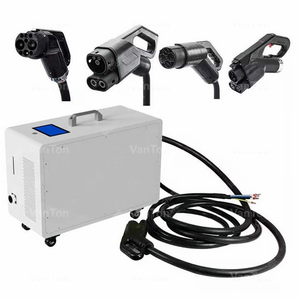
Yes. Our chargers are engineered specifically for end-of-line vehicle production, dealership workshops, commercial fleets, and public CPO networks. They feature multi-standard connector options (CCS1, CCS2, GB/T, CHAdeMO), configurable charging profiles for lead-acid and advanced lithium-ion chemistries, standard CAN Bus / SAE J1939 communication, and full network integration via DC-Connect protocols for localized and cloud telemetry.
How do you guarantee interoperability between your chargers and different global EV models?
Interoperability is validated through rigorous Hardware-in-the-Loop (HIL) testing and continuous interoperability testing against global vehicle platforms. Our firmware complies fully with standard charging protocols including DIN 70121, ISO 15118, CHAdeMO 2.0, and GB/T 27930, ensuring seamless handshake and charging session stability across diverse vehicle models.
What are the minimum order quantities (MOQ) and lead times for OEM/ODM orders?
Because development, PCB assembly, potting, mechanical enclosure fabrication, and automated testing are managed internally under one roof, we offer flexible production batches for both small-series custom engineering projects and high-volume commercial runs. Standard sample units are typically delivered within 2 to 3 weeks, while customized OEM production orders are fulfilled within 4 to 6 weeks.
What thermal protection mechanisms are built into your high-power charging stations?
Our chargers utilize multi-layered thermal protection including real-time temperature sensing at the power modules, internal busbars, output cables, and connector pins. If internal temperatures exceed safe operational thresholds, intelligent derating algorithms automatically scale back output current to preserve hardware longevity without abruptly terminating the charging session.
How does your factory support cloud monitoring and remote management?
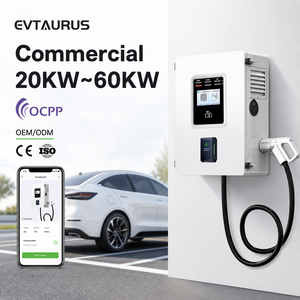
All smart chargers feature built-in Ethernet, Wi-Fi, and 4G/5G cellular gateways supporting the Open Charge Point Protocol (OCPP 1.6J and 2.0.1). This allows operator network backend systems to monitor real-time energy consumption, perform remote fault diagnostics, push over-the-air (OTA) firmware updates, and manage automated dynamic load balancing across multi-charger sites.